
 E-Paper



It’s all a one-bird orchestra: The greater racket-tailed drongo

 Prefer HTon Google


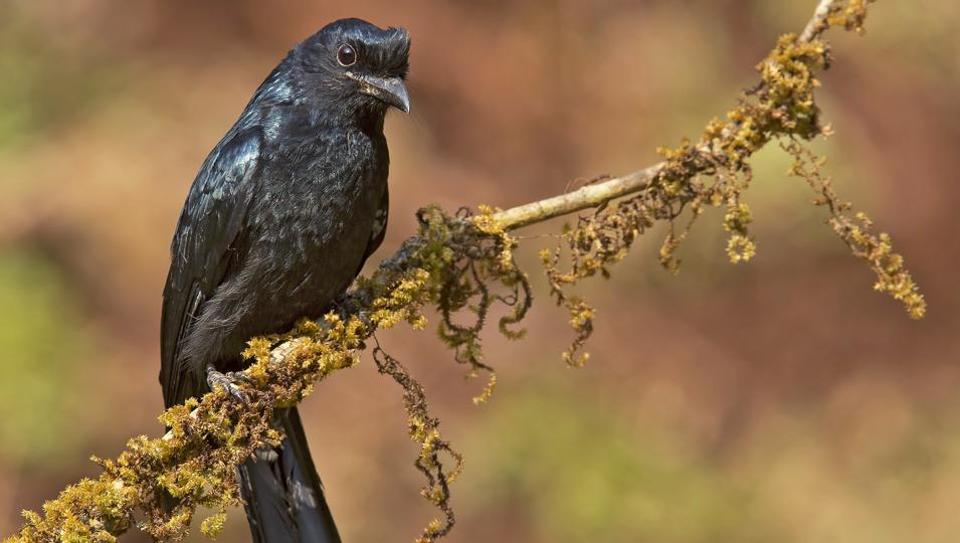
In these weeks, when a pre-monsoon scent is floating in the air and several birds get into song and display, one glossy black bird struts to the fore.
In these weeks, when a pre-monsoon scent is floating in the air and several birds get into song and display, one glossy black bird struts to the fore. It a true exhibitionist, but only on its own terms. No urban tangle for this fellow. It won’t even come to your city parks, no matter how lush. It has its ecological dignity, you see.
I’m speaking of the greater racket-tailed drongo, a name as long as its range of tunes and its special tail feathers. This is a fellow that will test and elude even the avid birdwatcher. If you want any kind of chance of seeing its unique play-acting, you must venture into some of the region’s select forest wilds.
Glossy black with a plumed crest, the real kicker with this fellow is that incredible tail — two wiry outer feathers extend another foot or so beyond the edge of the tail, each one ending in a broad, racket-like feather. Hence the common English name.
Watch the bird in flight, if you are blessed with such a sighting, outlined against the sky, and you’d be excused for wondering why two large bees were chasing the fellow. It is an extraordinary sight!
The physical charms are one thing. Now, let me get to the bird’s even more dramatic claim to fame — its voice, nay, its one-bird entire orchestra, if you may. There’s an air of cockiness to its head nods as the bird pierces through the forest’s quiet noises with a harsh chuckle that soon explodes into a series of metallic creaking notes; suddenly a mono or two-syllabled call transforms into a rhapsody of calls, a medley of musical screams, romantic trills, whistles and hoots.
In the midst of it all you will discover a phenomenal feathered mimic; I have heard this drongo produce to perfection the legitimate calls of nearly two dozen other birds, including those of birds of prey like the crested serpent eagle, shikra, besra, white-eyed buzzard and Oriental honey buzzard. It’s a one-of-a-kind solo orchestra!
And that’s when there’s just one of them around. Sometimes, a few drongos will get together, amid the deciduous luxuriance that is the only setting they’ll accept, and set up an orchestral arrangement together that goes magically with the rustle of the forest and the creaks of the trees.
So regularly and so year-round does this rather sociable creature perform in its acoustic settings that I wonder if the name racket-tailed was due only to the tail!
Mumbai’s Sanjay Gandhi National Park is the finest place to spot, and hear, this sound artist, though small populations do exist in some other forested sites in the region, including Karnala, Tungareshwar, Phansad and Tansa. Interestingly, the bird’s Hindi name is Bhimraj, denoting strength and power. But more on that another time.


