
 E-Paper



Family support in Covid ICU
There have been reports from across the world commiserating the tragic circumstances of how Covid-19 patients have had to face death alone in the ICU, without being allowed to meet their near and dear ones during those final moments


Stephen King, a bestselling author, has said, “If being a kid is about learning how to live, being a grown-up is about learning how to die”. As you grow older, you prepare yourself for it, to put on the brave and tranquil face to your loved ones as you bid the last goodbye. But should anyone have to prepare for dying alone? No last goodbyes? No last holding of hands?
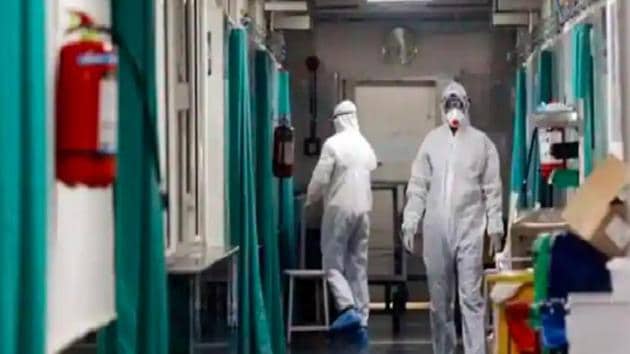
There have been reports from across the world commiserating the tragic circumstances of how Covid-19 patients have had to face death alone in the ICU, without being allowed to meet their near and dear ones during those final moments. An Indian web magazine for doctors recently conducted a poll on whether it was unethical and inhuman to deny immediate family members their right to be present at the bedside of their dying relative in a Covid ICU? At the time of writing this piece, the results of the poll showed the opinion was equally divided.
Surprisingly, many felt that family members should not be allowed to visit critical patients in the ICU. Presumably, their opinion was an impulsive one, dictated largely by the current Covid phobia. Had the same question been posed prior to the pandemic and unrelated to it, their answer may well have been otherwise. I wonder whether the poll results would be the same if the voter base was non-doctors. Many doctors, under these difficult circumstances, will tend to think only from the point of infection control and transmission.
However, decisions regarding allowing the presence of immediate family members at the bedside of their dying loved one are not simply matters of infection control and we should not allow them to be so. These are decisions to be taken primarily from the critical patient’s perspective. These are matters of humanity, medical ethics, rights of the dying, the family and the patient’s psyche.
Firstly, about the patient’s psyche. No one would dispute that the psyche plays a crucial role in the recovery process. A less anxious and calmer patient in a positive frame of mind is better placed to fight his disease. The environment in most of our ICUs is not conducive to enable this relaxed state of mind. On the contrary, the ever-busy, ever-noisy, cold and depersonalised ICU environment is likely to worsen one’s anxiety and instill a fear. Many patients admitted to ICUs lose their circadian body rhythm (physiological body responses to a cycle of day and night) because of lack of sleep and natural light. All this can play havoc on the psyche of ICU patients. A condition called ICU delirium – where ICU patients experience a sudden and intense confusion that can include hallucinations, delusions and paranoia – is not uncommon among adult ICU patients.
In this hostile foreign environment, the presence of a close family member by your side, even for a short time, can provide the much-needed timely healing touch and psychologically stabilising connection that an ICU patient needs. The kindness and warmth provided by some doctors and nurses cannot substitute the strength and moral support that loved ones can give. This family support can also help significantly in overcoming the illness.
The solution to reduce the patient’s anxiety and restlessness in the ICU should not always be sedation, as is practised too often in ICUs. Even patients on ventilators, can be fully conscious, calm and oriented. Every patient on ventilator does not need to be heavily sedated. When my mother was in the ICU on a ventilator two years ago, I have had normal meaningful communication with her. She could not vocalise because of the tube in her trachea, but used sign language effectively. Patients on ventilators who are not sedated can also use their phones and communicate with their near and dear ones by texting. Prolonged sedation has been linked to a higher incidence of ICU delirium and there have been global campaigns by Intensivists to reduce the use of sedatives and ventilators in the ICU. Sedation also hampers and prevents the much-needed emotional and psychological interaction with close family members. This interaction has also been shown to reduce ICU fear and psychosis.
Let us now look at the question (of allowing family members to be with the dying in the ICU) from the human rights angle. For lack of information about any Indian charter of rights in this regard, I quote the European charter of rights of the dying and Recommendation of the Council of Europe No. 1418/1999 on “protection of the human rights and dignity of the terminally ill and dying”. One of the clauses clearly mentions: “To encourage the relatives and friends to accompany the terminally ill and dying persons and that their efforts are supported by professionals.” These rights have been widely accepted, and there is no reason why they should be denied to Covid patients in the ICU, just because of concerns regarding infectivity.
Moreover, concerns regarding spread and transmission of the infection as a reason to deny a family member access to visit the critical Covid patient are exaggerated and unfounded. With use of proper personal protective equipment, social distancing and hand washing etc., family members can balance the risk to themselves and others, just as the caring professionals do. Where do all these concerns regarding infection go when reporters and VIPs are allowed to tour the Covid ICUs? I agree that in busy make-shift ICUs, too many people inside the ICU may be a hindrance, but surely one can easily regulate the timings and duration of the family visits to avoid crowding.
As I write this, some hospitals in the UK have realised that denying access to family members in Covid ICUs was indeed wrong and against the rights of the patient and family. Hopefully, hospitals across the world will follow suit.
It is not just a question of ethics and rights, but much is to be gained even in aiding the recovery. Therefore, there is no justification in denying family members the right to visit critical Covid patients in ICUs.
Let us put ourselves in the shoes of that dying person, whose life and dreams are being suddenly snatched away by this rogue virus. While providing patients the best possible medical care, let us not forget that they are also spouses , parents, children, breadwinners and siblings, and in their final moments, they need their loved ones. Maybe even more than they need us, doctors?
The author is a consultant pediatric surgeon and pediatric urologist at Lilavati Hospital & Research Centre, Bandra
Stay updated with all the Breaking News and Latest News from Mumbai. Click here for comprehensive coverage of top Cities including Bengaluru, Delhi, Hyderabad, and more across India along with Stay informed on the latest happenings in World News.


