
 E-Paper



IIT-B microsatellite Pratham sends signal after two months
Beacon signal is the signature of the satellite, which on decoding tells it’s ‘Pratham, student satellite of IIT-Bombay’; it also means that the satellite is live, stable and operational...

 Prefer HTon Google


Two months after communication with Pratham, the microsatellite launched by Indian Institute of Technology – Bombay (IIT-B) stopped, the ground station has once again started receiving beacon signals.
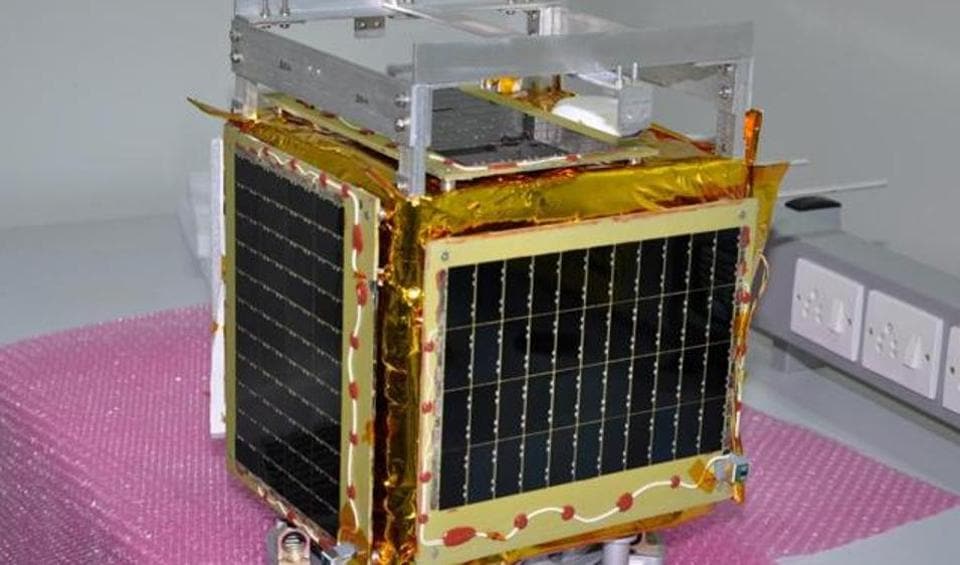
“About a week after the launch, beacon signals were recorded at ground stations across the world and at IIT-Bombay. After that, for more than a month we were facing technical difficulties, and unable to receive the signal,” said Ratnesh Mishra, project manager, Pratham.
The beacon signal is the signature of the satellite, which on decoding tells it’s ‘Pratham, student satellite of IIT-Bombay’. It also means that the satellite is live, stable and operational.
It was on December 16 that the Pratham team received a message from a HAM group based in Netherlands on having heard the beacon signal. The next morning, on December 17, IIT-B’s ground station received the signal as well.
“The satellite generally passes over India twice or thrice a day. On December 17, we received strong beacon signals thrice; twice during the day and once at night. Since then we have been getting signals twice a day,” said Mishra.
While the beacon signal has come through, the Pratham team is yet to get lucky with the second signal – the down-link signal – that signifies the functionality of the satellite such a battery voltage and temperature. It’s only when the ground station receives both the signals will they be able to start processing the data, which the team estimates will start next week.
“We still haven’t received the down-link signal, and are analyzing and discussing the technical issues surrounding it. We did receive a faint signal when the satellite was passing over India, but we haven’t been able to confirm it,” said Mishra.
Pratham – a 10kg payload that was ejected in to the earth’s orbit by the Polar Satellite Launch Vehicle C-35 – will measure total electron count in the ionosphere to improve the accuracy of the Global Positioning System, and predict tsunamis.
Designed to fit within a 30-cms cube, the indigenously built microsatellite will orbit at an altitude of 670kms. The life cycle of the mission is four months, but the satellite will be able to continue collecting data on the electron count.
About Pratham
It is the first student satellite designed and developed by the Indian Institute of Technology – Bombay (IIT-B)
The aim of the project is to measure total electron count of the ionosphere above India and Paris. The other being to acquire satellite and space technology facilities
The cost of the project is about Rs 1.5 crore
The life of the mission is four months – two months to validate data against known standards, and another 2 months for additional data that is correct
A memorandum of understanding was signed between IITB and ISRO in 2007
Microsatellite missed the launch in 2012 due to various reasons such as lack of manpower, technical faults, and administrative delays.
Also read
‘Pratham’ in orbit: The story of IIT Bombay’s student-built microsatellite


