
 E-Paper



Indian scientists help detect black holes in space through gravitational waves
The discovery, dubbed GW170608, is significant because it is the first case where the Laser Interferometer Gravitational-Wave Observatories (LIGO) has directly recorded the mass of lighter black holes

 Prefer HTon Google


Indian scientists were part of a multinational team which detected a gravitational wave from the lightest black hole merger. Gravitational-wave observations provide the most direct means of detecting black holes. A black hole is created when a star dies and the matter gets squeezed into a tiny space under a heavy force of gravity, trapping in the light.
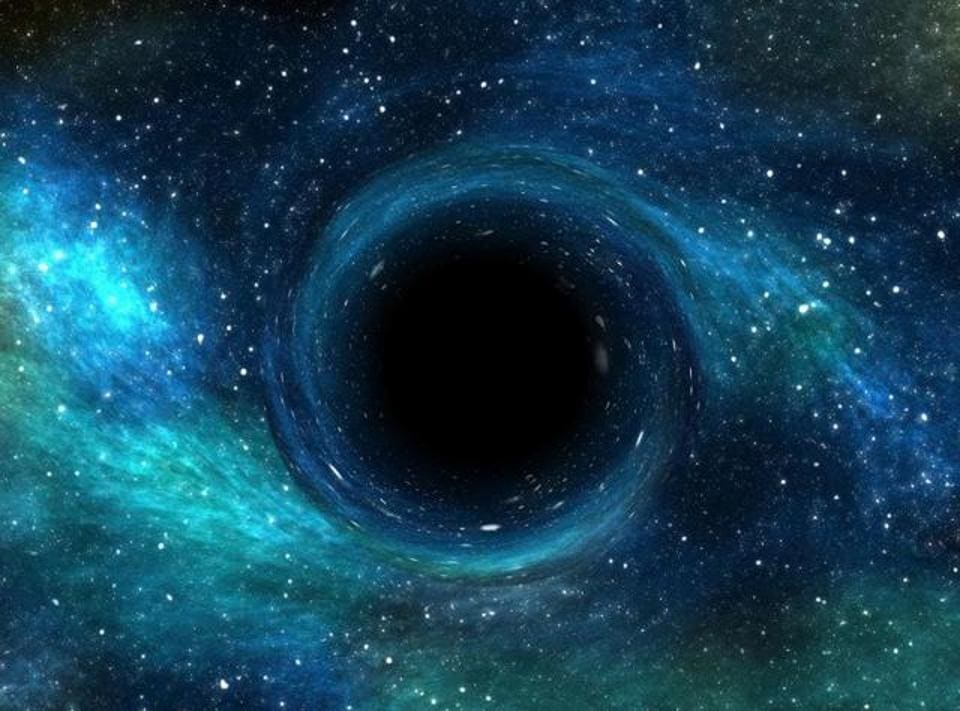
Though this is the sixth gravitational wave that has been detected in a span of two years, scientists said the latest discovery, dubbed GW170608, is significant because it is the first case where the Laser Interferometer Gravitational-Wave Observatories (LIGO) has directly recorded the mass of lighter black holes. Up until now, black holes with lighter mass had only been detected indirectly through electromagnetic radiation such as X-rays.
On June 8, two LIGO detectors recorded gravitational signals via the merger of two relatively lighter black holes that started about a billion light years from the earth. The gravitational wave first passed through Hanford’s interferometer and reached the Louisiana detector seven milliseconds later. This finding was reported on Thursday. The two black holes, which were 7 and 12 times the mass of the sun, merged into one black hole 18 times the mass of the sun. The power generated as a result of the final collision was equivalent to about one solar mass.
“Gravitational-wave observations provide the most direct means of detecting black holes, since the gravitational waves are produced directly by the motion of the black holes”, said Parameswaran Ajith, who is part of the LIGO Scientific Collaboration, and leads astrophysical relativity group at the International Centre for Theoretical Sciences – Tata Institute of Fundamental Research, Bangalore.
He added, “What was surprising was that most of the black holes detected from gravitational wave observations are much more massive than those detected by x-ray observations. However, the presently announced signal was produced by the lightest binary black hole system observed by LIGO so far.”
Over the last four decades, x-ray observations have been the only evidence of black holes. X-ray observations look for binary systems where a normal star is orbiting a black hole. Because of gravity of the black hole, the star’s gas gets attracted and falls on the black hole. The gas heats up and produces X-rays, from which scientists infer the mass of the black hole. Gravitational-wave signals detected by LIGO and Europe-based Virgo observatories are produced by the merger of black holes in distant galaxies that are billions of light years away from us.
“This discovery will enable astronomers to compare the properties of black holes gleaned from gravitational wave observations with those of similar-mass black holes previously only detected with X-ray studies, and fills in a missing link between the two classes of black hole observations,” read a news release from LIGO Caltech.
When gravitational waves were first discovered on September, 14, 2015, proving correct Albert Einstein’s theory, the final black hole mass was 62 times the mass of the sun – one black hole was 29 times the sun’s mass, while the other was 36 times the mass of the sun. The energy generated was equivalent to three solar masses, with 50 times the luminosity of all stars in the universe.


