
 E-Paper



Maharashtra govt to get its hawker policy ready before polls
While the policy will apply to whole state, it will have a major impact on Mumbai and its voters considering the high number of hawkers who live in the financial capital

 Prefer HTon Google


With a month to go for the crucial Brihanmumbai Municipal Corporation (BMC) polls, and just about a week for the model code of conduct to come into effect, the Bhartiya Janata Party-led Maharashtra government is ready with its new hawkers’ policy that will be placed before the Cabinet any time now.
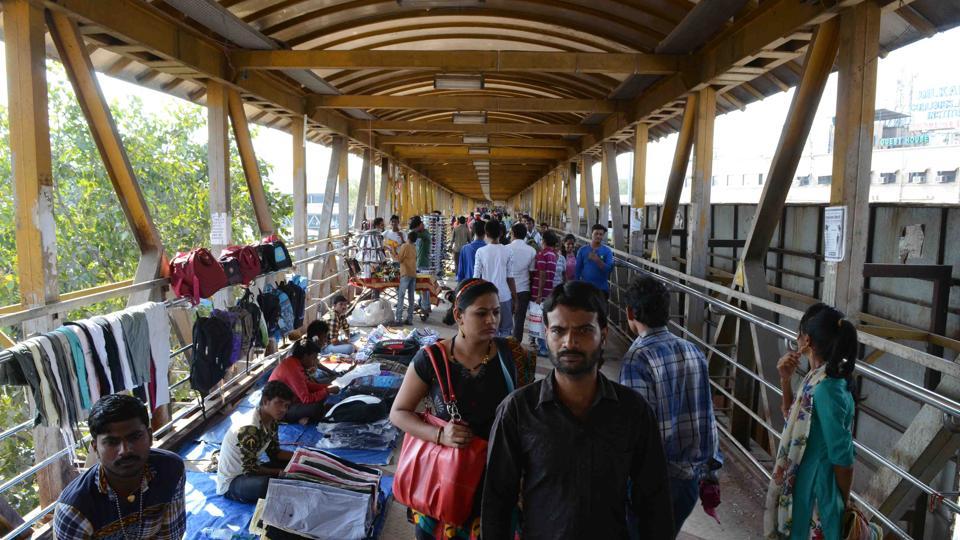
While the policy will apply to whole state, it will have a major impact on Mumbai and its voters considering the high number of hawkers who live in the financial capital. The government hopes the hawker policy will help it woo the north Indian population — as a majority of hawkers are from the community — which forms 28% of the vote share.
The new hawking policy aims to monitor and regulate hawking. It will assign demarcated pitches and hawking zones. The policy is be based on the Street Vendors (Protection of Livelihood and Regulation of Street Vending) Act, 2014, put in place to protect the rights of the community.
Sources in the know said hawkers will be classified into three categories — mobile hawkers, stationery hawkers and permanent hawkers. Those who cannot be given permanent place will be classified as mobile hawkers. The municipal corporation, however, is yet to conduct a survey to ascertain the actual number of hawkers. The survey has to be done in 45 days.
The policy will also provide for weekly markets and night markets, street fests and temporary plazas that may be allowed at private plots. Hawkers will be given unique identification cards that they will need to display at their shops.
The BMC had in 2014 started surveying hawkers. It distributed 1.2 lakh forms for this. The survey followed a 2013 Supreme Court order to implement the national hawking policy of 2009.
In a bid to reach out to the north Indian community, CM Devendra Fadnavis, in September last year, attended the ‘Baati-Chokha’, a traditional north Indian menu at a public dinner programme organised by the party’s leaders from the community. Later in November, he attended a Chhath Puja.
The move to woo the community, said political observers, comes as the BJP is considering contesting the polls to the BMC — currently ruled jointly with the Shiv Sena — on its own this time.
Read: Mumbai civic body acts against 1.1 lakh illegal hawkers


