
 E-Paper



Maharashtra locked down, elephant family steps out
Instead of moving after sunset, the five-member herd — two tuskers, a female and two calves — has been moving during the day, which is unusual


Forest officials from Sindhudurg district have been getting daily calls from worried residents reporting the movements of Maharashtra’s only herd of elephants along the state’s boundary with Karnataka. The herd has damaged crops worth ₹16 lakh during the lockdown.
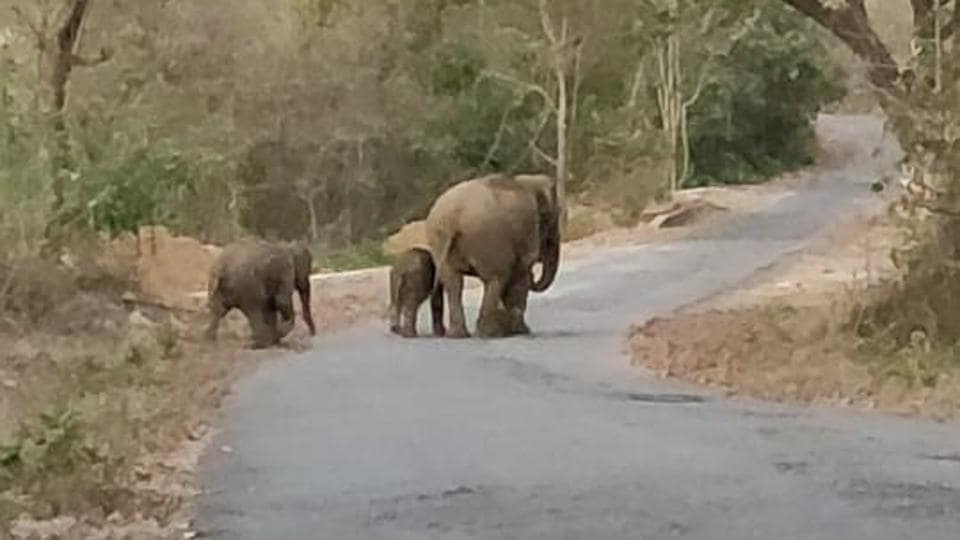
Instead of moving after sunset, the five-member herd — two tuskers, a female and two calves — has been moving during the day, which is unusual. “Elephant movement at Tillari zone of Dodamarg during lockdown, especially along arterial and main roads connecting villages, has been observed during the day. This is the most unusual sighting in our district. Human disturbance had forced them only to move after sunset when there was complete silence, but this has changed completely since the last week of March,” said Samadhan Chavan, deputy conservator of forests, Sindhudurg.
The forest department has set up awareness campaigns and elephant camps to aid local residents. “The movement of elephants during daytime increases chances of human-animal encounters apart from crop damage. Local volunteers and forest guards are keeping a watch on these developments and informing local authorities,” said Nitin Kakodkar, principal chief conservator of forest (wildlife), Maharashtra.
According to the forest department’s estimate, the herd has damaged crops worth approximately ₹16 lakh during the lockdown. “We were paying an average of ₹10 lakh per month as compensation for the damage every night before the lockdown. Now, owing to their rapid movement during the day, the area of damage is likely to be twice as much. We are yet to collate the final estimate,” said Chavan.
Three elephant camps have been set up in Heware, Bhekuli, and Sateli villages. “Each camp has five volunteers, some with prior experience as mahouts, and their job is to raise awareness among villagers, monitor conflict or crop damage, and elephant movement,” said Chavan.
Between April 2019 and March 2020, the Sindhudurg forest department gave ₹1.2 crore as compensation to villagers for crop damage by wildlife (including elephants, bison, deer etc.). The figure was ₹1.04 crore during April 2018 to March 2019.
“What is happening at Sindhudurg is truly unique for the state’s only elephant family,” said V Clement Ben, chief conservator of forest (Kolhapur). “From 2002 onwards, these pachyderms have dispersed from Karnataka to Sindhudurg in search of food and water resources. Transient movement of a few individuals across both states is regularly observed.” Overall, there are nine elephants in Maharashtra. One more tusker is located near the Tillari dam area, which is cordoned off using bamboo plantations, and the animal does not leave its habitat. There are three more (two tuskers and a female) present in the hilly terrain near Ghatkarwadi village at Ajara, Kolhapur district. “Elephants in the Kolhapur region are more isolated from each other since they are not a family. They mostly stay inside the forest and come out at night,” said Ben.
The 38-km long Dodamarg wildlife corridor that connects Radhanagari Wildlife Sanctuary in Maharashtra to Bhimgad Wildlife Sanctuary in Karnataka frequently witnesses elephant and tiger movement.
AT SINDHUDURG: 74% TURTLE HATCHLING SURVIVAL RATE
According to the forest department, the total number of Olive Ridley turtle nests between January and April was 59 in Vengurla, Malvan, and Devgad talukas, with 6,409 eggs and 4,767 hatchlings safely making their way to the sea. This year’s survival rate of 74.3% is higher than that of 2017 and 2019.
In Vengurla, 38 nests were recorded in seven villages, with 4,237 eggs and 3,204 hatchlings making their way into the sea (survival rate: 75.6%). At Malvan, 10 nests in two villages had 1,055 eggs and 758 hatchlings (survival rate: 72%). At one village in Devgad, 11 nests had 1,117 eggs and 805 hatchlings (survival rate: 72%). “Between 2017 and 2019, the number eggs may have been more but the hatchlings that made it successfully to sea did not cross 4,300. This year due to less disturbance during the lockdown, the survival rate is better,” said Samadhan Chavan, deputy conservator of forests, Sindhudurg.
Stay updated with all the Breaking News and Latest News from Mumbai. Click here for comprehensive coverage of top Cities including Bengaluru, Delhi, Hyderabad, and more across India along with Stay informed on the latest happenings in World News.


