
 E-Paper



Sanjay Gandhi National Park wants Mumbai to get a better view of big cats, to submit new proposal for leopard safari
The CZA had, in October, denied permission for a safari at the 20-hectare proposed site, citing security concerns owing to the dense tree cover. As leopards can climb trees, it would have posed a man-animal conflict threat to tourists during the safari

 Prefer HTon Google


After the central zoo authority (CZA) rejected their proposal for a leopard safari last year, officials of the Sanjay Gandhi National Park (SGNP) in Borivli have come up with two new proposals to display the big cats for Mumbaiites.
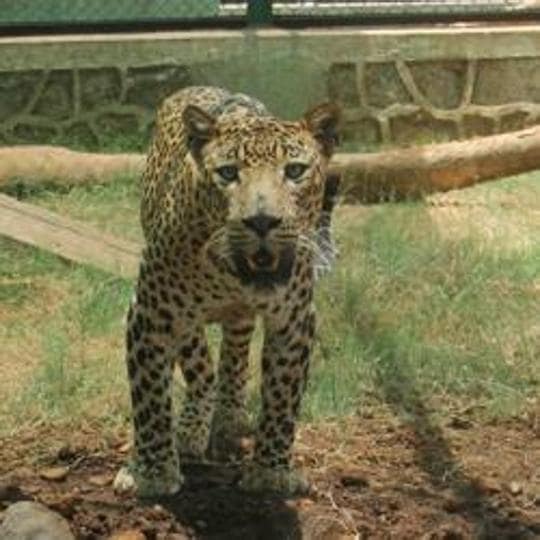
The CZA had, in October, denied permission for a safari at the 20-hectare proposed site, citing security concerns owing to the dense tree cover. As leopards can climb trees, it would have posed a man-animal conflict threat to tourists during the safari.
The SGNP will soon shortlist one of the two proposals and submit it to the state zoo authority (SZA) over the next fortnight. The state authority will then resend the proposal to the CZA.
“Taking the issues raised by the CZA into account, we have come up with two locations for the safari. We will narrow down on one before submitting the proposal to SZA,” said Anwar Ahmed, chief conservator of forest, SGNP.
The chief conservator of forest, SZA, senior officers from the state forest department and SGNP officials on Wednesday conducted a joint visit to check the feasibility of the project.
According to Ahmed, the first and most-likely proposal identifies a separate area across two hectares within either the tiger or lion safari to house eight leopards [four pairs]. “The idea is to have a safari within a safari,” he said, adding, “As the CZA has granted permission to the tiger and lion safaris, there should not be an issue with this site.”
The second proposal looks at setting up a safari along the toy train, which is in the shape of the number, 8, travelling across Krishnagiri Upava, a 5.5 sqkm area of SGNP. “A much smaller area, about half-an-hectare, has already been sanctioned as zoo by the CZA. The idea in this case is to have a train safari, but it can house only four leopards [two pairs]. This is the only drawback of the proposal,” said Ahmed.
“We have decided to have a big trench at either of the sites. The layout will be done in a way to ensure the animals cannot jump out. The trenches will be fenced and aligned with trees,” said Ahmed. “Tourists can see the movement of leopards from behind a protected fence, similar to a 6.5-m high fence at the current lion and tiger safaris.”
After getting the permission, the SGNP will look at appointment of a consultant with expertise in the field of eco-tourism development and prepare a detailed project report, including concept plans, designs and detailed estimates, to bring the park on a par with international parks.
If all permissions are granted and construction starts by mid-2017, the safari can commence by 2019, said park officials.
AUTHORITIES SPEAK
Officials from the state zoo Authority (SZA) said while the plans seemed feasible, the layout for an open space for easy movement of leopards needs to be worked out
“Safaris are nothing but a zoo. The captive animals need some free space. We cannot have a dense forested area, neither can there be any tree felling. We are waiting for the final proposal, which will be submitted to CZA,” said Sanjay Thakre, chief conservator of forest, SZA.
LEOPARDS AT SGNP
The park is currently home to 15 leopards - eight female and seven male
They have been kept in captivity at eight cages in three buildings
The leopard rescue centre is spread across one-and-half acres
Fifteen-foot-long wooden parallel bars have been erected for animals to improve their balance and resting areas
Shrubs, palatable grasses and medicinal plants such as lemongrass, spear grass, basil, dhub, bhama, durva and bermuda grasses, which can improve digestion of leopards, will be planted within the enclosure.
THE PARK
The SGNP is home to 274 species of birds, 35 species of mammals, 170 butterflies and 1,300 flowering plants
HT had reported in June that a study undertaken by the SGNP, in collaboration with the Wildlife Institute of India (WII), found 35 free-roaming leopards in and around the national park.
Read more: Living free: 35 leopards roam Mumbai’s forests
Caught on CCTV camera: Leopard crossing street in Mumbai
Green diet, exercise: New fitness regimen for Mumbai national park leopards


