
 E-Paper



World Thalassemia Day: Kopri resident wants to free India of the blood disorder
Over the last decade, 77-year-old Thadharam Tolani has held 290 camps in 200 cities across seven states to spread awareness about thalassemia


Dressed in all-white kurta-pajamas, 77-year-old Thadharam Tolani who is often seen riding around Kopri on his scooter could be any other friendly senior citizen. However, what sets this septuagenarian apart is that he is on a mission. A mission to eradicate thalassemia from the country.
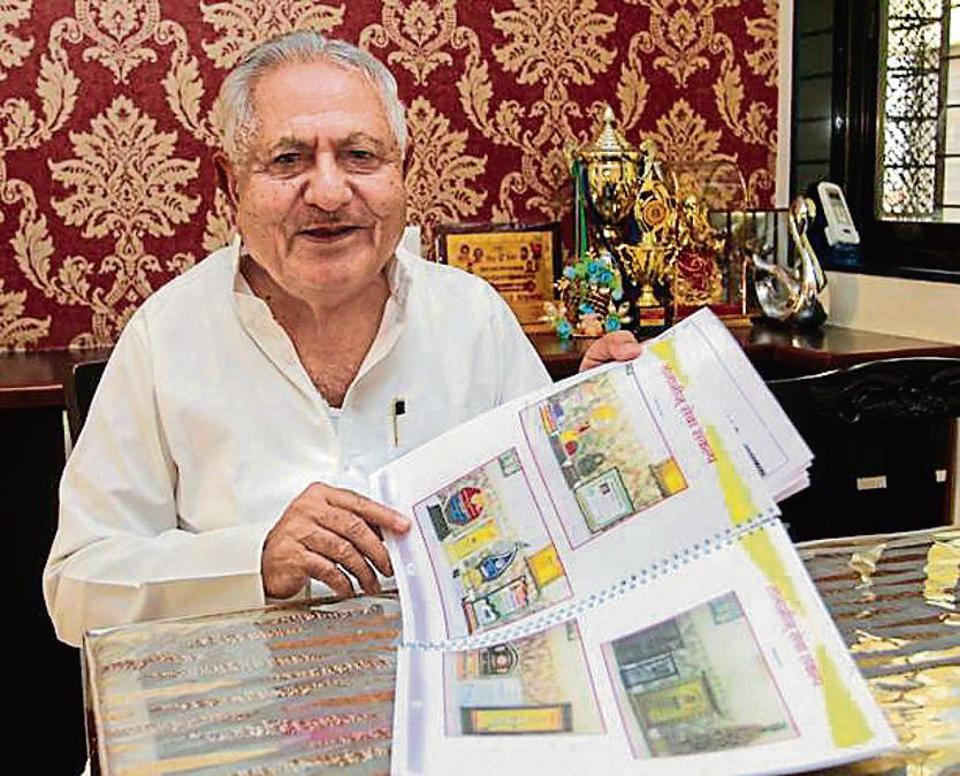
Over the last decade, Tolani has conducted 290 camps in 200 cities across seven states in India to spread awareness about thalassemia. Tolani Seva Mandal, the organisation founded by him in 2013, raises funds for thalassemia-affected children. Apart from this, they regularly run free blood test camps for people across the country.
Thalassemia, a condition wherein the body stops producing adequate haemoglobin, causing anaemia, affects several people around the world. According to Tolani, every year around 10,000 to 12,000 children are born with thalassemia major in India. There are around three lakh thalassemia-affected people in India currently.
On World Thalassemia Day on May 8, Tolani’s decade-long fight against thalassemia continues. “If people become aware and screen their blood group before getting married, then within three years we can completely abolish thalassemia from the country. However, for that, the government should make it mandatory,” says Tolani, who was also a corporator in Kopri before. He gave up his position to fight for this cause.
It was the death of his grandson who was a thalassemia patient that gave Tolani the push for taking up this struggle against the disease in 1988. “Until my grandson was detected with thalassemia, I was not aware about the problems attached with this deficiency. As very less information was available on this, I contacted many hospitals and social organisations. Even after trying different things, my grandson could not survive. I then decided to spread awareness for the prevention and cure of thalassemia,” he said.
After a lot of research, Tolani realised that only around 5% people had knowledge about thalassemia in the country back then. “So, I prepared pamphlets explaining the consequences of thalassemia to people. During community gatherings, I conducted sessions and also distributed leaflets to create awareness,” he says.
After garnering enough information about the disease, he arranged a testing camp in Kopri in 2007. Thousands of people attended the camp and some were tested as thalassemia minor and around 50 of them were tested as thalassemia major. Some children were also detected with thalassemia.
“A thalassemia blood testing unit worth ₹37 lakh was bought by tying up with an NGO. As the cost of a blood test to screen thalassemia in those days was ₹1,500, the treatment amounted to lakhs. However, we now offer thalassemia testing for just ₹150 for those who can afford it for rest free at our camps. We offer assistance in the treatment of thalassemia major patients as well,” said Tholani. The treatment for thalassemia major costs more than a lakh for every patient, every year, including medical tests, medication, etc.
In 2010, Tolani spread his movement beyond Thane, Mumbai and neighbouring areas. He wrote to ministers from various states asking them to make thalassemia testing free and provide free blood bottles. “Gujarat was the first state to implement it two years ago. Thalassemia blood test was made compulsory for school and college students there. In Maharashtra, Nagpur is the only district that provides free testing for thalassemia,” said Tolani, for whom age is no deterrent in this fight for a thalassemia-free India.
What is thalassemia?
Thalassemia is a genetic blood disorder. Those affected by the disease are not able to produce enough haemoglobin, which causes severe anaemia and chronic fatigue. There are two types of thalasemmia – major and minor – both inherited in the same manner. It is passed to children by parents who are carrying the mutated Thalasemmia gene.
Thalassemia is passed on genetically when a child inherits two mutated genes from each parent.


