
 E-Paper



Andheri-Saki Naka: This route wasn’t made for walking
While traffic crawls at a snail’s pace, pedestrians are forced to walk on the road because pavements are occupied by hawkers, Kailash Korde and Kunal Purohit report.


An international airport, a Metro rail line and the biggest multinational firms — the 8.5-km-long Andheri-Kurla road houses all this and more.
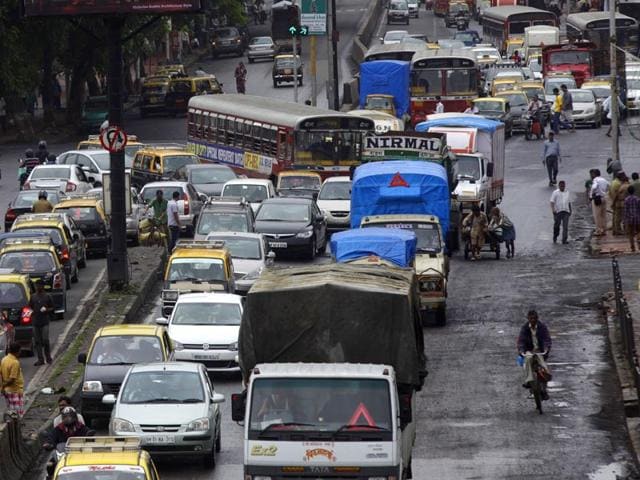
However, despite all these pluses, the road — possibly one of the widest arterial roads in the city — is in shambles. Traffic crawls at a snail’s pace, broken paver blocks are strewn all over the road, pedestrians are forced to walk on the road because the pavements are a mess and illegally parked vehicles occupy at least two lanes of the road.
The neglect is shocking especially because this road is a crucial link to important areas such as Mumbai's first economic zone, Santacruz Electronics Export Processing Zone (SEEPZ), the city’s only Maharashtra Industrial Development Corporation (MIDC) complex and the Chhatrapati Shivaji International Airport, among others.
“The poor quality of the roads on this stretch is the biggest reason for the terrible jams here,” said a traffic policeman, who spends nearly eight to ten hours each day trying to regulate traffic at a major junction on this road.
The links on this stretch have also been poorly developed. The Andheri-Kurla road branches out to significant areas such as the airport, Marol or at MIDC. However, the most significant three branches are at Saki Naka — where it leads to the Saki Vihar Road, continuing on to the Andheri-Ghatkopar Road and a third branch that tapers to Kurla.
All the three roads have plenty of bottlenecks, which in turn disrupts the flow of traffic on the Andheri-Kurla road.
Another traffic policeman said these bottlenecks, especially at the Khairani junction on Saki Vihar Road, results in traffic all the way up to Marol.
Commuters said the new Metro line has helped to a large extent. “The Metro remains crowded during morning and evening peak hours,” said Deepak Waghela, Andheri resident, who works in a private firm at Marol. “But spending 10-15 minutes in a crowded AC metro coach is always better than travelling in a packed bus for an hour or more,” he said.
While the Metro rail has brought relief to bus and autorickshaw commuters on the Ghatkopar-Andheri route, bus commuters from Kurla remain hassled. However, that does not take away from the chaos that surrounds the three railway stations nearby — Andheri, Ghatkopar and Kurla.
This road, however, also has multiple points of entry/exit, one almost every 200m. This, too, ends up slowing down traffic.
In some ways, the stretch is symptomatic of all the problems that plague the city’s business hubs. The question now that authorities must answer is if the stretch can be salvaged before it is too late.
Stay updated with all the Breaking News and Latest News from Mumbai. Click here for comprehensive coverage of top Cities including Bengaluru, Delhi, Hyderabad, and more across India along with Stay informed on the latest happenings in World News.


