
 E-Paper



Automation at the field helps farmer in yielding more despite shortage of water
Automated farming helps farmer save 20% water and increase his yield by at least 15% resulting in the rise in his overall profit from farming


At the time when farmers in Marathwada are deserting the parched region, one tiller is making hay in times of drought.
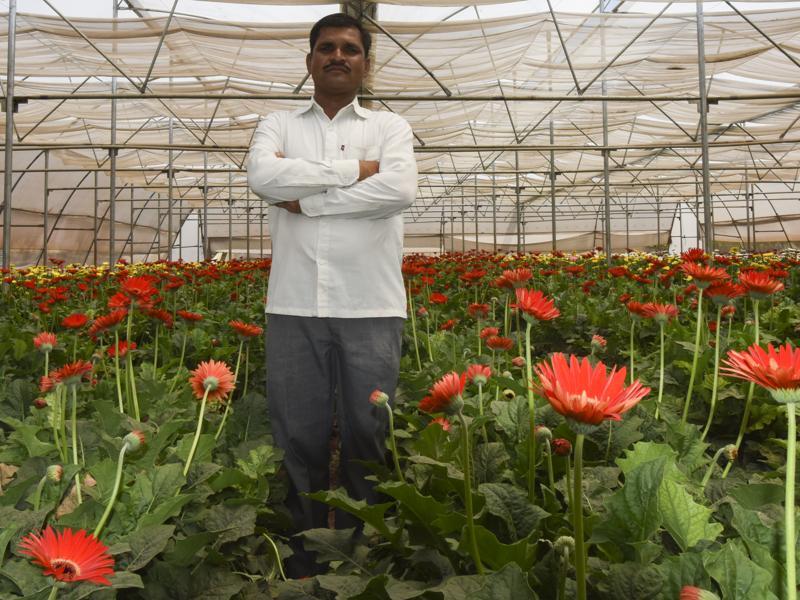
Prakash Padwal, a 41-year-old farmer, now decides the amount of water and fertilizer to be given to his grape orchard and plants of gerbera flowers in his polyhouse, sitting in front of a computer at the corner of his 13-acre-farm at Upale village in Osmanabad.
Automated farming has helped him save 20% water and increase his yield by at least 15% resulting in the rise in his overall profit from farming.
Padwal, who has studied only till class 12, is one of the three farmers in the district who have adopted the automation by setting up a computerised mechanism for modern farming.
The rate of fertilizer, water and pesticides is decided and controlled by the mechanism set up in a 10x12sqft room at his farm. The accuracy in providing water, depending upon the moisture and temperature outside, has not only pushed the productivity but also resulted in reducing the manpower.
“I get the alerts from an agency I have subscribed to about the moisture and evaporation rate. Depending on that I adjust my computerised mechanism that releases the water. The pesticides and fertilizers, too, are released through this mechanism ensuring that no added amount of the elements required for the crops are released. This has resulted in the rise in the production of grapes, quality of gerbera and other crops,” said Padwal.
His agriculture production was badly hit owing to the shortage of water in the parched Marathwada. But the automation he adopted, has helped him tide over the shortage.
“It is true that I could not cultivate my entire land because of the shortage of water. But I could maximise the total yield in the area under cultivation because of the system I adopted. I used to grow 8 to 10 tonnes of grapes an acre earlier. It has now gone up to 15 tonnes because of the controlled use of the things. This has helped me make a profit of Rs 4.5 lakh a year,” says Padwal.
It has also helped him in saving time and manpower too.
“I used to sleep in the orchard to ensure the plants are watered as per the schedule set on alarm. Now, everything is taken care of by the mechanism at the field,” he said.
Padwal got the automation mechanism idea, set up by spending Rs 15 lakh, during one of the workshops conducted by an Australia-based expert at Nashik. He attends at least five to six such workshops a year and implements the ideas he gets from attending them.

Stay updated with all the Breaking News and Latest News from Mumbai. Click here for comprehensive coverage of top Cities including Bengaluru, Delhi, Hyderabad, and more across India along with Stay informed on the latest happenings in World News.


