E-Paper



Politics behind Punjab’s flip-flop on battle against narcotics
Soon after chief minister Parkash Singh Badal took charge, police went all out against drug smugglers along the 553-km border with Pakistan, besides cracking down on the supply chain in Punjab. Most of the drugs trafficked in Punjab originate from Afghanistan and are processed in Pakistan’s tribal areas.

 Prefer HTon Google


Much before its stunning return to power in 2012 in Punjab, ruling party Shiromani Akali Dal (SAD) declared a war on drugs. Party president Sukhbir Singh Badal’s promise to rid the state of the menace, and the taint associated with narcotics abuse, put the Akalis back in the saddle.
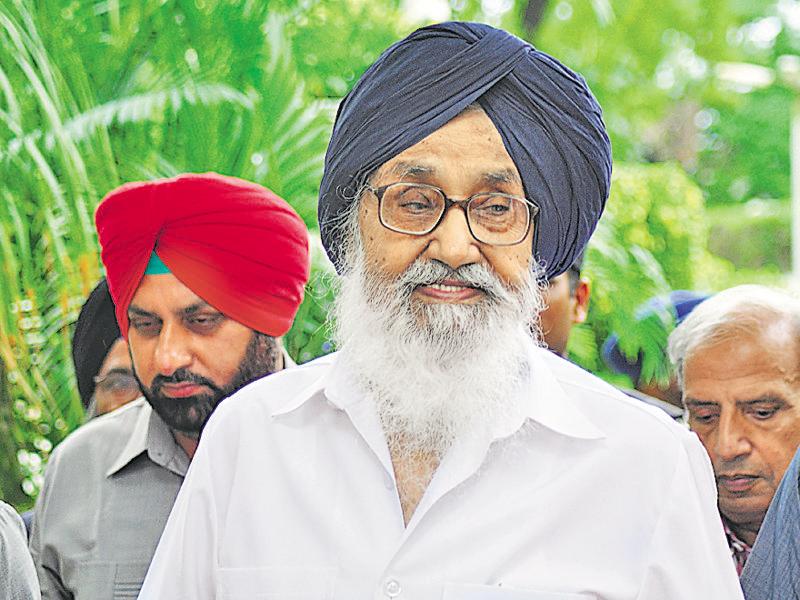
Soon after chief minister Parkash Singh Badal took charge, the police went all out against drug smugglers along the 553-km border with Pakistan, besides cracking down on the supply chain in Punjab. Most of the drugs trafficked in Punjab originate from Afghanistan and are processed in Pakistan’s tribal areas.
Ironically, the crackdown backfired for the Akalis in the 2014 Lok Sabha elections.
The drug issue dominated the campaign and the Aam Aadmi Party (AAP) won the perception battle, bagging four out of the 13 Lok Sabha seats. The Akalis were alarmed. “The opposition directed public anger against us and we paid the price,” Badal senior conceded.
Cut to 2016. The controversy surrounding filmmaker Anurag Kashyap’s Udta Punjab has pitch-forked the drug issue back to the spotlight as Punjab heads for another election. This time, the AAP sniffs an opportunity as wary Akalis look to revive the steam in their campaign against drugs, while a confused Congress hopes for a comeback from a decade in the wilderness.
Its offensive against drugs has ended up as a double-edged sword for the Akali government. The campaign has reinforced the view that drugs are indeed rampant in Punjab. At the core of this blame game is the 2017 elections. The AAP is using the issue as ammunition to taste power in the state.
The government, in a knee-jerk reaction, has not only slowed down its drive but is also in denial about the problem. It says the issue is not as serious as is being made out to be. Rather, it sees an attempt to malign Punjab and Punjabis.
Censor Board chief Pahlaj Nihalini expressed a similar opinion, saying Udta Punjab defames the state’s people by wrongly depicting that 70% of them consume drugs.
But the all-out offensive seems an abandoned cause, a pale shadow of the Akalis’ war cry against drugs in their poll manifesto in 2011.
The Punjab government has blamed the Border Security Force for failing to check the supply chain from Pakistan. “We are fighting the nation’s war,” Badal told the Vidhan Sabha recently, asking the Centre to seal the border.
Police personnel have covered 2,900 villages under the feedback campaign launched by the government, inspector general of police Ishwar Singh, who is the director of the state narcotics control bureau, said. “We are very serious in every respect. The institutional response has been prompt (against drugs). There is no question of slowing down.”
The 181 toll-free helpline has led to the registration of 85 FIRs in drug-related cases. The financial investigation of such cases is being handled by DIG-rank officers, Singh said.
The shift in the Akali strategy in the fight against drugs came when arrested lynchpin Jagdish Singh Bhola, an Arjuna award-winning wrestler-turned-dismissed cop, told the press on January 6, 2014, that cabinet minister Bikram Singh Majithia was the “real kingpin of the drug racket”.
Majithia is the younger brother of Union minister Harsimrat Kaur Badal, the wife of deputy chief minister Sukhbir Singh Badal. He has dismissed the allegations, calling them “wild imagination”. But Bhola’s bombshell triggered a political earthquake, the tremors of which continue to rattle political discourse two years on.
This damning disclosure, closely investigated by the Enforcement Directorate, led to Majithia appearing before the ED. It was enough to put the once-on-the-offensive Akalis on the defensive. The Congress’s Lok Sabha MP for Jalandhar, Santokh Chaudhary, too had to appear before the ED but the Akalis bore the maximum political damage. An Akali chief parliamentary secretary, Avinash Chander, is also embroiled in the case.
Such weak spots in the Akalis’ fight have derailed Punjab’s war on drugs. The flip-flop has given the opposition, particularly the AAP, ammo to target Akalis and make drug menace the central plank of their election campaign in the border state.