Boris Johnson has left office as the Prime Minister (PM) of the United Kingdom (UK) after just three years in office, marking an era of volatility in British politics. Johnson’s predecessor Theresa May was also forced out after three years, though he can insist he has much more to show for his short spell in power. He delivered Brexit, unblocking the stalemate in Parliament that had brought down May, and was rewarded with a significant Conservative majority in the 2019
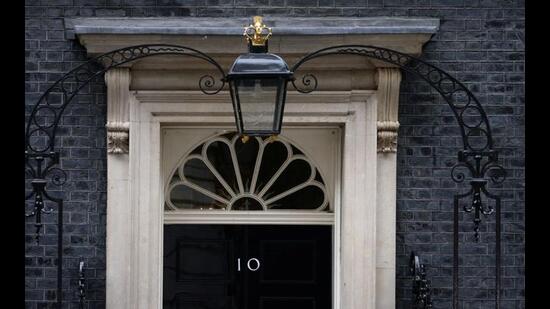
Boris Johnson has left office as the Prime Minister (PM) of the United Kingdom (UK) after just three years in office, marking an era of volatility in British politics. Johnson’s predecessor Theresa May was also forced out after three years, though he can insist he has much more to show for his short spell in power. He delivered Brexit, unblocking the stalemate in Parliament that had brought down May, and was rewarded with a significant Conservative majority in the 2019 general election.
Johnson’s premiership was dominated by Covid-19. Initially, this health emergency produced an enormous degree of social and political consensus — and increased trust in the government. Yet, that shared experience of a pandemic that affected us all ultimately proved fatal for his government. Revelations of a drinking and party culture in Downing Street brought significant public anger. An accumulation of scandals — including the mishandling of allegations of sexual harassment — finally ended Johnson’s premiership.
The new multi-ethnic diversity of British politics was a striking feature of the crisis that brought Johnson down. Health secretary Sajid Javid, born in Britain to parents from Pakistan, was the first to resign. Chancellor Rishi Sunak joined minutes later. Johnson’s response was to appoint Nadhim Zahawi, who came to Britain as an 11-year-old from Iraqi Kurdistan, without a word of English, as his next chancellor. A day later, Zahawi was publicly urging Johnson to recognise that he must stand down. Sunak, Javid and Zahawi are among six ethnic minority candidates in the dozen to declare as contenders. All three will run for leader. Home secretary Priti Patel is also a candidate.
This reflects a remarkable acceleration in ethnic diversity at the top table since David Cameron’s leadership. No British Asian had been a cabinet minister until 2010. British Future’s research finds the British public entirely unfazed by the idea of an ethnic minority PM — with 85% of the public seeing it as either positive or irrelevant, while one in 10 say they would be uncomfortable with the idea. Ethnic diversity has become the new normal in British politics.
Sunak is the initial frontrunner, making his family story of immigration and opportunity central to his pitch. As chancellor, Sunak was the most popular politician throughout the pandemic, largely because of the furlough scheme that protected people’s incomes when the UK economy largely shut. His public reputation was seriously dented this April. He was, rather unfairly, fined over peripheral involvement in a birthday gathering for Johnson. His personal finances and the non-domiciled tax status of his wife Akshata Murthy came under media scrutiny. His response to recent economic pressures was criticised as insufficient. His role in helping end the Johnson government may bring him both allies and enemies.
Conservative Members of Parliament (MPs) will vote for two names to go to a party members’ ballot. Sunak begins with most initial support from MPs, with foreign secretary Liz Truss and trade minister Penny Mordaunt among those with momentum. The identity of a new PM will be known by September.
The international theme of the Johnson government was Global Britain. A fractious relationship with the European Union (EU) was combined with an effort to strengthen wider relationships, with the UK-India partnership a prime example. In turn, Johnson reshaped British immigration policy. After Brexit, the end of freedom of movement within the EU — which earlier gave the UK and EU citizens the right to live and work anywhere in the bloc — means tighter immigration controls with Europe. Where Johnson broke with his predecessor May was in favouring a more liberal approach to immigration from outside Europe. He liberalised student migration, offering post-study work visas for two years. He also ended the caps on skilled migration from outside the EU. So, immigration to the UK remains high, but has changed composition, with rising numbers especially from India and Nigeria, and from Hong Kong in particular, with over 100,000 Hong Kongers coming to the UK last year.
There is broad political and public consensus on these policies. Public attitudes to immigration have softened dramatically over the last five years. Those who argued the Brexit vote was more about control over immigration than slashing numbers can claim vindication. Yet, agreement on work visas and student migration contrasts with a deep clash over asylum policy. The government’s deal with Rwanda to deport asylum seekers to the African State has been highly contentious. Church leaders have been especially vocal opponents — but the government has relished this clash with bishops and lawyers to demonstrate that it is getting tough. Yet, the public is unconvinced that the scheme is fair or will work, though it polarises opinion down party lines.
Restoring trust — and the party image of the Conservatives — will be the central challenge for Johnson’s successor. The cost of living crisis, with spiralling inflation and energy bills, dominates public concerns. The leadership contest will capture a consensus at Westminster on Britain’s global aspirations. The disagreements about international relationships in British politics are about whether to normalise post-Brexit relationships with the European Union, or to reopen the Brexit deal, especially over Northern Ireland.
What these aspirations for Global Britain mean in practical terms, in tough economic times, may take some years to work through. Deepening the UK-India relationship will be one theme that all potential successors to Boris Johnson will agree on.
Sunder Katwala is director of British Future, a non-partisan think tank on identity issues
The views expressed are personal
One Subscription.
Get 360° coverage—from daily headlines
to 100 year archives.
Archives
HT App & Website