A few weeks ago, I got back from my 48th trip to India, playing in the Big Cricket League. It still gets me every time, the noise, the colour, the kids playing cricket on every scrap of ground, the way a whole country loves the game.
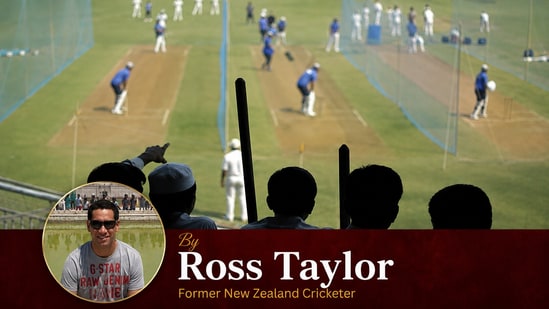
The stands are full of boys, and you can feel them watching. They don’t miss much. Back home, my 11-year-old, Jonty, sits through any cricket that’s on. He’s a Kiwi kid, so his heroes are as likely to wear a black jersey as a blue one. But that’s the point. Boys are always watching someone, and not just to see who wins.
They watch for clues. A grip, a stance, how a man holds himself on the long walk back after a duck. But also, how he speaks when no one important is listening, how he treats women, what he laughs at, and what he lets pass. I have spent 20 years in dressing rooms, and I won’t pretend I always pulled people up when I should have. The room decides what’s normal, and the kid in the stands is taking it all in.
What’s changed is who else is teaching them. While boys are on their phones, a whole industry of men online sells them a version of manhood built on dominance and contempt for women, where softness is weakness. I watched Louis Theroux’s Inside the Manosphere, the number one documentary on Netflix this year. What got me wasn’t the men in it, bad as they were, but the young lads crowding round them for selfies, telling them they had changed their lives. Boys are being shaped by men they will never meet, and sport has mostly stayed quiet about it.
Last December, I joined ALL IN, a group pushing for the funding and the will to end violence against women and girls. Around the table were Nobel Laureates, former presidents, Tarana Burke who started the MeToo movement. I thought, I am just a cricketer. But maybe that’s the point, cricket gets heard where those names can’t. I said yes because I am a dad. I have two daughters and a son, and I want them growing up where everyone’s treated with respect. What my son is learning about respect isn’t only coming from school or the dinner table now. It comes from dressing rooms, phones, group chats, and the small moments adults forget boys are watching.
Once you have seen the numbers they are hard to look away from. One in three women, more than 840 million, will face violence in their lifetime. Around 140 women and girls are killed every day, most by a partner or family member. It is bad at home in New Zealand. It is bad in Samoa, where my mother grew up and I hold a chiefly title that carries a responsibility to the women and children of the village, and which sits in a part of the Pacific with some of the highest rates of violence against women anywhere. And it is bad in India. No country I have played cricket in is exempt.
We are not starting from scratch. Coaches have used cricket, and other sports, to talk to boys about respect and how you treat girls. Where these programmes have been properly tested, from Mumbai schools to trials elsewhere, they worked. The boys came out less likely to accept hitting a girl, and changed how they behaved.
Also Read | Guest column | Women athletes & the uneven playing field
Cricket goes places most things never will. I am a kid from Masterton who kept ending up in India, so I have seen that from the inside. A boy in Bengaluru and a boy in Auckland may share nothing else, but they will both stop for a run chase. That reach is a responsibility. Just by how we carry ourselves, we settle a bit of what a boy decides is normal.
A few of us are starting to take it seriously, and not only in cricket. Marcus Daniell, the former tennis player, set up the 1in3 Fund to put athlete money behind the prevention work. Ugo Monye, the former England rugby player, joined UN Women UK’s Same Side campaign, putting different role models in front of boys online. None of it means sport has the answers. It means more of us are working out that staying quiet is also a message.
I joined for my daughters and for Jonty, but it can’t only be about my own kids. Adelaide, my youngest, is old enough now to ask hard questions, and the answers can’t only be about her. If using my name helps even a little, it’s worth showing up for.
What I have come to believe is that this is solvable. It is a slow burn, only a start, but the right direction. It needs more of us, across every sport, as loud as the voices on the other screen. The next time I walk into a dressing room, I will be there to play. But I am old enough now to know you bring more than your bat into a room like that.
Ross Taylor is a Samoan international cricketer and a former New Zealand international cricketer who captained the country’s men’s team. The views expressed are personal