
 E-Paper



Can Murmu’s election emancipate the tribals?
The election of Murmu cannot be an empty symbolic gesture, mere lip service to inclusion. It must signal a new era where it cannot continue to be business as usual

 Prefer HTon Google


At a time when political parties are queuing up to pledge support to the Bharatiya Janata Party (BJP)’s official candidate for president, Draupadi Murmu, news from Madhya Pradesh (MP) of another tribal woman, Rampyari Sehariya, being set ablaze for claiming land that belonged to her, couldn’t have come at a worse time.
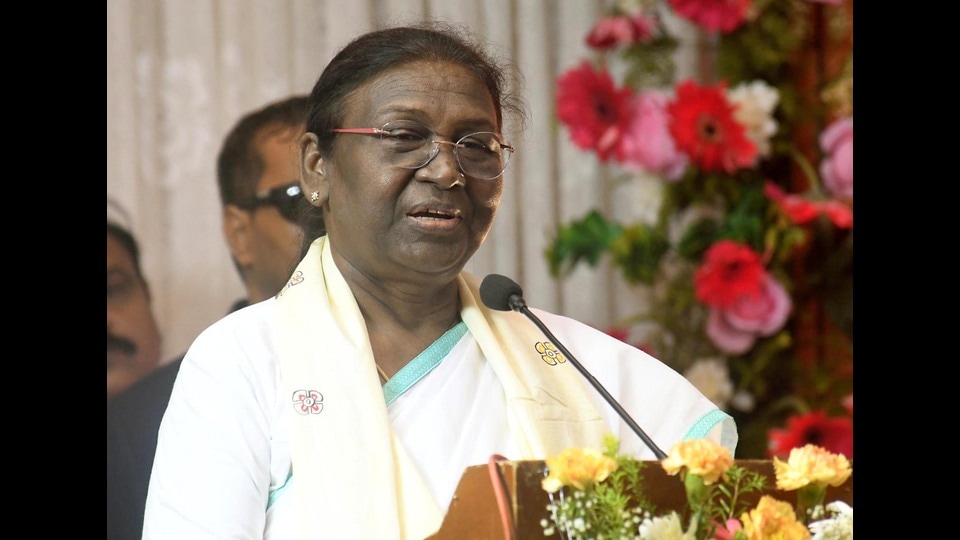
With a near certain election result, Murmu is set to become India’s first tribal president. Her election is wrought with the compelling optics of a woman from a historically marginalised group taking her seat as the head of State. It’s a powerful image.
But for 84.4 million tribals in the country, lived experience is a mixture of deprivation and denial.
Sehariya’s family was allotted six bighas of land under a welfare scheme by the then Congress government in MP. For 22 years, her family struggled to claim it, unable to match the muscle of the more dominant caste group, the Dhakads who had encroached on it, reports Shruti Tomar for Hindustan Times. Then, on July 2, Sehariya decided she was going to sow crops on her land. At about 2 pm, five members of the Dhakad family arrived and, within minutes, she was in flames. In a front-page photograph published in The Hindu, you can see her crouched on her land, smoke billowing out from under her.
That an incident of such unbelievable brutality against a tribal woman should happen weeks before Murmu’s election tells you both of the everyday reality of a group subjected to systemic deprivation and the urgent need to plug the gaps.
Despite a sizeable 22% tribal population, atrocities against tribals went up by 25% in MP to 2,401 cases in 2020 from 1,922 the previous year, according to the National Crime Records Bureau. The all-India crime figures also show a spike to 8,272 in 2020 from 5,756 crimes registered in 2011.
According to Land Conflict Watch, 25% of the ongoing land conflicts in India are in tribal areas.
As I’ve written elsewhere, Scheduled Tribes lag behind even Scheduled Castes on almost every human development parameter, from education to nutritional status and infant mortality.
The election of Murmu cannot be an empty symbolic gesture, mere lip service to inclusion. It must signal a new era where it cannot continue to be business as usual, where entitlements and allotments can no longer be so routinely denied and where it is so easy to set a woman on fire for standing her ground.
Murmu’s presence as head of State, albeit without real political power, must signal a new morality where there are renewed efforts to right a historical wrong; to improve the lives of 43.8% of tribals who live below the poverty line; to improve infant and maternal mortality; to bridge the education gap. As Rampyari Sehariya battles for her life with 80% burns, she must know that justice will be done, for her and every other tribal woman and man.
Namita Bhandare writes on gender The views expressed are personal


