
 E-Paper



Frequent party splits are hurting democracy
Political parties in India are experiencing a high number of splits and defections and amendments to the existing anti-defection law are needed.

 Prefer HTon Google


Political parties are important and useful ingredients in a representative democracy. The healthy functioning of political parties contributes to a healthy representative democracy, as is evident from an analysis of some western democracies.
Since independence, political parties in India have been multiplying incessantly. We now have six national parties, 54 state parties and 2,597 unrecognised parties. The first two categories are the ones relevant for elections. Some of the unrecognised parties also contest in limited regions but most of them function as lobbies or indulge in questionable activities by availing tax benefits available to such parties. In all, the scenario is vastly different from the US and UK, where only two or three major parties contest in elections at a national level.
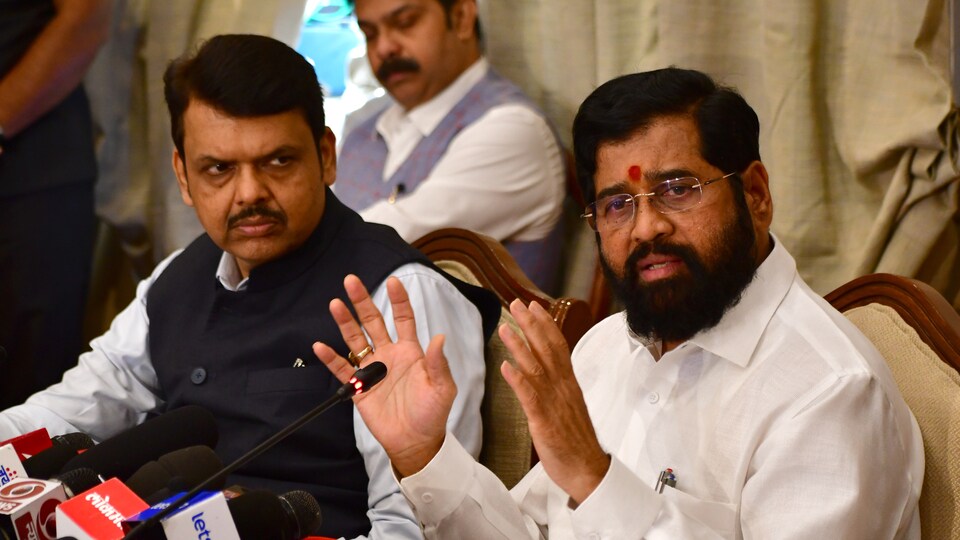
Fissures in political parties are not a new phenomenon. The first political party that split in India was the Communist party in 1964; a few years down the line, the ruling Congress also suffered the same fate. Yet, recent years have brought forth a deluge of such splits and defections, which have become a tool to capture political power with little care for divergent political ideologies. The mode of effecting a split has also changed over the years – currently, it seems that a leadership struggle within the existing party is increasingly the trigger to join the party in power or capture power in an alliance with other political parties, depending on the strength of the members of the party splitting, and the party in power.
In a democracy, elected representatives are supposed to represent the will of the citizens, ultimately contributing to the general will of the people in the legislature. A peculiar feature of the Indian political system are splits in political parties that fought an election together by forming a pre-poll alliance, but factions later forming post-poll alliances with the single objective of forming the government. This is unhealthy for a democracy because they cannot be said to represent the will of the people, and therefore represent a negation of an essential principle of democracy.
That such developments happen in parties immediately after an election, or soon thereafter, are indeed an unfortunate feature of our polity, one that distinguishes us from more advanced democracies. A key reason for this appears to be the anti-defection law that places an emphasis on a threshold of two-thirds of the legislators defecting from the parent party for its legal recognition – the representatives are bound to be disqualified if the members exiting the party are less than the minimum benchmark – but does little to prevent such an occurrence.
Such splits are seen more in the case of small parties, which often unsettle existing governments. The consequent proliferation of small and medium parties, therefore, plays havoc with the stability of elected administrations.
One of the reasons for splits in parties roiled by internal disputes is the absence of a codified law regulating the formation of political parties and their functioning. The Election Commission of India (ECI) has repeatedly recommended a codified law on political parties. The Law Commission, as well as Justice Venkatachaliah Committee, appointed to review the Constitution of India, suggested a separate law to regulate the formation, the functioning and dissolution of political parties.
At present, due to the absence of a separate law, ECI is charged with the responsibility of deciding disputes between parties, based on various judicial pronouncements by the Supreme Court and the high courts. Such a vague system contributes further to the uncertainty of party splits, resulting in many claims and counterclaims by faction leaders. Further, the legal delays in settling issues and appeals to higher judiciary result in avoidable confusion.
The normal rule should be that a representative, or a group of representatives, who are not in agreement with the leadership of a party, move out and form a new political entity. This does not seem to be attractive to our elected representatives, simply because they want to exploit the party symbol, funds and the flag, which act as easy tools in their quest for power. The anti-defection law does not provide adequate provisions to deal with unhealthy party disputes.
It would, therefore, be necessary to frame proper rules and regulations under a new codified political party law or amend the anti-defection law so as to deal with party disputes and splits more effectively. It would also be worthwhile to consider a ban on party splits for a period of one or two years immediately after the formation of the government in a state or at the Centre. Another suggestion for preventing the proliferation of such unhealthy trends and splintering parties is to move away from the existing first-past-the-post system to prescribing a minimum threshold of 33.13% or 50% of votes polled in a particular constituency as a condition for winning the election.
TS Krishna Murthy is former chief election commissioner. The views expressed are personal.


