No other infectious disease has impacted the full course of human history like malaria. A global scourge, it has plagued us since antiquity. Clay tablets from Mesopotamia carry inscriptions of deadly fevers, suggestive of malaria. It is mentioned in epics like Homer's The Iliad and Nei Ching, the Chinese medical canon dating back several millennia.
Even now, nearly a million people die from this disease each year. In the 20th century alone, malaria was responsible for 150 million to
No other infectious disease has impacted the full course of human history like malaria. A global scourge, it has plagued us since antiquity. Clay tablets from Mesopotamia carry inscriptions of deadly fevers, suggestive of malaria. It is mentioned in epics like Homer's The Iliad and Nei Ching, the Chinese medical canon dating back several millennia.
Even now, nearly a million people die from this disease each year. In the 20th century alone, malaria was responsible for 150 million to 300 million deaths. Children are at the greatest risk of this disease.
This is why, the development of an effective malaria vaccine – it was approved by the World Health Organisation (WHO) on October 6, 2021 – and its deployment over the next two years to 12 African countries represent a major scientific milestone.
On July 5, the WHO announced that it will help send 18 million doses of RTS,S/AS01 to countries like Ghana, Kenya, Uganda, and Malawi. The choice of the continent is pertinent: Africa is ground zero in the fight to control malaria; in 2021, around 95% of global cases and 96% of deaths from malaria occurred there.
It has been an arduous journey to get here.
In contrast to the Covid-19 vaccines which were developed and deployed in a year, the first vaccine for malaria took 30 years from the stage of development to clinical trials. One reason is that despite significant advancements in medicine, health challenges that affect primarily developing nations lack of research funding and development from commercial entities. As a result, these diseases tend to remain unaddressed.
Second, unlike viruses or bacteria, malaria parasites have complex life cycles. Researchers estimate that they have been mutating for 30 million years making the disease especially difficult to target.
This is not to say that modern medicine hasn't tackled what ancient texts in India called "the king of diseases". Despite methods of control such as treatment with the drug artemisinin, the use of mosquito nets, and rapid diagnostic testing, the fatality rate was still alarming.
The new vaccine will save the lives of many of those who are most vulnerable to this disease: children under the age of five living in malaria-prone areas of sub-Saharan Africa. Approximately half a million children under the age of five contract malaria each year.
Understanding the disease
In the symptomatic phase, patients suffer from fever accompanied by chills, nausea, and sometimes rashes.
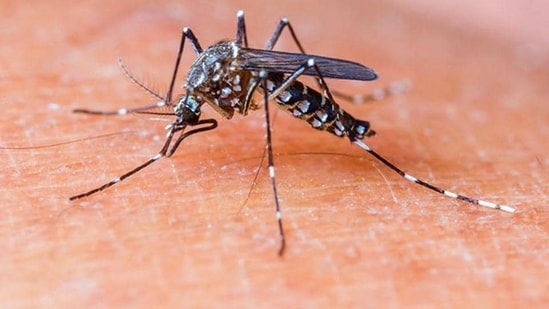
Malaria is spread through bites from mosquitoes carrying the parasite Plasmodium, of which the most dangerous species is P. falciparum. Severe untreated malaria caused by this particular parasite leads to death in over 90% of those who are infected.
The process starts when a female Anopheles mosquito injects a form of parasite into the bloodstream during a blood meal. These invaders then head to the liver where they stealthily invade cells and produce roughly 30,000 to 40,000 offspring. This is a silent phase since the host remains free of symptoms.
In subsequent phases of the parasite’s life cycle, it infects red blood cells. This causes an immune response and symptoms of the disease such as fever, headaches, and weakness.
There are additional cycles of infection and reinfection of red blood cells. When a mosquito bites an infected person, it takes up parasites.
What’s also clear is that the Plasmodium parasite is highly adaptable and can genetically recombine to form new forms that are not recognized by the immune system of those who had been previously infected. This level of complexity enables it to evade immune responses and to rapidly mutate to escape from drugs.
This is why effective vaccines for parasites are rare.
The big take-home message is that there were significant challenges to targeting the Plasmodium parasite with vaccines, leading to the delay in their development and use.
The vaccine breakthrough
It is clear that an effective vaccine might work by thwarting the parasite early in its life cycle, thereby preventing further stages and stopping onward transmission.
The RTS,S/AS01 vaccine, which was first created in 1987, targets the parasite as it invades the liver, prior to the development of the disease-causing form found in the blood.
Drawing from their work on a Hepatitis B vaccine, researchers at GlaxoSmithKline and Walter Reed Army Institute of Research collaborated to develop a vaccine to target malaria. Their strategy was to use a protein from the parasite that triggers an immune response. But due to technical challenges, they could only use a small fragment of the protein. This led to a candidate vaccine that showed the capacity for protection in a single volunteer.
This vaccine was then engineered to generate a stronger immune response. To further enhance the vaccine's efficacy, various adjuvants – substances that boost the response of the body to a vaccine – were tested. After successful results from preliminary trials, the final vaccine entered a phase 3 clinical trial in 2009.
So, how well does the vaccine work? The efficacy of the vaccine against malaria was 36% over four years of follow-up in phase three clinical trials in children aged 5–17 months who received four doses.
This partial protection rate might seem inconsequential compared to the high efficacy we have come to expect from some other vaccines, but already we know that vaccination will reduce the malaria burden in children.
In a pilot implementation programme that began in 2019, 4.5 million doses of the vaccine were administered to more than 1.7 million children in Ghana, Kenya, and Malawi- countries where malaria is persistent. This has demonstrated the safety of the vaccine while also reducing the burden of severe malaria and the number of deaths from the disease.
The success of the RTS,S/AS01 vaccine also heralds in a new era in reducing the global burden of malaria. The WHO estimates that the vaccine could save one life for every 200 children vaccinated. Deployed at a large scale, this translates to tens of thousands of deaths prevented each year.
A roadmap for future innovation
The development of RTS,S/AS01 paves the way for future vaccines against other strains of the parasite. India is not slated to receive doses of this first vaccine, though other vaccines in development will be required to meet the global demand for effective malaria vaccines.
Other malaria vaccines in the pipeline include the R21/Matrix-M vaccine which was developed by Oxford University and will be manufactured by Serum Institute of India. This vaccine could soon be prequalified by the WHO for broader use.
With all these successes, will malaria finally be under control? The United Nations Sustainable Development Goal 3 is to ensure healthy lives and promote well-being for all at all ages. This goal targets a 90% reduction in malaria incidence and mortality by 2030. It also includes the elimination of malaria in at least 35 countries where it is endemic. Eradication is, however, unlikely.
Nevertheless, these lofty goals will not be reached without the widespread deployment of vaccines. We finally have one. And by 2030, the global demand for malaria vaccine doses is estimated to be 80-100 million per year.
Anirban Mahapatra is a scientist by training and the author of a popular science book on COVID-19. The views expressed are personal.
One Subscription.
Get 360° coverage—from daily headlines
to 100 year archives.
Archives
HT App & Website