
 E-Paper



Scientifically Speaking | Could a yellow fever outbreak happen in India?
Yellow fever is a life-threatening viral disease spread by Aedes aegypti mosquitoes. Why a yellow fever outbreak has never occurred in India is an unsolved medical mystery

 Prefer HTon Google


Yellow fever is a serious disease caused by a virus which occurs in parts of Africa and South America. It is spread through the Aedes aegypti mosquito vector. It can result in mild symptoms like the flu all the way up to a serious life-threatening disease resulting from organ failure. Why a yellow fever outbreak has never occurred in India where all the conditions for spread exist is an unsolved medical mystery.
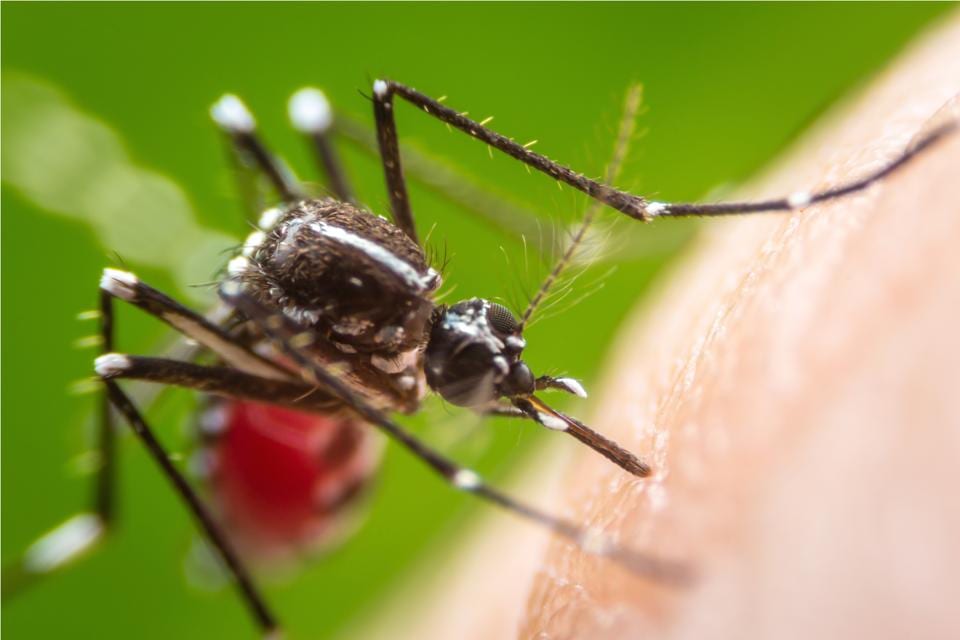
Yellow fever is a serious public health concern in sub-Saharan Africa, where epidemics occur from time to time. Thirty-two countries in Africa, with a collective population of 610 million people are at risk. It is also endemic to South and Central America, where urban areas in the tropical regions are at elevated risk. The World Health Organization is concerned that “Latin America is now at greater risk of urban epidemics than at any time in the past 50 years.”
The virus, which is related to dengue, was not always a scourge in the western hemisphere. The spread of yellow fever to new regions of the world has historically been linked to migration and urbanization.
In fact, yellow fever was introduced in large numbers by the mass migration of humans from Africa to the Americas through slavery. The Atlantic slave trade led to the spread of disease and devastating epidemics in the Americas. From there, it spread and caused epidemics in Spain, France, England, and Italy.
Such migration on large scale has not occurred from Africa to Asia, but there is still an unsolved medical mystery waiting to be solved. Despite years of travel from regions of the world where yellow fever is prevalent, there has never been a major outbreak of the disease in India or anywhere else in Asia. This, despite the fact that yellow fever is related to dengue and the mosquito that spreads both diseases, is rampant in India. No one really knows why yellow fever never caught on.
Yellow fever has one of the highest fatality rates among all mosquito-borne diseases. An effective vaccine for yellow fever is available, but only in limited amounts. If a yellow fever pandemic were to break out the existing stocks would be depleted rapidly putting millions of people at risk.
The mosquito vector that spread the disease is present in large numbers in India and is capable of harbouring the yellow fever virus. All the factors of climate and environment that are present in tropical and subtropical regions of Africa and South America where yellow fever is a scourge are also present in India. In fact, dengue, which is caused by a related virus in a similar manner is endemic to India.
It is possible that different strains of Aedes aegypti mosquitoes have different susceptibilities for different viruses, and the ones in India are not as prone to carrying yellow fever virus as they are dengue. The problem with this theory is that scientists have shown that Asian mosquitoes are able to transmit yellow fever. Still, it could be that Indian mosquitoes are not as good at transmitting the yellow fever virus as they are the dengue virus.
Another hypothesis is that since dengue is endemic to India, populations have built up antibodies from prior infection from dengue that are cross-reactive and prevent yellow fever. But if getting dengue prevented yellow fever and there were different mosquito strains of Aedes aegypti for each virus, we would expect there to be limited geographic overlap of outbreaks. But that’s not the case. The dengue virus coexists with the yellow fever virus in parts of Africa and South America. It is only in Asia that we find dengue, but not yellow fever.
Tens of millions of people travel from countries where yellow fever is established, to Asia. It is inconceivable that the requirement for yellow fever vaccination will be enforced for all arriving passengers and so it is highly likely that some travellers import yellow fever from Africa and South America into Asia.
In 2016, the first documented cases of yellow fever in Asia were reported from travellers. Further spread has not been documented, but it may only be a matter of time before new cases are reported.
In Asia, there are around 2 billion people who live in areas where the mosquito vector for yellow fever is prevalent. The WHO cautions that there is potential for outbreaks because of the density of the mosquito vector.
We only need to look at the recent past to see how two other viruses spread by the Aedes aegypti mosquito, Zika and chikungunya, can gain a foothold in parts of the world where there are people whose immune systems have not encountered these viruses.
As we observed with Covid-19, unprecedented air travel has blurred international boundaries and led to the rapid spread of infectious diseases. And with the current outbreak of monkeypox, a disease endemic to parts of Africa that we had not seen elsewhere, we have a real-time spread of a disease beyond its recent boundaries.
We cannot ignore the risk of yellow fever, especially when all the ingredients for an epidemic are in place. We must be vigilant.
Anirban Mahapatra is a scientist by training and the author of a book on COVID-19. He’s writing a second popular-science book
The views expressed are personal


