
 E-Paper



Terms of Trade | Analysing the economy: Do the bulls have it right or the bears?
There is money to be made in India from an investor’s point of view, but questions remain about the potential of investments to catapult living standards


What are the Indian economy’s medium-term prospects? Let's take a look at some perspectives.
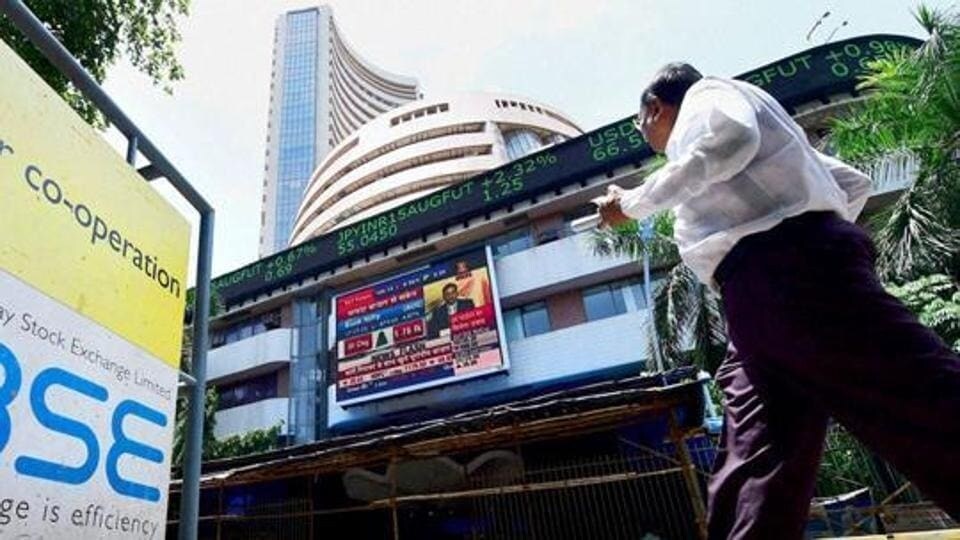
The bullish view
Most foreign investors — both portfolio and greenfield — continue to be bullish on India. Many global companies, big and small, are planning to enter India to set up production. Those who have already entered are planning to expand. To be sure, this is not the first time India has made an impact on global capital. However, there is some evidence that the latest phase might transcend the geographical boundaries which attracted foreign capital in the first half of economic reforms. The latter half has seen more advantages to precisely these regions.
An aggressive infrastructure push by the Union government and an active interest among state governments to engage with capital and business beyond their regional borders is a major factor behind this optimism. If things continue to gain momentum in the right direction, there is a possibility that the future of Indian manufacturing will not just be bigger but also geographically more egalitarian.
Then there is the recent surge in high-end services exports outside the realm of IT as we have known it so far. Will India also emerge as the world’s back-office of legal, accounting, payroll, and, hold your breath, even technical R&D services? While there is always the proverbial slip between the cup and the lip, trends are nothing but encouraging. Things will only get better with a focused approach which encourages ease of doing business and cuts the bureaucratic clutter, we are told.
Lest one gets the wrong idea from the discussion so far, the bulls are advocating anything but complacency about the economy’s prospects. They ask for nothing short of a complete overhaul of our governance systems and policy approach and their areas of interest are now focused at not just the state but even the district level. It is a hands-on and detailed technocratic take on the Indian economy.
There is nothing principally wrong with this set of arguments. The only thing which clouds this outlook is the possibility of growing social unrest due to communal tensions because of the programmatically polarising nature of the party which is the political hegemon in our country today. An investor who is making a long-term bet on India will see growing communal tensions as a threat to the safety of his business as well.
And then there are the bears…
Things appear to be very different if one takes an old-school development economics/macroeconomic view.
Forty per cent of our workforce is still employed in agriculture. Farming is increasingly turning into an unrewarding and risky economic pursuit. While things have been going downhill for decades now, the worsening climate and sustainability crisis will add to the problem at an increasing rate. Ironically, the latter is a by-product of our biggest success story in agriculture, namely, the green revolution. The most important question, as far as the future of the Indian economy is concerned, is what will the share of agricultural employment be 10, 20 or 30 years down the line? This, more than anything else, will chart the course of our future per capita income.
The current government’s repeated attempts to expand manufacturing — from Make in India to Production Linked Incentive (PLI) scheme to One District One Product — aim to facilitate and expedite the proverbial farm to factory transfer or workforce.
To be sure, just getting the headline share of agricultural employment down is not going to be enough. India’s structural transformation story in the post-reform period will look very different if one takes away the construction sector. It is the largest source of growth in non-farm employment. While one cannot deny the importance of construction employment in preventing a widespread employment crisis, it cannot be the game changer that would give a big boost to purchasing power, and eventually, overall growth.
Crudely speaking, a construction boom can prevent starvation and make it possible for families of these workers to buy new clothes during festivals, but there is very little it can do beyond that.
What about the current enthusiasm around the gig economy? The growth in these jobs — growth in internet connectivity and digital payments has paid a huge role here — has been spectacular. For the school-educated young worker, where ability to operate a smartphone is enough and some fluency in English is a bonus, who has access to a minimum amount of capital, let’s say, enough to buy a motor-cycle, today’s gig economy is what construction was to the practically uneducated agricultural worker in the 1990s and early 2000s.
Like construction, it is frightening to imagine how things would have been if these gig economy jobs had not come. They are supplementing family incomes, playing a role in giving a boost to the aspirational demand for various kinds of goods and services in the economy and, most importantly, have become a last resort for millions of India’s young workers who may well have spent their entire educational career preparing for government jobs without learning any employability enhancing skills and failed to land one. The potential angry young man has been converted into a delivery man. Sure, there are issues of exploitation in the gig economy. But it is not as if economic exploitation did not exist in India before this.
So, is the gig economy unequivocally good for the economy? The key question to be asked vis-à-vis the role the gig economy can play in aiding India’s long-term structural transformation is twofold.
One, how much of the income generated by the gig economy has come at the cost of destruction of incomes in the informal sector? A garment or phone shop for an Amazon, a local electrician or barber for an Urban Company, a hyperlocal chain for the neighbourhood grocery store; one can go on giving examples. If the degree of substitution is indeed very high, then the net gains from this development are likely to be smaller than they appear to be, because part of it is just creative destruction.
To be sure, it is entirely possible that the gig economy has only hurt petty capital rather than the workers who were employed by it. If a grocery shop goes belly up then its employee can always start working as a delivery boy for Amazon. And as long as venture capitalist firms are burning money behind these companies, there is also the gain from an increase in consumer surplus due to provision of what are essentially privately subsidised goods and services. However, the burn-money campaign will not last forever and the most successful bets are likely to create significant monopoly power which will eat into rather than enhance consumer surplus.
The second question is slightly more forward-looking and troubling. As traffic, pollution and heat continue to increase in Indian cities, what will be the long-term health costs for the kind of jobs gig workers are doing, like riding a two-wheeler while carrying huge loads on their backs?
A gig worker who spoke to this author was clear that it will be next to impossible to physically sustain this kind of a job after the age of 40. It is difficult to argue that he was exaggerating. This is something which can become a huge problem for the economy when this cohort of workers gets older. The state of our public health infrastructure and social security is woefully inadequate to deal with a crisis like this.
If one were to take into account all the factors listed above, it is very difficult to feel good about India’s medium-to-long term economic prospects. A 6%-6.5% growth rate over the next decade or so is enough to keep us the world’s fastest growing major economy but will do precious little to give a major boost to per capita incomes and living standards.
So, who is right?
Neither of the views is wrong. If one were to put it simply, there is a lot of money to be made in India from an investor’s point of view, but questions remain about the potential of such investments to catapult living standards for a significant majority of Indians to higher levels.
Part of this is a problem of scale, part of it a change in the nature of technology, and another part of it a change in the global economic landscape. It will take significantly less investment to give a boost to the economy of Vietnam than India. So even a lot of FDI might not be enough for India. The employment generation per FDI dollar in manufacturing is lower than what it used to be three decades ago. Opportunities in world trade and willingness of advanced economies to open their markets are significantly lower than what they were between World War II and the 2008 global financial crisis.
What does it mean?
If the Indian economy were just a textbook example rather than a real country, this would make for a fascinating study in economic dualism. But that is not the case. If we were not a democracy based on universal suffrage, things would be slightly less complicated. The government could make long-term economic plans and use means of coercion (if needed) at its disposal to make sure that they were not derailed. Think of the temporary advantage China reaped from its one-child-policy. But not only are we a democracy, we are a federal democracy and political parties and governments have to continuously make sure that their long-term economic plans do not erode their immediate political capital.
This brings up an obvious question. If India indeed has separate economic enclaves where the minority has nothing but economic tailwinds and an overwhelming majority is looking at nothing but drudgery and a constant fight for survival, why don’t we see a growing unrest over economic issues?
While many people have tried to answer this question in many ways, a simple way to explain this is that the majority does not see stakeholders in the dynamic economy as a reason for their economic predicament. The unicorn founder is hardly responsible for the crisis in Indian agriculture. In other words, the dynamic sectors are seen as a merit-based privileged club rather than an exploitative entity. The opportunities available in this privileged enclave do not discriminate in an explicit manner. It’s more a structural kind of exclusion which builds on existing inequalities in education and exposure to the new economy.
This does not mean that the poor treat such exclusion passively. But their political demands are targeted towards the government rather than the dynamic economy. A farm loan waiver, electricity subsidy, access to low-end government jobs etc are some such examples. Competitive politics over reservations is another way this tension manifests itself. The current government has aced this political bargain by introducing a new component, namely, small-ticket asset transfers such as LPG cylinders, tap water, and toilets in the portfolio. relatively high-value asset transfers such as housing for the poor, have seen a significant expansion.
For how long will this ‘use fiscal policy to manage large economic anger’ strategy keep Indian democracy in the realm of the normal? Unless things start improving at a much faster pace than they have in the last decade, patience and the efficacy of this strategy will increasingly run thin.
It is on this count that there is a fundamental asymmetry between the bulls and the bears. A lot of people who have already made it big in the ‘new’ Indian economy and continue to be bullish about it are global citizens as far as their skill sets, employability and even cultural outlook is concerned. If things do get really bad, they can just decide to exit for greener pastures. This option does not exist for a large number of people who are still trying, increasingly without success, to make their fortune in the old economy.
To conclude, it is too early to say whether the bulls are completely right and the bears are just naysayers. But one can say with a lot of conviction that the former group is hedged in a much better way than their historical predecessors as far as the future economic prospects of their current and future generations are concerned. This has extremely far-reaching implications for India’s political economy.
Every Friday, HT’s data and political economy editor, Roshan Kishore, combines his commitment to data and passion for qualitative analysis in a column for HT Premium, Terms of Trade. With a focus on one big number and one big issue, he will go behind the headlines to ask a question and address political economy issues and social puzzles facing contemporary India.
The views expressed are personal
 ABOUT THE AUTHORRoshan Kishore
Roshan Kishore is the Data and Political Economy Editor at Hindustan Times. His weekly column for HT Premium Terms of Trade appears every Friday.


