
 E-Paper



Terms of Trade | Kamaraj to Ponmudi: Has non-Hindi belt politics turned inward?
There is a clear difference in tones of K Kamaraj in 1966 and K Ponmudi in 2022 on the Hindi debate, at a time when the Opposition must form a united front

 Prefer HTon Google


“No English. No Hindi. How?”, is what K Kamaraj, one of the biggest leaders of the Congress of his times, is supposed to have told the party leadership when he was asked to take over as the Prime Minister (PM) of India after Lal Bahadur Shastri’s death in 1966. Kamaraj’s view of ability to speak Hindi being a necessary skill for a politician who were to become the India’s PM came barely a year after southern states, especially Tamil Nadu, had seen massive language riots.
To be sure, Kamaraj was never seen as a pro-Hindi figure in his own state. Even the most radical of the Tamil leaders, E V Ramasamy or Periyar, despite political differences, praised Kamaraj has a worthy son of the soil for Tamil Nadu. The only way to interpret Kamaraj’s statement is to see this as a democratic acknowledgement of the fact that it was politically expedient for an Indian PM to be able to speak in a language which people beyond his state would be able to understand.
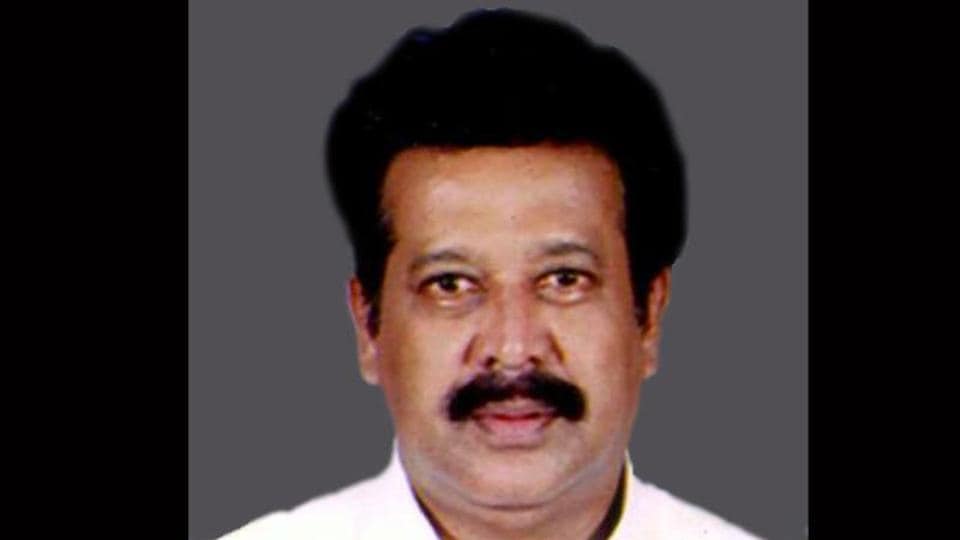
Almost six decades after Kamaraj’s famous words, another politician from his state, K Ponmudi – he is the education minister in the Dravida Munnetra Kazhagam (DMK) government – made a statement regarding Hindi. “We were told that learning Hindi could land us with jobs. Is that so? You go and see in our state and in Coimbatore. Who are those people who sell pani puris?,” Ponmudi said while speaking at a convocation last week in Tamil Nadu.
Factually speaking, Ponmudy’s comments are not very far from the truth. India’s southern states have made far more economic progress than their Hindi speaking counterparts. This has triggered a massive outmigration of labour, both skilled (especially in the IT sector) and unskilled, from the Hindi speaking regions to the southern states. To be sure, similar states such as Maharashtra and Gujarat have also seen a large-scale migration, especially of the blue-collar workforce from Hindi speaking states. Thanks to the regional diversity in India’s demographic transition, India’s southern states are already much older than their northern counterparts, which also means that they will need more workers from their Hindi-speaking peers in the future. In other words, more and more sundry jobs in the south will be taken up by Hindi speakers.
Politics, however, is not an exercise in stating unpalatable facts. More than anything, it has to be about appealing to your electorate and tapping into their sentiment, which will potentially translate into electoral support. It is not very difficult to understand that Ponmudi’s remarks will not be music to the ears of a lot of poor Hindi-speaking voters.
What is also equally true, however, is that the views of Hindi-speaking voters will hardly matter as far as the political fortunes of the DMK in Tamli Nadu are concerned. In fact, the minister’s remarks are likely to work to the DMK’s advantage because they were made in the presence of the governor of the state (who comes from a Hindi-speaking state) and were aimed at attacking the pro-Hindi statements by leaders of the ruling Bharatiya Janata Party (BJP).
How is the issue even relevant then? It matters because the opposition has been trying to build a coalition of regional parties which are electorally successful in some of India’s largest non-Hindi speaking states. This includes the DMK in Tamil Nadu, the Trinamool Congress (TMC) in West Bengal, the Nationalist Congress Party (NCP) and perhaps even the Shiv Sena in Maharashtra, and the Communist Party of India (Marxist) or CPI (M) in Kerala.
Congress leader Rahul Gandhi has been the most vocal champion of this line, which can be seen in his repeated assertions of the fact that India should be seen as a union of states rather than a monolithic nation. Most commentators accept that the cultural alternative such parties have been able to sell in opposition to BJP’s Hindi-dominated nationalism push is an important factor in the BJP not being able to capture these states.
The BJP, as is to be expected, has been attacking the Congress for such a line, and this campaign has been particularly shrill in the Hindi-speaking states. While parties such as the TMC and DMK have very little to fear with such a campaign, the Congress and Mandal based Hindi-belt parties such as the Samajwadi Party (SP) and Rashtriya Janata Dal (RJD) will not be immune to the potential pain of such a campaign. They will have to answer questions about siding with political parties which “insult” Hindi and Hindi-speakers. There is a very thin line which separates Hindi nationalism from nationalism at large in the Hindi-speaking states. The fact that the BJP’s propaganda machine is far better and effective than any other political party will only make this charge more difficult to counter.
The electoral implications of such a politics, or the tailwinds it will generate for the BJP is crystal clear. Both in 2014 and 2019 general election, a majority of the BJP’s halfway mark tally of 272 came from the Hindi-speaking states . The Congress, on the other hand, has had a very poor showing in Hindi states. Given the fact that Hindi-speaking states have a much larger share of the total population today, there is a good chance that their share in the Lok Sabha will only increase once India takes up what will be an extremely controversial delimitation exercise (for a detailed discussion, see https://bit.ly/3lgji48). While any formula which drastically reduces the representation of southern states is bound to trigger political discontent in these regions, the current regime’s proclivities have shown little concern for maintaining a larger balance at the cost of political gains.
The ticking time bomb of delimitation and its potential fallout in non-Hindi states only increases the importance of initiating a non-antagonistic political dialogue between political parties and voters of the Hindi speaking and non-Hindi speaking regions. Such a conversation and alliance can only happen when political forces from both regions offer each other mutual respect.
The Hindi-speaking states have to recognise that even empty rhetoric of Hindi imposition is bound to create a backlash in the non-Hindi speaking states. The non-Hindi states, especially the prosperous ones, most also realise that they cannot be seen as denigrating their relatively less well-off Hindi-speaking citizens while claiming to fight Hindi chauvinism. A preservation of status-quo on this question – where the BJP indulges in occasional Hindi chauvinism rhetoric and portrays counter-attacks on this issue as an attack on Hindi and Hindi nationalism itself – only works to the advantage of the BJP.
Can this status quo be challenged? Any effort to do this must understand the roots of the basic contradiction between political-intellectual space between Hindi and non-Hindi states, especially ones such as Tamil Nadu. Two factors can be underlined.
States such as Tamil Nadu saw very strong social reform movements, which later adopted the political route. They opened up political and socio-economic opportunities for hitherto discriminated sections of the population. That Tamil Nadu’s politics revolves around two splinter groups of the Dravidian movement is the biggest testimony to this fact. The reason such a movement was extremely successful electorally in a state such as Tamil Nadu is also rooted in the fact that the “oppressor” upper castes which were the target of progressive politics were a miniscule minority in the state.
This is unlike states such as Bihar and Uttar Pradesh, where the “upper-castes” had a significantly higher share in population. This made a fundamental difference to state-level politics in Hindi-speaking states in the formative years where conservative upper caste politicians were able to marginalise their more radical peers in the electoral game. The isolation of Swami Sahajanand Saraswati – he was among the founders of the All India Kisan Sabha and a strong supporter of peasant rights and land reforms – in the Bihar Congress is one such example. The gap between class and caste politics in the Mandal dominated states has only grown since independence and the BJP has successfully exploited the resentment among the lower Other Backward Classes (OBC) who rightly feel short-changed by the dominant OBCs who came to control Mandal based parties.
This historical fact has a direct bearing on the limitations of current efforts to forge some sort of a pan-India OBC coalition with a Dravidian party such as the DMK as the most successful OBC politics experiment in the country. Not only are there significant limitations on the ability of the reservation route to usher in upward economic mobility because of a sharp reduction in the state’s economic footprint compared to what it was when Dravidian politics took shape in a state such as Tamil Nadu, Mandal-based parties are extremely reluctant to champion the kind of rationalist politics with the Dravidian movement preached and established a hegemony for in its early years.
Simply speaking, the absence of a rationalist ideology makes subaltern politics in the Hindi speaking regions a poor caricature of the south. Unlike the cultural counter assertion against Hindutva in the south, northern social justice parties only have the (diminished) economic promise in their political appeal.
To be sure, these factors are not exactly hidden from the regional politicians in non-Hindi speaking states such as Tamil Nadu. However, an organic engagement with such political constrains will require going beyond the comfort zone of (rightfully) progressive narratives of politics in these states rather than outsource the management of the so-called Hindi belt to the Congress and Mandal parties such as the RJD and the SP.
The fact that no such efforts are being made to do so suggests that the non-Hindi speaking progressive camp has chosen self-righteous posturing in its own stronghold rather than a vanguardist approach to politics which will take this battle to the Hindi-speaking states. More than anything, this betrays a lack of political ambition. This is what explains the difference in tones of K Kamaraj in 1966 and K Ponmudi in 2022.
The views expressed are personal


