
 E-Paper



The problem isn’t Delhi. It’s the Taliban
Engagement isn’t Delhi’s choice to make alone. The Taliban’s dependence on Pakistan, violence, and links with Kashmiri terror groups have strained contact

 Prefer HTon Google


To engage or not with the Taliban has become an urgent question in India. The withdrawal of the United States (US) military from Afghanistan followed by the Taliban’s offensives across the country, and China’s diplomatic courting of the group has intensified the debate whether New Delhi should “openly” talk with the group or not. Given reports about India’s silent outreach to the Taliban in Doha, this issue requires unpacking beyond the realpolitik versus moralpolitik binary.
There are compelling reasons why India must engage with the Taliban. The group, in its entire tribal diversity and reliance on Pakistan, is essential to Afghanistan’s politics, and India will have to somehow deal with the Taliban. But there is an equally powerful case to be made that the violence and misogyny of the Taliban must not be encouraged by India, even if the world is doing so and despite Kabul’s struggles to deliver on promises of political inclusivity and social progressiveness.
Also Read | Speed of Taliban’s assault on key cities exceeds Indian assessment
But this choice is not just of India’s to make. The Taliban’s Rahbari Shura, or the leadership council, faces an acute dilemma on the “India question”. Unlike talking to Beijing, Moscow, Tehran, London, and Washington DC — none of whom Islamabad, the Taliban’s principal patron, has an enduring rivalry with — the Taliban’s international ambitions hit a roadblock when it comes to New Delhi. This is primarily because of the enduring India-Pakistan rivalry, which shows few signs of resolution, and Islamabad’s demand for an India-minus Afghanistan.
From this perspective, as seen in the largely understanding responses to the limited outreach in Doha, India is more capable of handling and sustaining “open” talks with the Taliban than the other way round.
To be seen in public with Indian leadership will cost the Taliban heavily. Islamabad will either reduce financial and armed support, or, more likely, target those Taliban figures who it believes have a proclivity to engage with India. Such signalling was clear when Pakistan’s national security adviser Moeed Yusuf sought India to be “ashamed” for talking to the Taliban. Yusuf’s public messaging was accompanied by an uptick in anti-India propaganda on the Afghan battlefield and in Taliban-centric social media networks.
At a moment when the Taliban is making strides both on the battlefield and the negotiating table, there is little appetite in the Rahbari Shura to complicate relations with Pakistan for India’s sake. This is despite the desire among Taliban leaders to carve an independent identity for the group. In fact, some old-guard Taliban leaders such as Mullah Zaeef and Mullah Muttawakil have maintained access to New Delhi over the years. But the current Taliban leadership cannot do so openly. This was made clear after news of the Doha channel was reported by Indian media, and partly explains why New Delhi wouldn’t officially confirm the channel.
In India, the Taliban’s reluctance to cease violence, a key Afghan and Indian ask, is viewed as the group being beholden to Islamabad. This is an accurate assessment till the time the Taliban remains an insurgent force operating out of Pakistan. After all, Taliban-the-insurgent doesn’t have an option but to maintain a stable relationship with Islamabad. The true test of their political autonomy — regardless of their Islamist make — will occur if and when the Taliban comes to power. Whether Taliban-the-administrator openly engages with India and respects its interests needs to be seen.
If the propaganda space offers an indication, there are signs of strain in the “quiet” India-Taliban space.
One, the brutal killing of Indian photojournalist Danish Siddiqui in Spin Boldak has shaken the contact. If one is to believe India’s narrative — uncorroborated but gaining currency — the Taliban targeted Siddiqui on command from their handlers across the border. His body was subsequently mutilated, allegedly in Taliban custody. Despite the unbelievable posthumous note of regret by the Doha office, the damage is done.
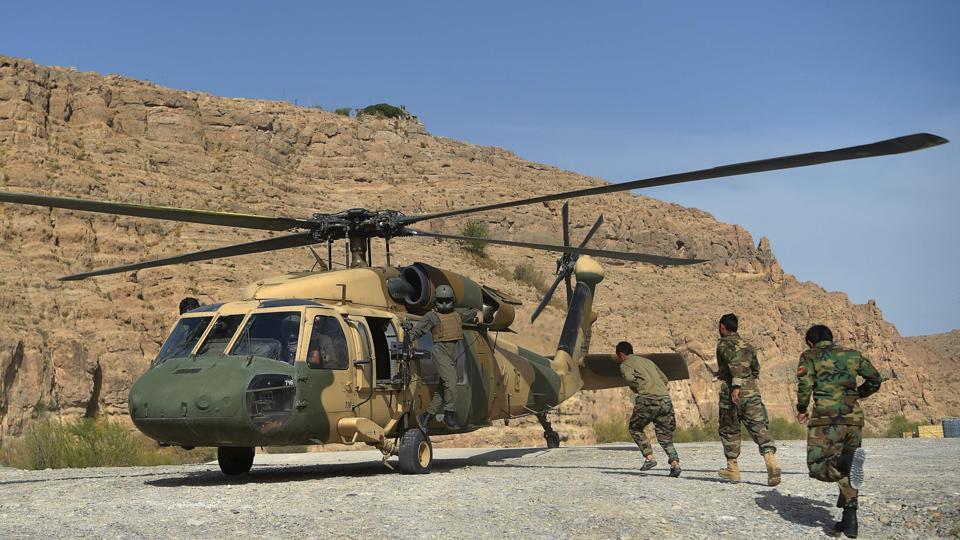
Two, the Taliban recently blamed Kabul for perpetrating “war crimes” in Lashkar Gah by bombing hospitals using India-supplied aircraft. Given the Taliban’s demand for “impartiality” by India i.e., not to support Kabul militarily, this was unsubtle messaging. The Mi-25 gunships that India gifted to Kabul in 2015 were not operational. If they are now undertaking sorties in Helmand, it implies that India has offered technical support to buttress Kabul’s airpower — and the Taliban is taking note.
Three, the Taliban is promising to not allow the Islamic State and al-Qaeda to target other countries from Afghan soil. But it remains muted on its relationship with the Lashkar-e-Taiba and the Jaish-e-Mohammad. These groups have demonstrated intent to harm India in the past, and currently play an enablers role for the Taliban’s offensives. Even if such regional Islamists are unable to enter Kashmir, given India’s counter-infiltration grid, the Taliban’s victory will encourage them politically. The Taliban’s indications to India that they will not become embroiled in Kashmir, then, are factually accurate i.e., they won’t send fighters to Kashmir — but this may be politically meaningless.
Limits of contextually relevant information (for outside observers and involved insiders alike) in a fast-changing Afghan battlefield makes it hard to assess the success of covert channels such as that between India and the Taliban. But it is easier to observe strains as they often play out openly. India’s continuing support for Kabul, lobbying with the US, Iran, and Russia to resist offering diplomatic recognition to the Taliban if it comes to power by force, and heightened featuring in Taliban’s propaganda pieces is a sign that both sides are far from a meaningful conversation.
Avinash Paliwal teaches at SOAS University of London and is the author of My Enemy’s Enemy: India in Afghanistan from the Soviet Invasion to the US Withdrawal
The views expressed are personal


