On Independence Day, Prime Minister Narendra Modi called for regulatory reform so we can better weather the storm of uncertainty that besets us. We must cut through the regulatory thicket that stifles our competitiveness, while often hurting the very cause it purports to protect. A prime example is the mandate that 33% of industrial land be set aside for “green cover” to get environmental clearance. This rule means that a factory running on one acre in China would need 50% more land — 1.5 acres — in India for the same output. The assumption that reserving such green cover benefits the environment, in practice, not only handicaps Indian industry but also hurts the environment.
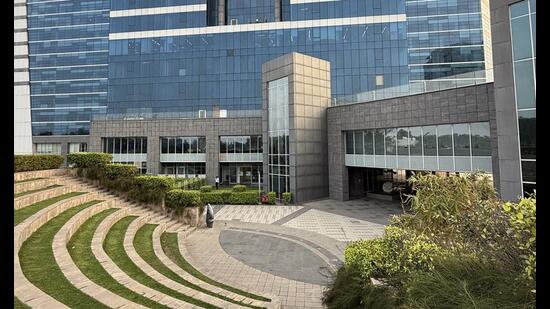
The handicap to industry is clear: For the same output, it must use 50% more land in India, a famously land-scarce country, than in competitors like Vietnam or China which reserve 0-10% land for green cover. The damage to the environment happens through two mechanisms. One is relatively straightforward: We force industry to use much more land than necessary, while creating small, spread out green fragments on industrial land with little to no environmental benefit. The harder to see, but potentially more dangerous mechanism is that, by preventing efficient industrialisation and urbanisation, we force more people to stay in agriculture and in conflict with wilderness and animal habitat. This not only causes much greater environmental damage by reducing agricultural efficiency, it also reduces standards of living for all of us.
To understand the first mechanism better, consider that, according to the India Industrial Land Bank, we produce our current industrial output using 660,000 hectares of industrial land (only 0.2% of India’s land area). Without the 33% green cover requirement, we could produce the same output from 440,000 hectares! The remaining 220,000 hectares would be free to be put to any use, including forests. What is more beneficial to the environment — small lawns with a few trees attached to each factory building or large uninterrupted stretches of forest? There are a multitude of studies that show how concentrated green belts do much better relative to isolated, small parcels of green cover on metrics such as air quality, de-carbonisation, providing a habitat for animals, and sustaining ecological diversity. Yet, we persist with forcing industrialists in India to make our environment worse by mandating a 33% green cover on industrial land. This brings us to the second mechanism: the 33% rule also makes all industrial activity in India less efficient, in particular preventing low-margin industries like garment making, electronics assembly and footwear from setting up in India. The irony is that these industries are largely non-polluting, so they themselves have very little direct impact on the environment, and they can absorb labour in big numbers, giving people options other than agriculture.
{{/usCountry}}To understand the first mechanism better, consider that, according to the India Industrial Land Bank, we produce our current industrial output using 660,000 hectares of industrial land (only 0.2% of India’s land area). Without the 33% green cover requirement, we could produce the same output from 440,000 hectares! The remaining 220,000 hectares would be free to be put to any use, including forests. What is more beneficial to the environment — small lawns with a few trees attached to each factory building or large uninterrupted stretches of forest? There are a multitude of studies that show how concentrated green belts do much better relative to isolated, small parcels of green cover on metrics such as air quality, de-carbonisation, providing a habitat for animals, and sustaining ecological diversity. Yet, we persist with forcing industrialists in India to make our environment worse by mandating a 33% green cover on industrial land. This brings us to the second mechanism: the 33% rule also makes all industrial activity in India less efficient, in particular preventing low-margin industries like garment making, electronics assembly and footwear from setting up in India. The irony is that these industries are largely non-polluting, so they themselves have very little direct impact on the environment, and they can absorb labour in big numbers, giving people options other than agriculture.
{{/usCountry}}This is important because agriculture, on a per worker basis, is much worse for the environment than labour-intensive industry. To illustrate, agriculture uses 55% of all land, and employs 46% of the workforce. Industry by comparison uses only 0.2% of all land, and employs 11% of the workforce. Not only is per person usage of land much higher and much more inefficient in agriculture, water and energy wastage, air and water pollution from crop burning and fertiliser usage are also very high. Giving people better livelihoods without having to work in agriculture can help produce more from the same amount of land in both agriculture and industry, with fewer demands on the environment.
So even if more efficient industrial land use led to greater industrialisation instead of contiguous green belts, it would still be beneficial to the environment. Much of this growth could come from labour-intensive sectors such as garments, footwear, or electronics assembly — which, while not impact-free, have far lower environmental costs on a per person basis than agriculture, and simultaneously provide far higher standards of living to people.
The 33% green cover rule is a textbook case of regulation that looks good on paper but fails in practice. It forces industry to sprawl, leaves us with small lawns instead of real forests, and keeps too many people tied to low-productivity farming. By removing it, we would not only help Indian businesses compete in a dangerous world, we would also raise living standards for all Indians by increasing their employment options while substantially reducing pressures on the environment.
Rahul Ahluwalia is director, and Vranda Singhal, senior program associate, Foundation for Economic Development. The views expressed are personal