I’m perplexed and dismayed by the cold indifference with which most of our politicians have responded to the savage attack on Salman Rushdie. In 1988, we were the only major democracy to ban The Satanic Verses. We did so without reading the book. Thirty-four years later, we’re the only major democracy not to officially condemn the attack. I truly cannot understand why.
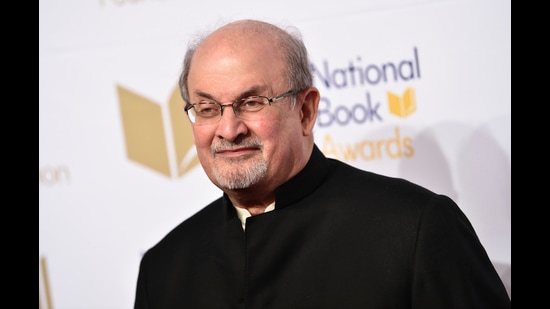
Rushdie was born in India. Though his citizenship may have changed, he continues to identify with this country.
I’m perplexed and dismayed by the cold indifference with which most of our politicians have responded to the savage attack on Salman Rushdie. In 1988, we were the only major democracy to ban The Satanic Verses. We did so without reading the book. Thirty-four years later, we’re the only major democracy not to officially condemn the attack. I truly cannot understand why.
Rushdie was born in India. Though his citizenship may have changed, he continues to identify with this country. In 2000, in an interview for BBC’s Hardtalk India, I asked him: “Is this country still home?” This was his reply: “There’s a sense in which the country in which you were born and grew up as a child is always home. You never have that feeling about any other place. Anyone who reads my books knows the extent to which my imagination calls this country home.”
If anything, his answer to my next question was even more telling. I asked: “If I was to ask, is Salman Rushdie Indian or English or Pakistani, which identity would you accept?” His response was short, stark but simple: “Oh not Pakistani!” The laugh that followed sounded more like a sneer. He found the very idea of being Pakistani ludicrous.
So why is there no public expression of horror and condemnation from our leading politicians? Why are they unable to voice anger at what happened? Why are they unwilling to even state their concern for his recovery? Indeed, why are they just silent?
No doubt a small handful have spoken, but the only party leader to do so is Sitaram Yechury. The rest, it seems, have nothing to say. That list includes not just the Prime Minister and his Cabinet, but also Sonia and Rahul Gandhi, Mamata Banerjee, Naveen Patnaik, MK Stalin, Nitish Kumar, Conrad Sangma, Farooq and Omar Abdullah. Is it really the case that not one of this lot felt anything when they learnt of the attack on Rushdie? Or has politics and the fear of offending Muslim voters – or the Iranian government – silenced them?
The full truth is the external affairs minister (EAM) has spoken, but when you consider what he said, it’s arguable that silence might have been preferable. In response to a question at a press conference in Bangalore he said: “I also read about it. This is something that the whole world has noticed and the whole world has reacted to such an attack.” The whole world, yes, but not our EAM. His was not a reaction to the attack – and certainly not a condemnation of it – but merely an acknowledgment that he was aware of it.
Rushdie is possibly the greatest, certainly the most widely read and by far the best known, author of Indian origin. Yet we’ve turned our back on him. Meanwhile, the rest of the world has embraced him and made him their own. “His fight is our fight,” said France’s President Emmanuel Macron. “Now more than ever, we stand by his side.”
So, let me ask bluntly, whose side are we on? There are occasions when you need to make it clear and obvious. In this instance the disturbing questions also affect our stature as the world’s largest democracy. When someone we should proudly call our own is attacked, why is it that we have nothing to say? And what does this suggest of our attitude to the Indian diaspora? Is Rushdie not one of its shining stars? Or is the faith he was born into – which he doesn’t follow – the problem?
Let me give Rushdie the last word. In the BBC interview I asked if he felt rejected by India. For years, it denied him a visa. “Yes, I did,” he replied. “I felt very hurt. I did feel the exile from India to be one of the most painful things of those years. I loved to come. I used to come every year.” Now, perhaps, our silence has added to his hurt.
Karan Thapar is author of Devil’s Advocate: The Untold Story.
The views expressed are personal
One Subscription.
Get 360° coverage—from daily headlines
to 100 year archives.
Archives
HT App & Website