Who is Dalit?
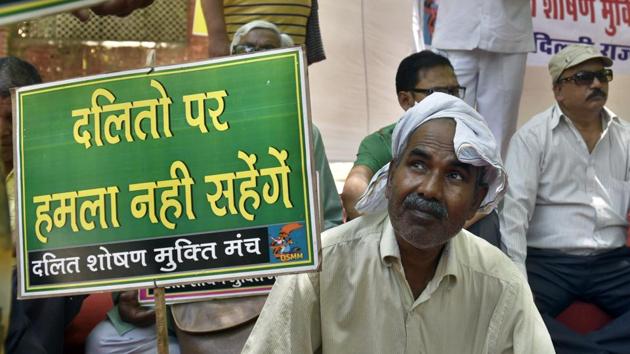
The answer, in the not-so-distant-past, was predictable: A starving farmer from the rural hinterlands of India conveniently removed from intelligentsia of urban India – a comfortable construction that kept any discussion of caste away from the living rooms of 21st century India.
Not anymore. Buoyed by constitutional protections, enterprise and affirmative action, the community now occupies spaces hitherto “reserved” for dominant castes and transforming what it means to be Dalit: No longer a mute sufferer of caste oppression to be rescued but confident individuals raring to claim their legitimate rights and unwilling to tolerate bias.
The recent protests against a rash of attacks on Dalits in Gujarat for sporting a moustache showcases this resilient spirit. Dalit men from across India mobilised on WhatsApp, Twitter and Facebook to post selfies of themselves with moustaches to signal their defiance.
Though one of the attacks is now under doubt and might be fake, the underlying point made by the protesters is unequivocal – that a new generation of Dalits won’t be sated in a discourse of caste that views them as passive sufferers.
A result of this assertion has been an expansion of the conversation on caste, from basic subsistence to web access, gender, political power and higher education – and growing resistance in situating caste in the body of the Dalit body, instead seeing that bias as shaping our lives, economies and social structures.
{{/usCountry}}A result of this assertion has been an expansion of the conversation on caste, from basic subsistence to web access, gender, political power and higher education – and growing resistance in situating caste in the body of the Dalit body, instead seeing that bias as shaping our lives, economies and social structures.
{{/usCountry}}The moustache protests, for example, broke out of the traditional mould of dharnas and rallies and took over a medium that is often crowded by voices from dominant castes. The twirling moustaches and facial hair also underlined the significant but little-understood ways in which caste governs gender, and how any conversation on masculinity is incomplete without probing how endogamy and caste inspire masculine behaviour — the oft-used synonyms of Jat, Khsatriya or Rajput to signify virility is a clue to this relationship. In Gujarat, the dominant castes’ objection was linked to a struggle for power and how visible masculinity was punished to deny that.
Caste is about power. The new wave of Dalit protests understand this well and therefore targets the bastions of power: Academia, political representation and culture. From the protests sweeping universities demanding a more equitable culture that goes beyond mere admission to Bhim Army’s muscular response to subtle and overt ways of caste governance in western Uttar Pradesh, a new generation of Dalits are taking off from the eighties groundwork of their Dalit panther ancestors.
This is a transformative moment because such movements are on their way to expelling the possibility of dominant caste bastions and their markers — English-speaking, university-educated, foreign-travelled individuals from “good” families — and effecting an expansion of the caste conversation.
So if you asked the question, Who is a Dalit, today, the answer could be as varied as India: The Dalit could be the daughter of a bureaucrat, the topper of the country’s toughest examination, a social media expert, a village headman or a political commentator.
A vast majority of them are still poor and lack basic amenities but impoverishment, soiled clothes and broken English are no longer the only reference points to talk about caste. They’re no longer the labourer who dies 15 minutes into a movie, they’re Newton.
dhruba.purkait@hindustantimes.com