
 E-Paper



After lock down, India swimmers chase A qualifying norm for Tokyo Olympics
At least six Indian swimmers have achieved the second-level Olympic qualifying mark—B standard or Olympic Selection Time—but it only keeps them on course if the total quota of swimmers is not reached by the end of the qualification period.

 Prefer HTon Google


As Indian swimmers finally settle down to some level of training rhythm after months of frustration due to Covid-19 lock down, they may have to surmount a double challenge to confirm a berth in next year’s Tokyo Olympics.
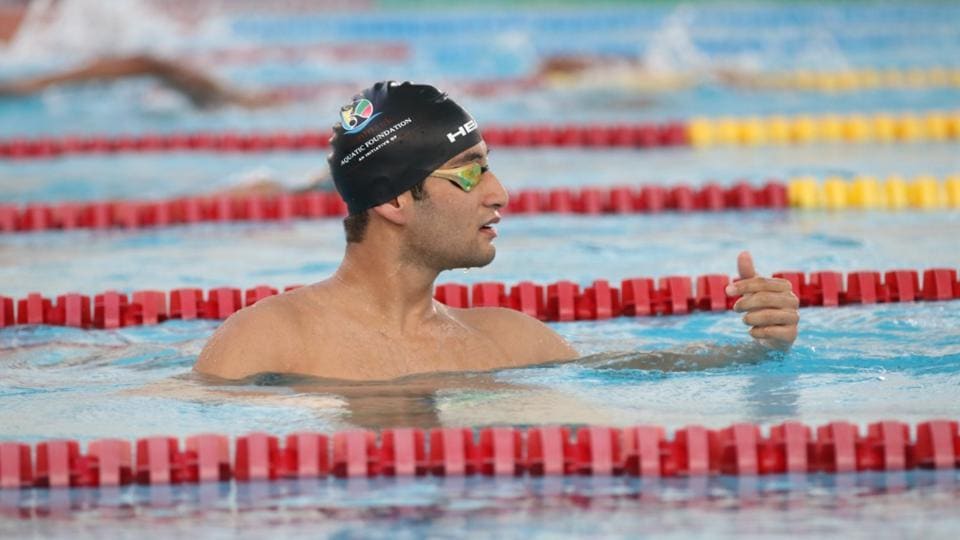
At least six Indian swimmers have achieved the second-level Olympic qualifying mark—B standard or Olympic Selection Time—but it only keeps them on course if the total quota of swimmers is not reached by the end of the qualification period.
That means they may have to write a new chapter—no Indian swimmer has till date achieved the A standard, or Olympic Qualification Time—to ensure an automatic berth to line up at the Olympic pool next year.
Among those to achieve B qualifying standard in the 2019 Olympic qualification cycle are a young band of distance swimmers in the pool—Delhi’s 20-year-old Kushagra Rawat and US-based teenager Advait Page. Teenager Srihari Nataraj has made the B grade clocking 54.69 secs in 100m backstroke (53.85 secs is the A mark).
Sajan Prakash (200m butterfly) is based in Phuket, Thailand while Aryan Makhija (800m freestyle) is based in Alabama, US and part of the college system there like Page.
Nataraj is keen to achieve the A qualification mark. “I’ve a goal in mind. I just need two-three months of hard training. That’s all. “When you think of big things, small issues don’t matter,” says the Bengaluru youngster, who is determined to overcome the setbacks due to lockdown. The national champion was one of three swimmers selected by Sports Authority of India (SAI) in late August for a two-month training stint in Dubai along with Rawat and Sajan Prakash that ended on October 20.
Rawat and Page are determined to make a mark in swimming’s gruelling events.
In March, Rawat, a final year Delhi University student, achieved B norm for the Tokyo Games in all three freestyle endurance events—400m, 800m and 1500m--in a meet in Sydney.
His favourite event though is 800m freestyle, having made significant progress in the event since 2018. Rawat, who as a 13-year-old was dismissed by a Delhi coach as not having much promise, has sliced vital seconds in the last two seasons. Still, his personal best of 8 min, 01.71 secs is seven seconds shy of the Olympic A norm.
The national record of Advait Page—he reached the final in 800m and 1,500m freestyle at the 2018 Asian Games—in the shorter distance is 8:00.76 although the Olympic A qualifying mark is 7:54.31.
“I believe I can do better in this event,” says Rawat, referring to the 16-lap event.
Rawat holds the national records in 400m and 1,500m events now—3:52.75 secs and 15:25.22. The A standard in 400m freestyle is 3:46.78 secs.
Rawat faces twin challenges in his bid to achieve the A mark. Months of lockdown means he is pretty much in a re-building phase as far as his fitness and rhythm are concerned. And he acknowledges he needs to fine-tune strokes and technique at the turn—gaining micro-seconds at each of the 15 turns will ease the pressure on having to plough through the water faster.
“By December I should be able to regain my lost fitness, and I can then focus on further improving,” Rawat said from Bengaluru, where he is currently training. “I’ve to polish my technique—it will automatically lower my time without pushing hard in terms of strokes.”
His coach Partha Prathim Majumdar, head of the national swimming academy in Delhi, believes his ward has the ability and dedication required to achieve his 800m target. “Good technique apart, proper distribution of energy is important to be successful in top-level competitions,” he said. Among aspects Rawat, who joined the Delhi academy in 2017, needs to correct is body alignment (head slightly bouncing while breathing).
Lactic acid efficiency tests, done twice a month between high intensity sessions by taking Rawat’s blood sample to evaluate the impact of training, though show promising results. “He (Rawat) has good aerobic capacity, which is an advantage in distance swimming. But we are aiming for maximum speed that can be maintained without getting tired,” Majumdar said.
Advait Page, 18, who set the national 800m freestyle record at last year’s Singapore nationals, is a freshman in the University of Florida, where he trains as part of the swimming programme. He is also national record holder in 400m individual medley.
Rawat, son of a former Delhi footballer and retired bank official, received a big boost last December after he was included in the government’s Target Olympic Podium Scheme (TOPS) that funds the training of select athletes. It will ease the financial burden on his family.
His father Hukam Singh says he spent R10 lakh to R12 lakh annually on Rawat’s diet and equipment. “When my son goes for coaching camps I go with him, though I stay on my own. I prepare food and ensure he gets good diet.”
Coach Majumdar says the January to March phase will be important as Rawat will take part in competitions approved by swimming world body, FINA, chasing the A standard. “Depending on the pandemic situation and international travel restriction, we will decide where to participate,” said Majumdar. While 800m will be the focus for Tokyo, it will be 400m for the 2022 Asian Games.
Former national coach, Nihar Ameen, the prominent Bengaluru-based trainer, acknowledges it will be difficult to achieve the Olympic A qualifying standard. “Our athletes are training hard, but a clear picture will emerge only when the season starts in early 2021. Competition will tell us how much we have improved and how much we have lost during the pandemic.”
Parents have been fully involved in Rawat’s training since 2015. Hukam Singh said: “It’s like a 24x7 job. I get up at 3.30 am and drive 45 minutes from home in North Delhi to drop my son at the Talkotara swimming pool for training. We also make sure he goes to sleep at 9 pm.”


