
 E-Paper



Bindra, Campriani set out to give refugee shooters new identity
For Campriani and Bindra, it’s about opening a channel where refugee athletes can get better opportunities and facilities to achieve sporting excellence.


When Niccolo Campriani left the shooting range at the Rio Olympic Games with the 50m 3-positions rifle gold around his neck, the Italian rifle marksman - one of the most successful Olympic shooters with three gold medals in two editions - was clear in his mind. He won’t be firing competitively again. When Abhinav Bindra bowed out at the same venue in 2016, missing bronze by a whisker, the Beijing Olympic Games gold medallist in 10m air rifle too had made up his mind that he had fired his last competitive shot. Both had seen their “passion turn into obsession”. They could have trained endlessly, but it would have been bereft of enjoyment.
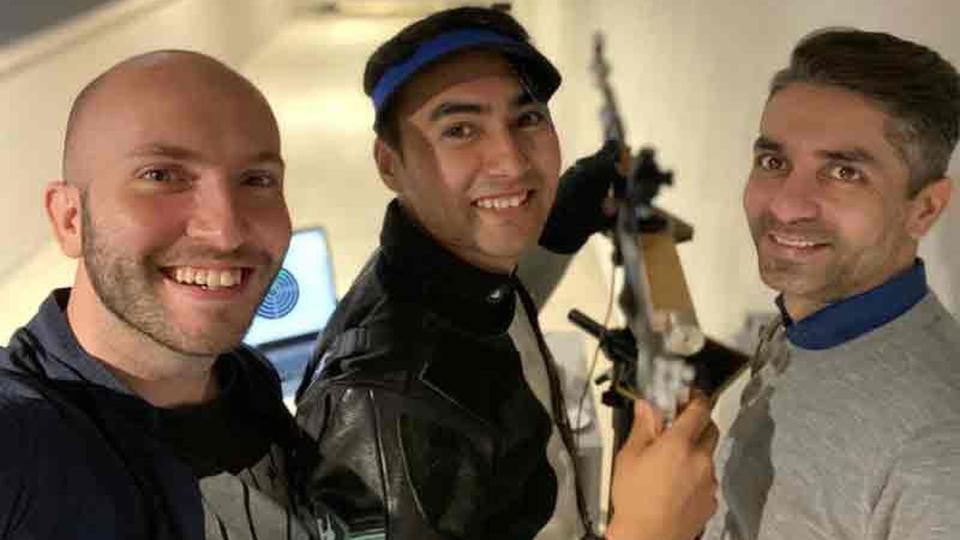
“When I started to shoot in 2000 at the age of 13, the focus was to go to the Olympics one day. After winning gold at the 2012 London Olympics, there was a void…. What next? So I kept shooting and passion became an obsession. Four hours of shooting became 12 hours and I could have gone on endlessly. But I wasn’t enjoying what I was doing. My mind was made up that it (the Rio Games) would be the last competitive event of my life,” said Campriani, as he unveiled “Taking Refuge”, a five-part series partnering Bindra, which premiered on the International Olympic Committee’s (IOC) global media platform, olympicchannel.com, on Monday.
The series traces the 500-day-long journey of three refugees from the moment they set foot at an archery venue in Lausanne for a trial in 10m air rifle, and the progress they’ve made to achieve their goal of competing at the Tokyo Olympics. For Campriani, the project was born out of the “urge” to do something for the refugees.
“After competitive shooting, there was a big void in my life. The global refugee issue is very close to my heart and when I moved from Italy to Lausanne, Switzerland, the blueprint was clear.” Campriani had known that a refugee team had competed at the Rio Olympics and he wanted to take a few refugees under his wings and train them so that they could make it to the Tokyo Olympics.
Eleven young refugees residing in Switzerland came for trials. Of them, three - a boy from Afghanistan and two women, one from “a Middle-eastern country and another from an African country” were shortlisted. They would by trained by Campriani himself at an archery venue in Lausanne and Abhinav Bindra at his foundation in Bengaluru in 10m air rifle. The target was to make them a part of the refugee team that would compete at the now-postponed 2020 Olympics.
“I was touch by Campriani’s project, his determination and I was determined to help. Nico and I are really excited about the project. He wants the project to be taken forward by more athletes in other disciplines and I am all for it,” says Bindra, adding, “We want to change the lives of the athletes involved (in the project). We want to create a legacy.”
With three refugees onboard – Mahdi (Afghanistan), Khaoula (Middle-east) and Luna (Africa) – Campriani set out to experiment. It had taken him eight years to make it to the Olympics in Beijing but he wanted them on the global stage in just 500 days. “The idea came to me sitting with a Starbucks coffee in hand and the next day I was at it,” says Campriani.
More than a year on, Luna has got married and has a three-month-old child to take care of, while Mahdi and Khaoula continue to train, though still not sure they will get a chance to go to Tokyo or not. “There are about 50 shooters vying for berths in the refugee team for Tokyo. Though Mahdi and Khaoula have achieved MQS (Minimum Qualification Scores), they are not assured of a berth. With the Tokyo Games postponed, we still have 364 more days to train them,” says Campriani.
For Campriani and Bindra, it’s not just about getting the two to Tokyo but also about opening a channel where more refugee athletes can get better opportunities and facilities to achieve sporting excellence. Bindra’s project ‘Make A Mark’ is helping refugee athletes transform their lives through sport. “We require money, crowd funding and sponsors to make it happen... help the Mahdis and Khaoulas achieve sporting excellence,” says Bindra.
For Campriani, the bigger objective is to give refugees a new, positive identity. “The perception is they just don’t do anything… they just sleep and eat. I want to change that.”


