
 E-Paper



Photos: Cadets prepare to become efficient firemen in Delhi’s Mandawli
To combat the rising incidents of fires in the city, the Delhi Fire Services (DFS) plans to add 500 more firemen to the already existing 2,200 firemen present at its disposal. These cadets are being trained for the challenging task in training centres at Rohini and Mandawli. As part of their training, they are familiarised with fire, taught the different ways of lifting victims and tying knots, among other things. HT’s Raj K Raj documents the training of the cadets in Mandawli.
Updated on: Aug 13, 2019 10:13 AM IST

Share via


Copy link

1/10
 View Photos in a new improved layout
Updated on Aug 13, 2019 10:13 AM
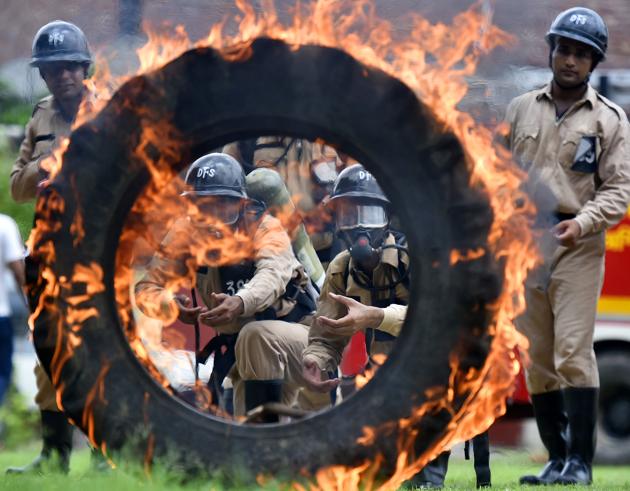
Cadets are familiarised with different emergency and disaster situations at the Delhi Fire Service (DFS) campus in Mandawli, New Delhi. Delhi reports more than 80 incidents of fire every day. The DFS has 2,200 firemen at its disposal, and a total of 240 fire tenders. To ably fight them, the DFS plans to add 500 more firemen — who are currently readying for the challenging task in training centres at Rohini and Mandawli. (Raj K Raj / HT Photo)
2/10
 View Photos in a new improved layout
Updated on Aug 13, 2019 10:13 AM
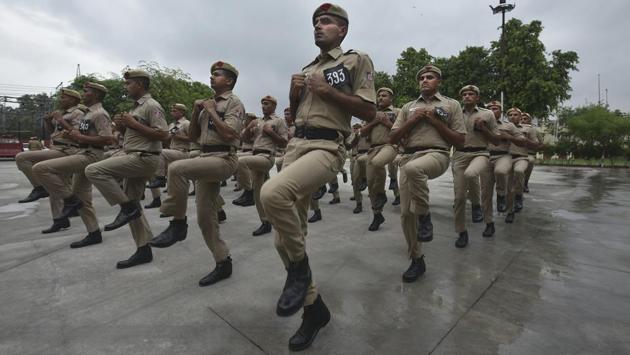
Cadets during a physical drill at the training centre. The training lasts for a period of six months, and equips the cadets to deal with all kinds of situations at the scene of a fire. (Raj K Raj / HT Photo)
3/10
 View Photos in a new improved layout
Updated on Aug 13, 2019 10:13 AM
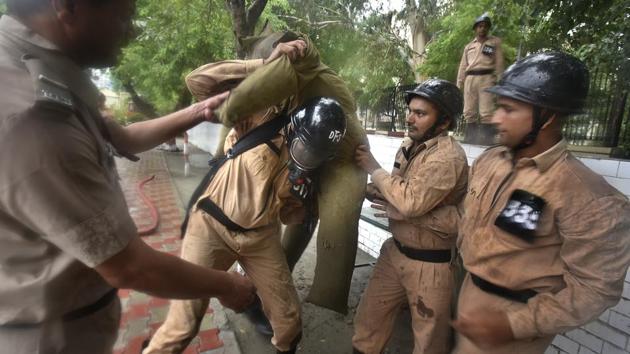
Lifting an injured person is the most crucial part since lifting incorrectly may aggravate injuries. Some of the lifts that the firemen are taught are – fireman’s lift: lifting on shoulder, pick a back: carrying a victim on back and chair lift: two firemen making an injured sit on their arms and carrying them out. (Raj K Raj / HT Photo)
4/10
 View Photos in a new improved layout
Updated on Aug 13, 2019 10:13 AM
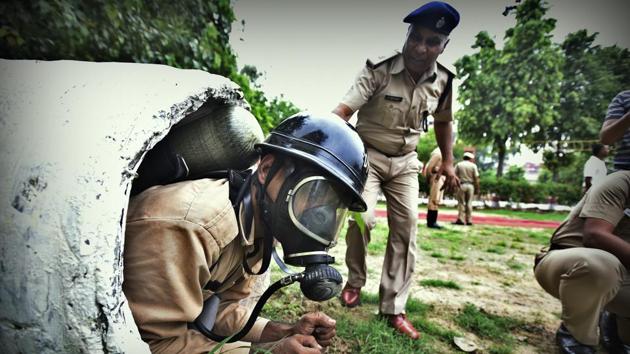
While rescuing people in confined places such as sewer lines and manholes, firemen wear self-contained breathing apparatus sets, to maintain oxygen levels. With a face mask and an oxygen cylinder, it allows the personnel to breath for up to 40 minutes. (Raj K Raj / HT Photo)
5/10
 View Photos in a new improved layout
Updated on Aug 13, 2019 10:13 AM
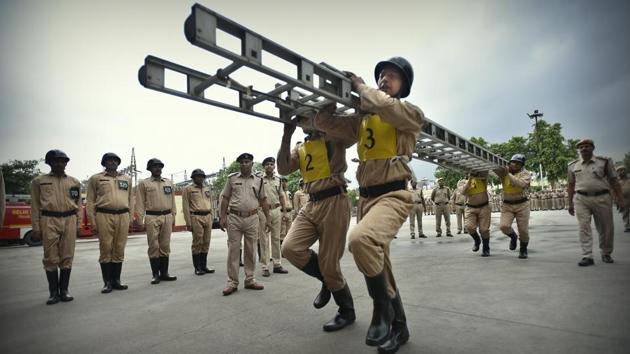
Cadets carry a ladder during a drill. In case of fires in buildings, ladders are used by the firemen to reach the site of the fire and douse it. (Raj K Raj / HT Photo)
6/10
 View Photos in a new improved layout
Updated on Aug 13, 2019 10:13 AM
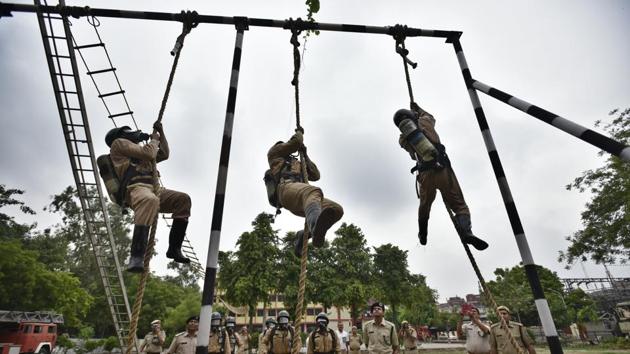
When ladders fall, ropes are the last resort. The firemen are taught as many as 32 different kinds of knots to use during any rescue operation. Some of these are – reef knot: to increase length of a rope; chair knot: to bring down people from a building: bowline knot: to lift and rescue animals, and constrictor knot: to tie together a bundle of equipment. (Raj K Raj / HT Photo)
7/10
 View Photos in a new improved layout
Updated on Aug 13, 2019 10:13 AM
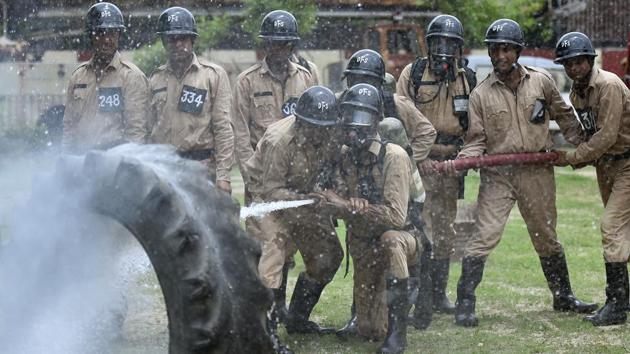
Cadets use water to douse fire during a drill. Fires kill around 80 people in the city every year. To ably combat these fires, the role of the firemen cannot be understated. (Raj K Raj / HT Photo)
8/10
 View Photos in a new improved layout
Updated on Aug 13, 2019 10:13 AM
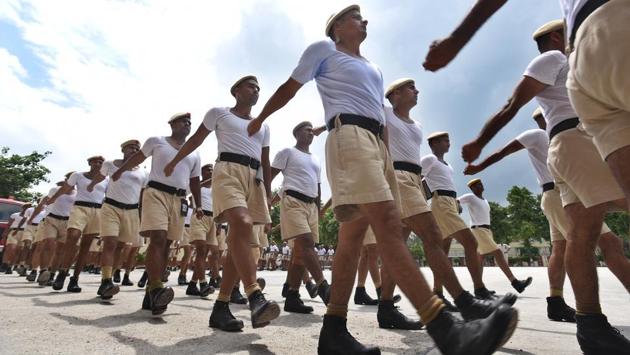
The cadets are being trained to march by the Central Industrial Security Force (CISF) personnel. They will march in the presence of the Lieutenant-Governor of Delhi Anil Baijal on August 14. (Raj K Raj / HT Photo)
9/10
 View Photos in a new improved layout
Updated on Aug 13, 2019 10:13 AM
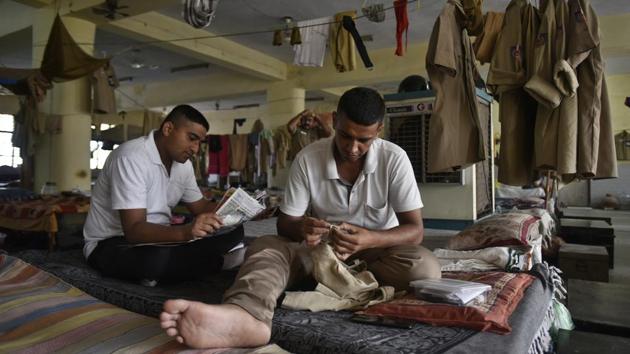
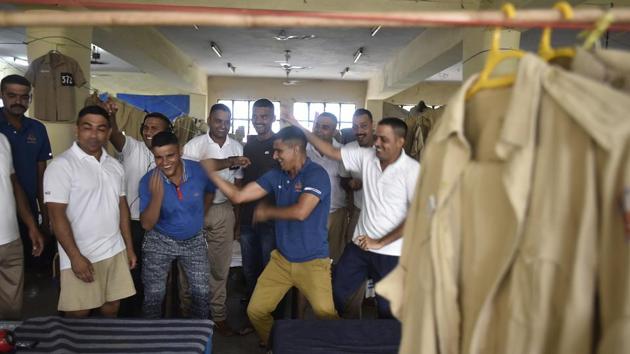
After a day full of physical training, yoga, fire fighting drills, equipment training, sports activities and roll call, that stretches from 5:30 am to 6 pm every day, cadets are allowed leisure time before lights out at 10:30 pm. Leisure activities may include watching the television, listening to radio, reading books and newspapers, working out at a gymnasium or surfing the internet. (Raj K Raj / HT Photo)
10/10
 View Photos in a new improved layout
Updated on Aug 13, 2019 10:13 AM


