
 E-Paper



Photos: Delhi’s air quality now “poor” after improving from “severe”
From a "severe" AQI reading of 435 just after Diwali on November 15, the air in Delhi has improved to "poor" (221) on November 16 and "moderate" (171) on November 17 according to the Ministry of Earth Sciences’ System of Air Quality and Weather Forecasting And Research (SAFAR). A slight deterioration on November 18 took the air to “poor” but the Air Quality Index (AQI) is predicted by weather agencies to improve a notch due to favourable weather conditions and fewer stubble fires. The capital is looking at colder temperatures of as low as 9 degrees Celcius by the weekend according to the IMD.
Updated on: Nov 19, 2020 11:46 AM IST


Share via


Copy link

1/8
 View Photos in a new improved layout
Published on Nov 19, 2020 11:46 AM
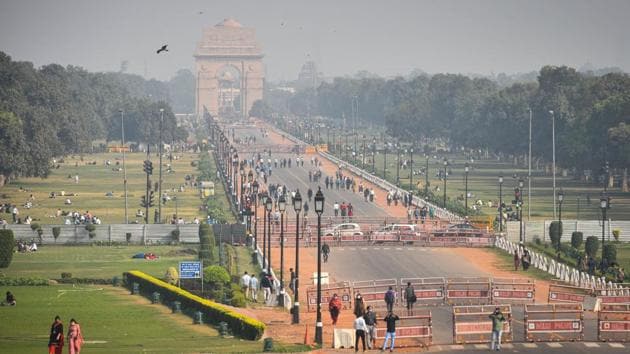
A view of India Gate in New Delhi on what remained a hazy day on November 18. Delhi’s air deteriorated marginally and slipped into the “poor” category on November 18, according to the Central Pollution Control Board bulletin, despite beginning the day in the “moderate” category. The Air Quality Index (AQI) stood at 180 at 6am and had dropped to 211 by 4pm. (Sanchit Khanna / HT Photo)
2/8
 View Photos in a new improved layout
Published on Nov 19, 2020 11:46 AM
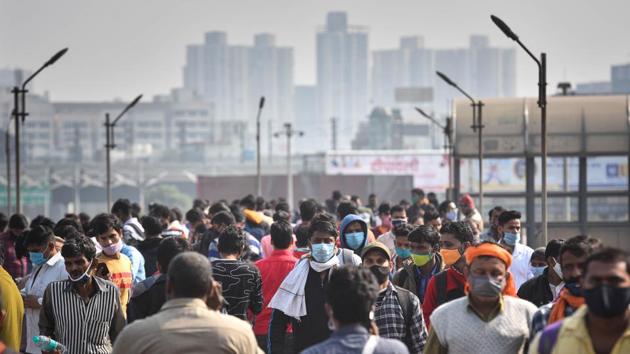
A rush of people travelling ahead of Chhath Puja, at Anand Vihar ISBT on November 18. Favourable meteorological conditions and the reduction of farm fires in recent days have helped the capital breathe better, improving upon the “severe” AQI reading of 435 that was recorded on November 15, just a day after Diwali. (Sanchit Khanna / HT Photo)
3/8
 View Photos in a new improved layout
Published on Nov 19, 2020 11:46 AM
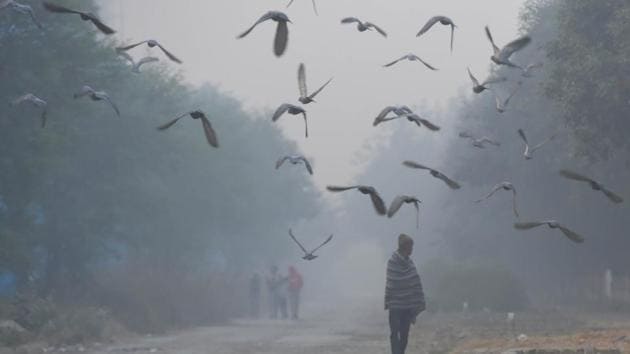
Pigeons take flight on a foggy morning in the outskirts of Dwarka in New Delhi on November 18. Weather experts and government agencies have said no significant change is likely in the next three to four days in Delhi’s weather, PTI reported. Due to high wind speeds throughout the week and negligible stubble burning activity, the air quality is expected to oscillate between “moderate” and “poor”. (Vipin Kumar / HT Photo)
4/8
 View Photos in a new improved layout
Published on Nov 19, 2020 11:46 AM
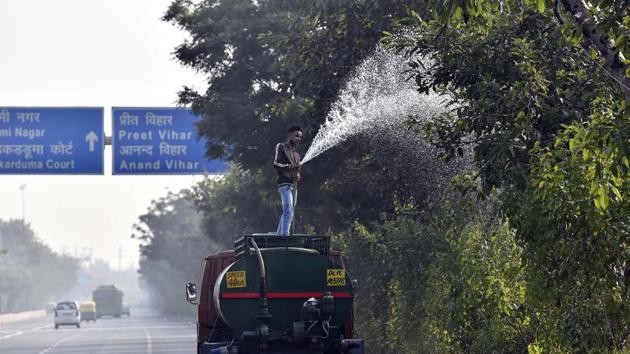
A Public Works Department (PWD) worker sprays water on trees as a pollution control measure, at Vikas Marg near ITO Bridge in New Delhi on November 17. According to the Ministry of Earth Sciences’ System of Air Quality and Weather Forecasting And Research (SAFAR), stubble burning accounted for eight per cent of Delhi’s PM2.5 pollution on November 18. It was three per cent a day prior. (Sanjeev Verma / HT Photo)
5/8
 View Photos in a new improved layout
Published on Nov 19, 2020 11:46 AM
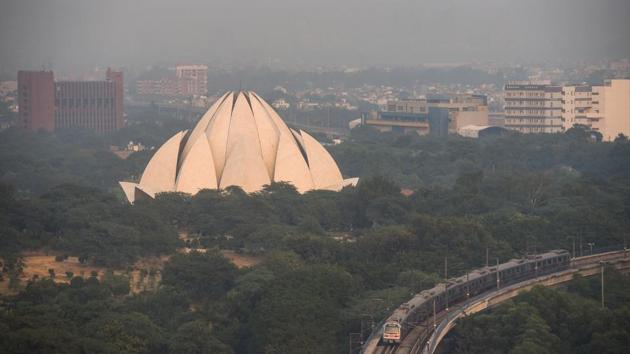
A metro train passes Lotus Temple in the afternoon at Kalkaji in New Delhi, India, on November 18. V K Soni, the head of the India Meteorological Department’s (IMD) environment research centre, told PTI that northwesterly winds had increased the contribution of stubble burning to Delhi’s pollution slightly on November 18. (Amal KS / HT Photo)
6/8
 View Photos in a new improved layout
Published on Nov 19, 2020 11:46 AM
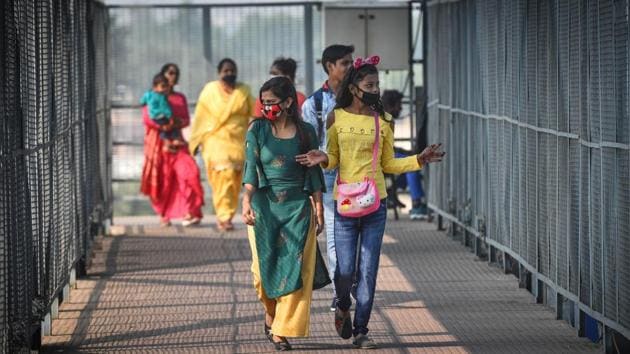
People wearing protective face masks while out in New Delhi on November 18. Meanwhile, temperatures are likely to drop in the national capital this week. The IMD predicts a drop to 9 degrees Celsius by November 21, due to cold winds blowing in from hilly regions, which have witnessed a fresh bout of snowfall. (Sanchit Khanna / HT Photo)
7/8
 View Photos in a new improved layout
Published on Nov 19, 2020 11:46 AM
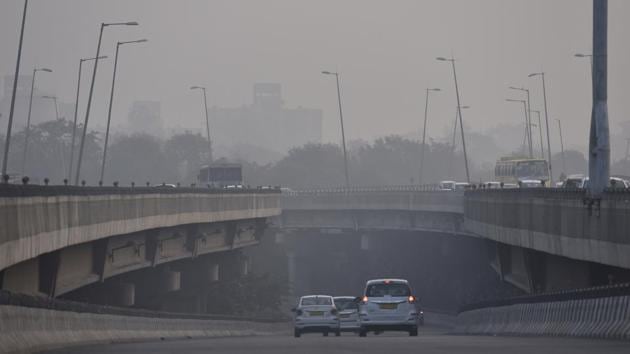
Sparse traffic on a cold morning near Shankar Vihar, in New Delhi on November 17. The minimum temperature this month, barring on November 16, has remained 2-3 degrees below normal in the absence of a cloud cover, according to IMD officials. (Sanjeev Verma / HT Photo)
8/8
 View Photos in a new improved layout
Published on Nov 19, 2020 11:46 AM


