
 E-Paper



Photos| Delhi’s happiness curriculum: a class with no textbooks or homework
Happiness Curriculum, a passion project of deputy chief minister Manish Sisodia is designed by a team of Delhi government teachers, educators, psychologists, volunteers, among others for enhancing the mental and emotional well-being of students. The curriculum is being taught to about 10 lakh students in over 1,000 Delhi government schools across Delhi, where there is a 45-minute “happiness class”, daily for children in classes 1 to 8 and twice for kindergarten children. HT visited Kautilya Bal Vidyalaya in Chirag Enclave where about 1,000 students have been attending the class since it was introduced in the school on July 12.
Updated on: Aug 28, 2018 11:39 AM IST

Share via


Copy link

1/8
 View Photos in a new improved layout
Updated on Aug 28, 2018 11:39 AM
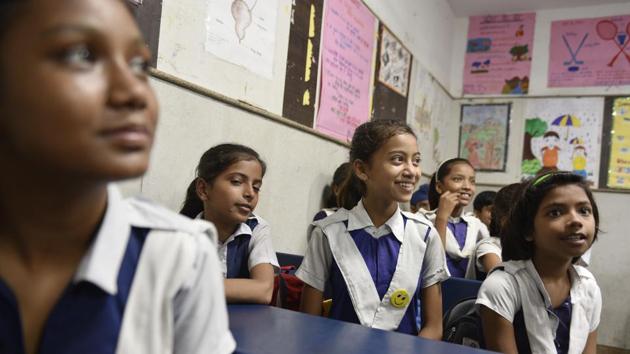
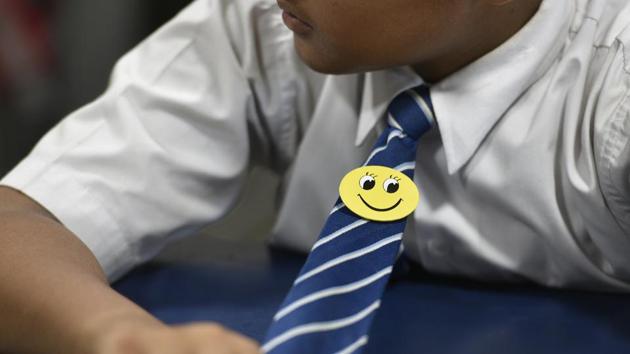
Students listen to their teacher during first period -- happiness class -- at Kautilya Government Sarvodaya Bal Vidyalaya in south Delhi’s Chirag Enclave. The walls have several colourful posters made by the students, including one that lists ‘12 ways to happiness.’ The teacher and the children, with yellow smiley badges pinned to their ties, look fresh, cheerful and jovial — the perfect atmosphere for a class, which has no grades, no textbooks, no homework. (Sanchit Khanna / HT Photo)
2/8
 View Photos in a new improved layout
Updated on Aug 28, 2018 11:39 AM
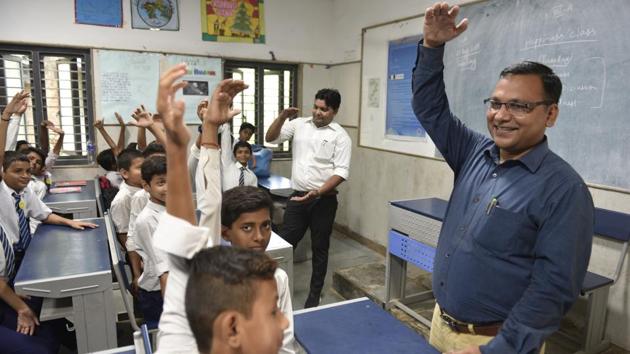
Principal CS Verma (R) and teacher Suresh Kumar take the happiness class. These classes were introduced by the Delhi government in its schools for children up to Class 8 for enhancing their mental and emotional well-being. The curriculum was rolled out on July 2 in the presence of the Dalai Lama at an event attended by chief minister Arvind Kejriwal and deputy chief minister Manish Sisodia. (Sanchit Khanna / HT Photo)
3/8
 View Photos in a new improved layout
Updated on Aug 28, 2018 11:39 AM
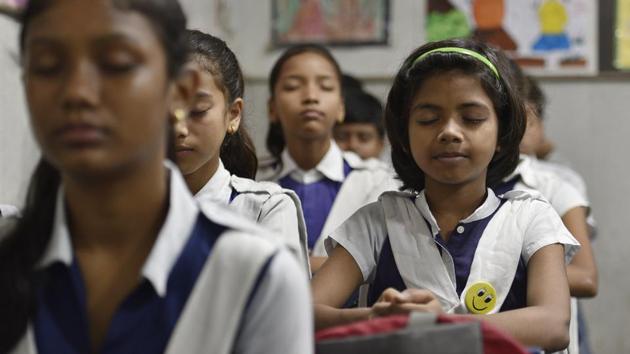
Students meditate as a teacher speaks. Happiness Curriculum is a passion project of Sisodia, designed by a team of Delhi government teachers, educators, psychologists and volunteers. The curriculum is being taught to about 10 lakh students in over 1,000 government schools across Delhi, where there is a 45-minute “happiness class”, daily for children in classes 1 to 8. Kindergarten students have the classes twice a week. (Sanchit Khanna / HT Photo)
4/8
 View Photos in a new improved layout
Updated on Aug 28, 2018 11:39 AM
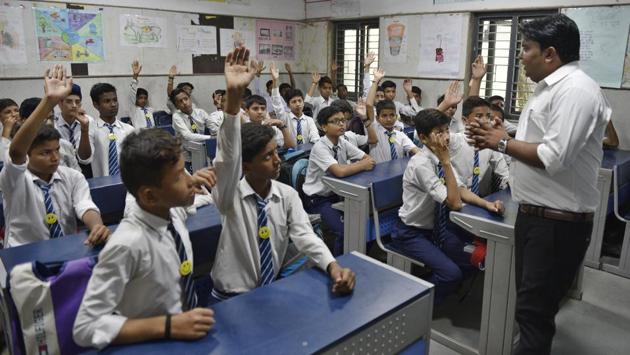
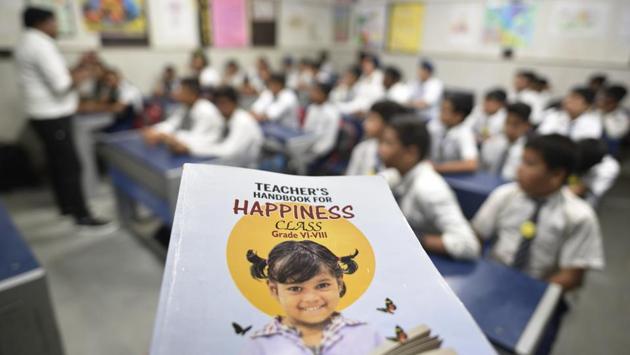
About 18,000 government teachers, including Kumar, have gone through a three-day orientation programme to learn how to teach the new curriculum. He, like all other teachers, has been provided with a ‘handbook’, which has the curriculum with clearly defined learning objectives and guiding principles. (Sanchit Khanna / HT Photo)
5/8
 View Photos in a new improved layout
Updated on Aug 28, 2018 11:39 AM
This handbook for happiness for Classes 6 to 8 is divided into four sections: Mindfulness, which includes mindful listening, sensory awareness, among others; Storytelling, which includes 20 stories, each story with its objective clearly spelt out on top of the page; Activities aimed at teaching the meaning of happiness, competence; and Expression. (Sanchit Khanna / HT Photo)
6/8
 View Photos in a new improved layout
Updated on Aug 28, 2018 11:39 AM
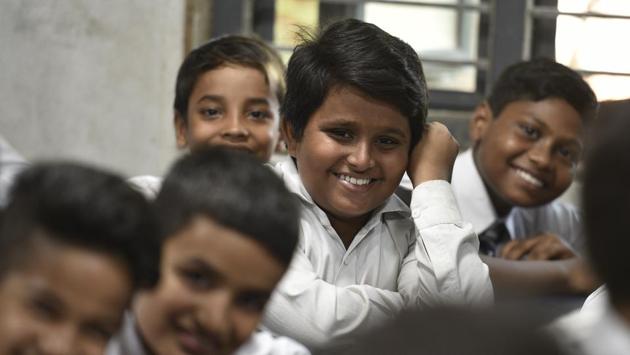
About 1,000 students at Kautilya Bal Vidyalaya have been attending the class since it was introduced in the school on July 12. Verma, the principal of the school, who was also a member of the core team that contributed to the curriculum -- is pretty excited about the course and the result it has produced so far. (Sanchit Khanna / HT Photo)
7/8
 View Photos in a new improved layout
Updated on Aug 28, 2018 11:39 AM
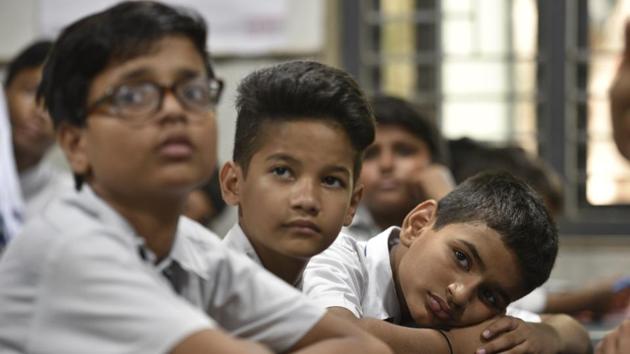
A majority of children in this school come from underprivileged sections of society and are vulnerable to stress. Verma said, after these students have attended happiness class for 6 weeks he has seen they are more focused on studies and unlike in the past, they are more willing to accept their mistakes. (Sanchit Khanna / HT Photo)
8/8
 View Photos in a new improved layout
Updated on Aug 28, 2018 11:39 AM


