
 E-Paper



Photos: Fishermen cry foul as China bids to fix its biggest freshwater lake
On Jan. 1 2020, China will ban fishing in environmentally sensitive regions along the Yangtze, China's longest river, and by the start of 2021, fishing throughout China's biggest freshwater lake, the Poyang itself will be prohibited for at least 10 years. The government says excessive fishing has brought stocks down to perilously low levels and put endangered species under threat, including China's last surviving river mammal, the Yangtze finless porpoise. Fishermen meanwhile say they’re being unfairly blamed for mounting local environmental problems and must now find other ways to make a living.
Updated on: Dec 24, 2019 1:42 PM IST


Share via


Copy link

1/14
 View Photos in a new improved layout
Updated on Dec 24, 2019 1:42 PM
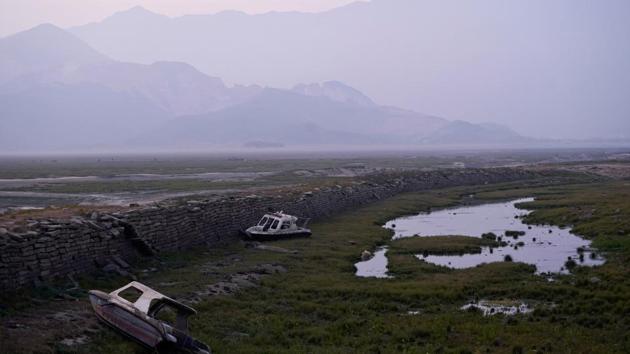
An abandoned boats lie on the dried lake bed of Poyang Lake, in Jiujiang, Jiangxi province, China. After wading through mudflats, Fan Xinde, a 36-year-old fisherman, sifts old copper coins from the debris scooped from the bed of a dwindling river that feeds China’s biggest freshwater lake, the Poyang. (Aly Song / REUTERS)
2/14
 View Photos in a new improved layout
Updated on Dec 24, 2019 1:42 PM
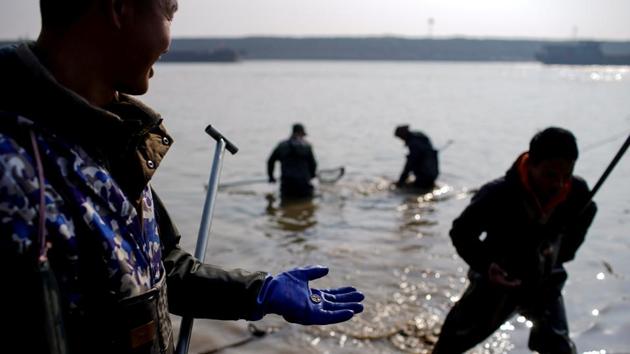
Fan Xinde holds a copper coin. As residents fled invading Japanese troops 80 years ago, the coins were packed into boxes and sent down the river on rafts, with many sinking without trace. They are now being unearthed as the water in the Poyang recedes to its lowest level in decades, providing a small income for fishermen like Fan facing an uncertain future. (Aly Song / REUTERS)
3/14
 View Photos in a new improved layout
Updated on Dec 24, 2019 1:42 PM
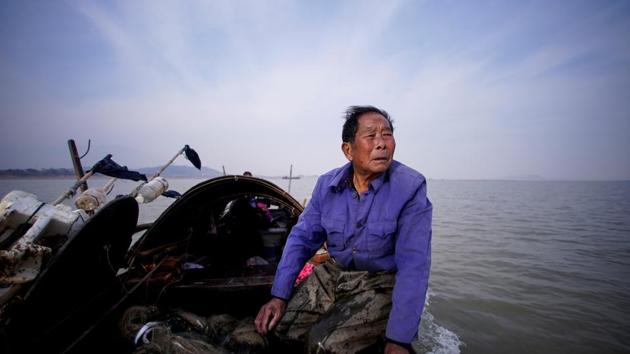
Cha Zhengnan, a fisherman, on his boat at Poyang Lake. On Jan. 1 2020, China will ban fishing in sensitive regions along the Yangtze, China’s longest river, and by the start of 2021, fishing throughout the Poyang itself will be prohibited for at least 10 years. Fan said he and as many as 100,000 other fishermen were being unfairly blamed for mounting local environmental problems and must now find other ways to make a living. (Aly Song / REUTERS)
4/14
 View Photos in a new improved layout
Updated on Dec 24, 2019 1:42 PM
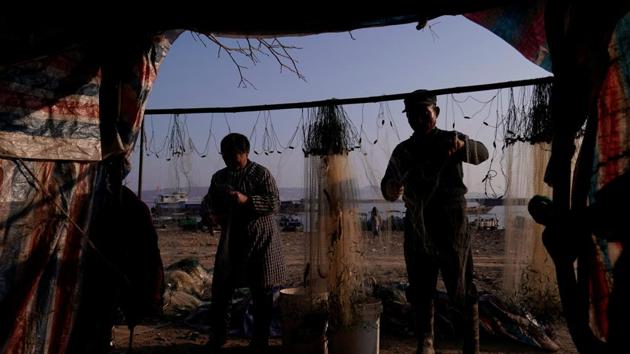
Fishermen remove fish from a net. “Our sources of income have been cut off. We don’t have anything else,” Fan said. “To be honest, we shouldn’t be collecting the coins at all because they are owned by the state, but it is only a tiny amount.” The government says excessive fishing has brought stocks down to perilously low levels and put endangered species under threat, including China’s last surviving river mammal, the Yangtze finless porpoise. (Aly Song / REUTERS)
5/14
 View Photos in a new improved layout
Updated on Dec 24, 2019 1:42 PM
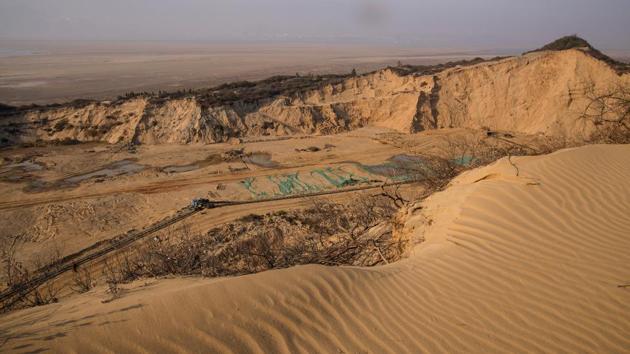
An area cleared for sand mining is situated on a dried Poyang Lake lake bed. The Poyang, described by President Xi Jinping as a vital “kidney” filtering the water supplies of 40% of China’s population, has also been hurt by intensive sand mining, untreated wastewater and the impact of the giant Three Gorges Dam some 560km upstream. (Aly Song / REUTERS)
6/14
 View Photos in a new improved layout
Updated on Dec 24, 2019 1:42 PM
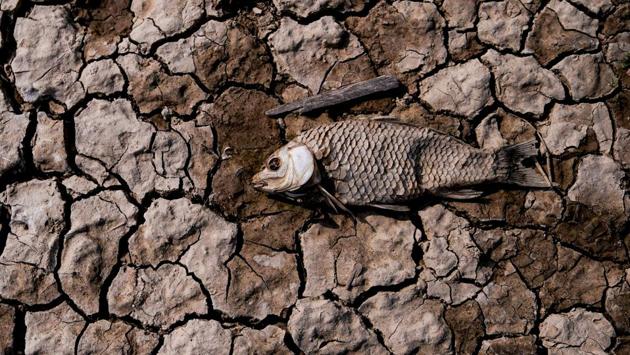
The remains of a fish, lies amongst cracked mud on the dried lake bed. Water in the Poyang, which spills off from the middle reaches of the Yangtze River in Jiangxi province, routinely declines in winter. But the lake is now at its lowest in 60 years. With little rain since July, hundreds of shrivelled anchovies and tiny shellfish have been baked into the exposed shoreline flats. (Aly Song / REUTERS)
7/14
 View Photos in a new improved layout
Updated on Dec 24, 2019 1:42 PM
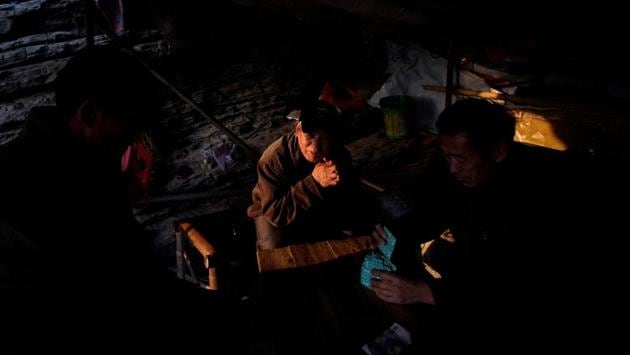
Fishermen play a game of poker in a tent . Residents blame the Three Gorges Project for the problems facing the lake, with its vast 660km-long reservoir storing huge volumes of water behind a giant dam for power generation. “The Three Gorges is blocking off all the water,” said Zhang Yingsheng, a 59-year old fisherman picking clams from the edge of the lake. “Every winter is like this now, but this year is especially low because of the drought.” (Aly Song / REUTERS)
8/14
 View Photos in a new improved layout
Updated on Dec 24, 2019 1:42 PM
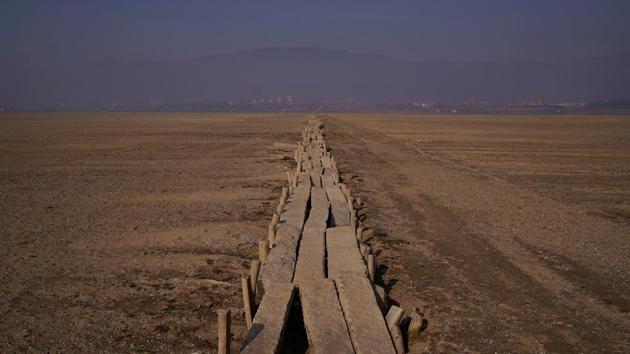
Qianyan bridge, a historic stone bridge which dates back to the Ming dynasty, stands on the dried lake bed of Poyang Lake. With the 181-metre dam reducing the Yangtze’s flow in winter, water from the Poyang drains quickly and easily back into the river. But the primary cause of problems is the two decades of intensive sand mining in the Poyang, said David Shankman, professor at the University of Alabama, who studies the lake. (Aly Song / REUTERS)
9/14
 View Photos in a new improved layout
Updated on Dec 24, 2019 1:42 PM
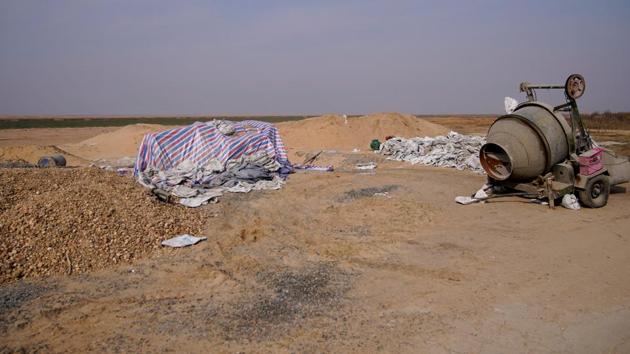
Remnants of a construction site stand on the dried lake bed. “Sand mining has made the drainage channel (in the northern part of the lake) deeper and wider” accelerating the draining, he said. Zhang said quarrying by giant dredgers had hit fishing hard, with deeper lake beds making it harder for fishermen to deploy their nets. The sand industry had also damaged the lake’s ecosystem, he said. (Aly Song / REUTERS)
10/14
 View Photos in a new improved layout
Updated on Dec 24, 2019 1:42 PM
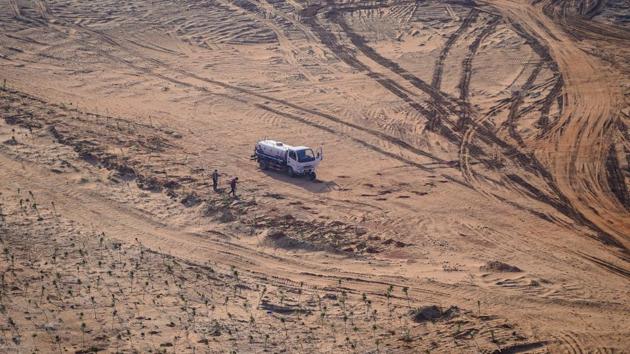
People plant trees on a sand mine. According to policy plans seen by Reuters, the local government is already working to reduce mining activity in the Poyang after banning it in the Yangtze two decades ago. Annual sand production will be limited to 39.9 million tonnes from 2019-2024, down 26.9% compared to the 2014-2018 period. Dredgers will be permitted to mine 65 square km of the lake area, a quarter of the previous level. (Aly Song / REUTERS)
11/14
 View Photos in a new improved layout
Updated on Dec 24, 2019 1:42 PM
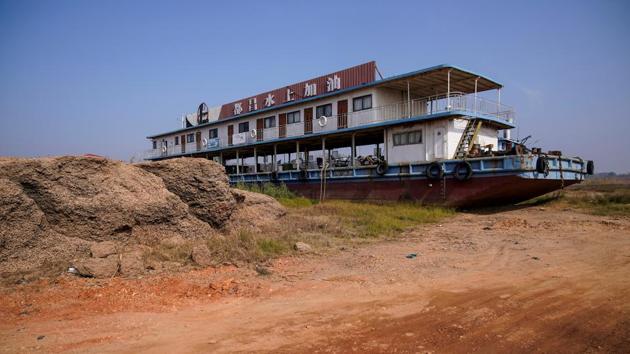
A boat rests on the dried lake bed of Poyang Lake. The new policy was a sign officials had recognised sand mining had become a serious environmental liability, Shankman said, but simply stopping the activity wouldn’t automatically solve the problems. “It depends not only on the extent of the mining, and not on the total area of the mining, but where they are mining,” Shankman said. (Aly Song / REUTERS)
12/14
 View Photos in a new improved layout
Updated on Dec 24, 2019 1:42 PM
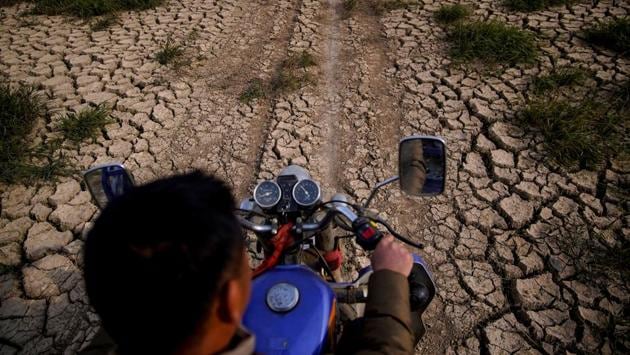
A fisherman rides a motorcycle across the dried lake bed. China is in the middle of a campaign aimed at ending big and “destructive” development along the Yangtze. President Xi said restoring the Poyang was a crucial element of the plan to revitalise regions along the river’s banks. But experts say many of the devastating changes to the lake are irreversible. (Aly Song / REUTERS)
13/14
 View Photos in a new improved layout
Updated on Dec 24, 2019 1:42 PM
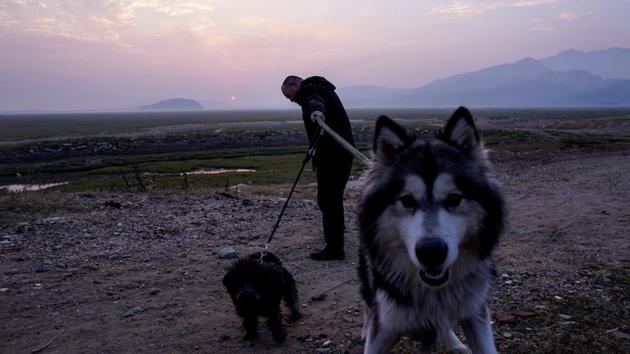
A man walks his dogs on the dried lake bed. Even before the Three Gorges Dam and the sand mining boom, the lake had already shrunk considerably as a result of an earlier campaign to reclaim farmland and curb floods through the use of dykes and diversions. (Aly song / REUTERS)
14/14
 View Photos in a new improved layout
Updated on Dec 24, 2019 1:42 PM


