
 E-Paper



Photos: Ahead of IPL 2018, making cricket gear at Meerut’s Sanspareils Greenlands
From manufacturing cricket balls, bats, protective equipment, clothing, shoes and kit bags to ground equipment and accessories used across sporting disciplines, Sanspareils Greenlands in Meerut, Uttar Pradesh has been a legendary name in Indian cricket gear. Ahead of the 11th edition of the Indian Premier League from April 07 onwards, a look inside what makes some of the best Indian cricketing equipment.
Updated on: Apr 06, 2018 2:46 PM IST

Share via


Copy link

1/7
 View Photos in a new improved layout
Updated on Apr 06, 2018 2:46 PM
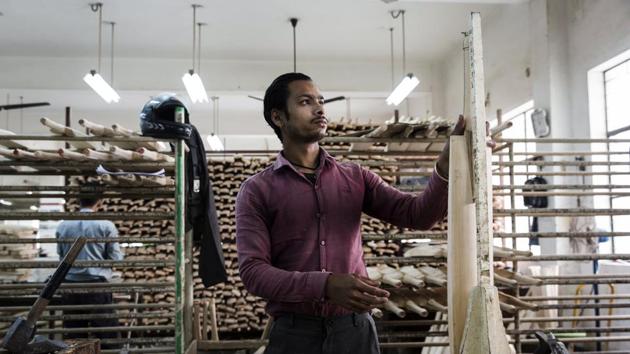
With the 2018 Indian Premier League knocking, a worker measures the length of an unfinished cricket bat at Sanspareils Greenlands (SG), in Meerut, Uttar Pradesh. From their cricket balls and bats to protective equipment, clothing, ground equipment and accessories used across sporting disciplines, Sanspareils Greenlands has been a legendary name in Indian sporting gear. (Udit Kulshrestha / Bloomberg)
2/7
 View Photos in a new improved layout
Updated on Apr 06, 2018 2:46 PM
SG began in Sialkot in 1931 when brothers Dwarkanath and Kedarnath Anand decided to diversify the family’s leather business into manufacturing and exporting sports gear. After decades of working for foreign names, they launched their own line of protective cricket gear called Featherlite in 1972. There wasn’t money for expansion, but demand picked and products were soon booked out for seven-eight months. (Udit Kulshrestha / Bloomberg)
3/7
 View Photos in a new improved layout
Updated on Apr 06, 2018 2:46 PM
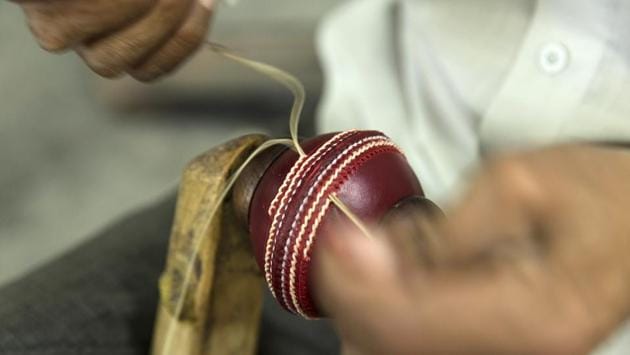
India’s 1983 ICC world cup win had a massive impact on the sales of cricket bats and balls in a country gripped with cricket fever. In the same year, SG opened second manufacturing unit and also began working on international-standard balls, known today for their narrow, thicker seams from being hand-crafted. (Udit Kulshrestha / Bloomberg)
4/7
 View Photos in a new improved layout
Updated on Apr 06, 2018 2:46 PM
Every Indian cricketer from 1983 onwards has used or endorsed their products at some point. In 1987, Sunil Gavaskar reached the 10,000-run mark using an SG bat, giving the company a picture-perfect ad campaign. SG became official ball suppliers to The Board of Control for Cricket in India for all domestic matches in 1992, and test matches since 1994. (Udit Kulshrestha / Bloomberg)
5/7
 View Photos in a new improved layout
Updated on Apr 06, 2018 2:46 PM
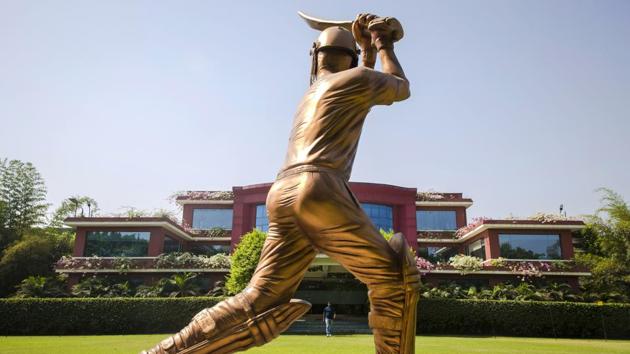
A statue of a cricket player stands in front of a Sanspareils Greenlands factory in Meerut, Uttar Pradesh. Skill, precision and quality control has been the company’s recipe for continued success. SG today is the world’s largest manufacturer of cricketing gear. (Udit Kulshrestha / Bloomberg)
6/7
 View Photos in a new improved layout
Updated on Apr 06, 2018 2:46 PM
There are no shortcuts to the work here. The unit has been running an in-house training programme since the late 1960s, and every new employee is apprenticed to a master craftsman. It takes one to two years to get an employee to a place where they can make the products that merit the SG badge. (Udit Kulshrestha / Bloomberg)
7/7
 View Photos in a new improved layout
Updated on Apr 06, 2018 2:46 PM


