
 E-Paper



Photos: ‘Air washing’ and emission traps turn Delhi smog into alpine air
Apathy over the poisonous smog choking Delhi annually has led many like businessman Kamal Meattle and entrepreneur Ankit Dhupar to take matters into their own hands, with an office building the former says pumps air as fresh as from the Swiss Alps, and a device that can capture up to 90% of particulate emissions from power generators.
Updated on: Jan 10, 2018 9:49 AM IST

Share via


Copy link

1/8

 View Photos in a new improved layout
Updated on Jan 10, 2018 9:49 AM
Delhi chokes every winter as cool air traps a toxic blend of pollutants from crop burning, car exhausts, open fires, construction dust and industrial emissions. Short-term measures -- such as shutting factories and restricting car use -- have failed to have a significant impact on the annual scourge. Many, like businessman Kamal Meattle have taken matters into their own hands, with an office building he says pumps air as fresh as from the Swiss Alps. (Money Sharma / AFP)
2/8
 View Photos in a new improved layout
Updated on Jan 10, 2018 9:49 AM
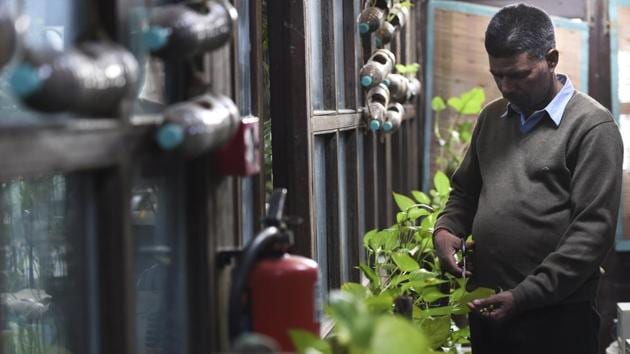
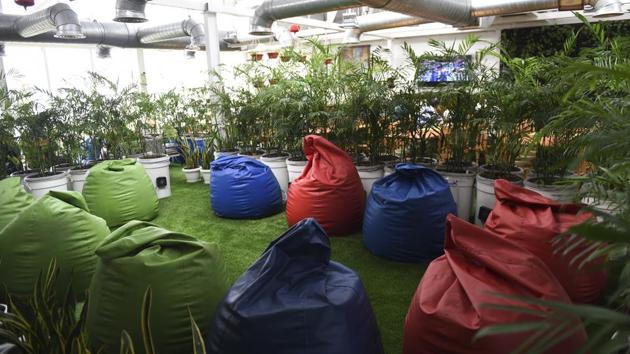
An employee tends to plants in the greenhouse at the Paharpur Business Centre in New Delhi. From the outside, the building looks like any office block. But inside is a virtual jungle where rooms and corridors are lined with more than 7,000 plants and creepers. Its terrace, with artificial grass and green walls, houses an “air washing” system that moves polluted air through a series of cleaning filters. (Money Sharma / AFP)
3/8
 View Photos in a new improved layout
Updated on Jan 10, 2018 9:49 AM
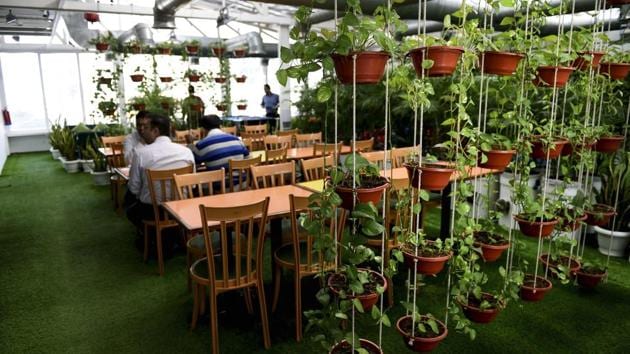
Air is then pushed through the greenhouse where the plants remove bacteria, fungus, carbon dioxide and other toxins, before air conditioning pumps it to workers on floors below. Meattle likens working in the building to “working in Gulmarg in Kashmir or Davos in Switzerland.” (Money Sharma / AFP)
4/8
 View Photos in a new improved layout
Updated on Jan 10, 2018 9:49 AM
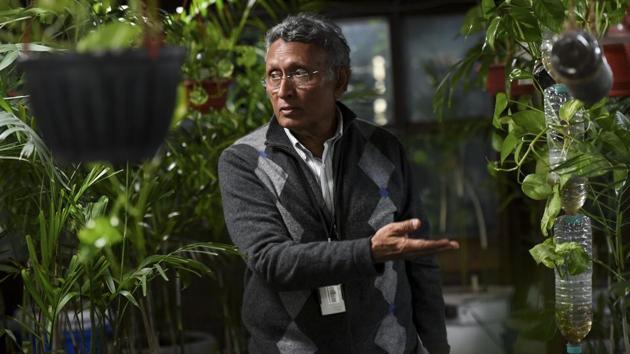
Meattle (pictured), says the building's greenhouse is like an air tank, where PM2.5 -- the most harmful particulates in the air -- register nearly zero compared with 415 outside, according to Paharpur’s monitoring system. The level outside is more than 16 times the World Health Organization’s safe limit. (Money Sharma / AFP)
5/8
 View Photos in a new improved layout
Updated on Jan 10, 2018 9:49 AM
His centre, whose tenants include Amazon, Samsung and Microsoft, is rated among the city’s healthiest buildings, and Meattle says people who work there benefit from improved blood oxygen levels, better brain function, and fewer asthma and eye irritation cases. (Money Sharma / AFP)
6/8
 View Photos in a new improved layout
Updated on Jan 10, 2018 9:49 AM
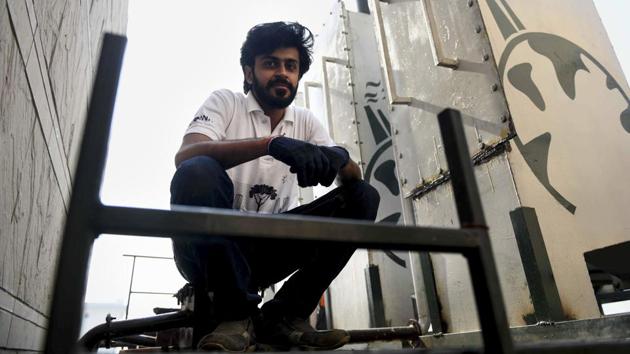
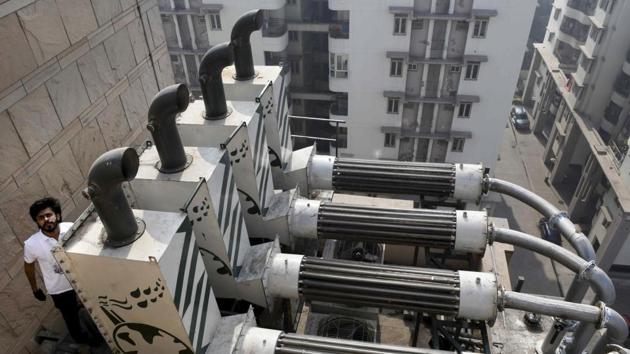
Arpit Dhupar, co-founder and CTO at Chakr, poses near a Chakr Shield that can be retrofitted to diesel generators, capturing 90% of particulate matter. Started by graduates from the Indian Institute of Technology, Chakr capitalises on converting carbon and other fine particles including PM0.3 and PM2.5 into liquified soot. Captured carbon is washed down with a solvent and processed into ink and paints. (Money Sharma / AFP)
7/8
 View Photos in a new improved layout
Updated on Jan 10, 2018 9:49 AM
Dhupar was inspired by a diesel generator that was powering a roadside juice stall and turning the wall behind it black in the process. “What would have otherwise been a waste is captured and reborn to be used as a raw material again,” he said, adding that in 18 months, the machines had collected enough carbon to pollute about 1.5 billion litres of air. (Money Sharma / AFP)
8/8
 View Photos in a new improved layout
Updated on Jan 10, 2018 9:49 AM


