
 E-Paper



Photos: Bangladesh migrants tap Siliguri date palms for jaggery
Seeking better livelihood, a group of Bangladeshi migrants in Siliguri have revived the preparation of jaggery from the area’s abundant date palms utilised otherwise only for their fruit.
Updated on: Dec 21, 2017 1:42 PM IST

Share via


Copy link

1/6
 View Photos in a new improved layout
Updated on Dec 21, 2017 1:42 PM
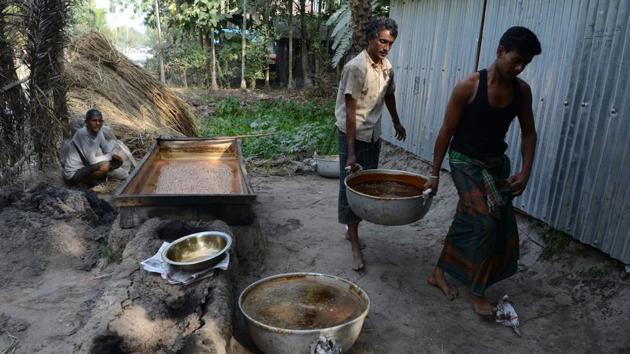
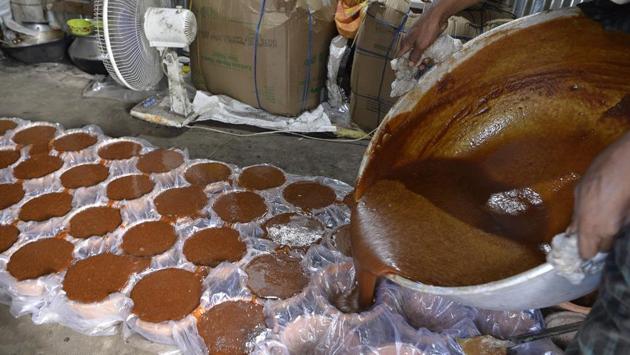
A group of Bangladesh citizens in the Dodhiabari village, around 41 km from Siliguri are utilizing the area’s date palm trees to revive the production of jaggery, and to earn a better livelihood in the process. The date palm jaggery being made here is free of chemical agents and preservatives and retains its natural mineral salts. (Diptendu Dutta / AFP)
2/6
 View Photos in a new improved layout
Updated on Dec 21, 2017 1:42 PM
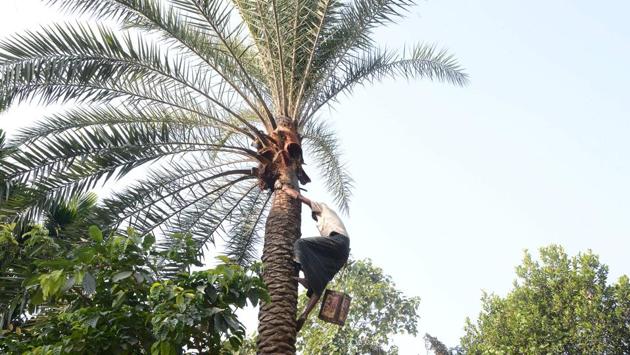
Rahim Sheikh, 42, a labourer from Bangladesh, collects sap drippings from a date palm tree. Having migrated out of poverty, the migrants here have been using the date palm sap to make jaggery –a traditional method seen in Southern India, which was unknown to the locals in the region. (Diptendu Dutta / AFP)
3/6
 View Photos in a new improved layout
Updated on Dec 21, 2017 1:42 PM
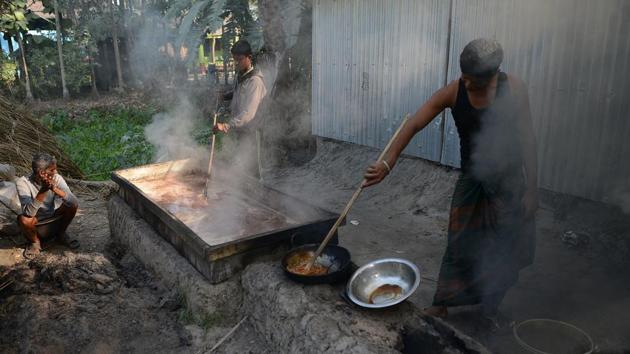
Rahim (L) looks on as his son Alamgir Sheikh (R), 21, boils cane sugar. After collecting the sap from the trees the process includes boiling, filtering and extensive stirring to make a thick paste that is cooled down to form jaggery. Also known as Gur, its production uses sap from four kinds of palm: palmyra, date, coconut and sago. (Diptendu Dutta / AFP)
4/6
 View Photos in a new improved layout
Updated on Dec 21, 2017 1:42 PM
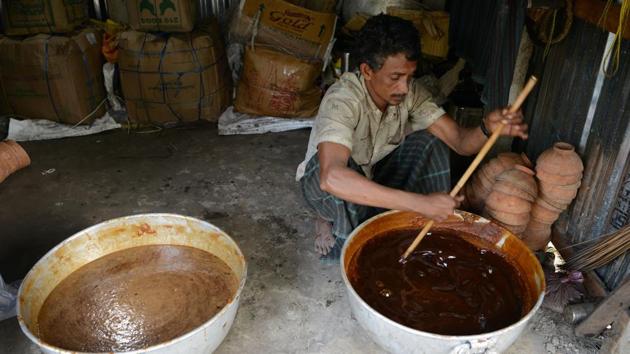
Rahim filters the boiled sap of the date palm tree. The jaggery made by these workers has found a market among locals and in various parts of North Bengal. When consumed in small quantities, jaggery is considered to have widespread health benefits, as is even gluten free. (Diptendu Dutta / AFP)
5/6
 View Photos in a new improved layout
Updated on Dec 21, 2017 1:42 PM
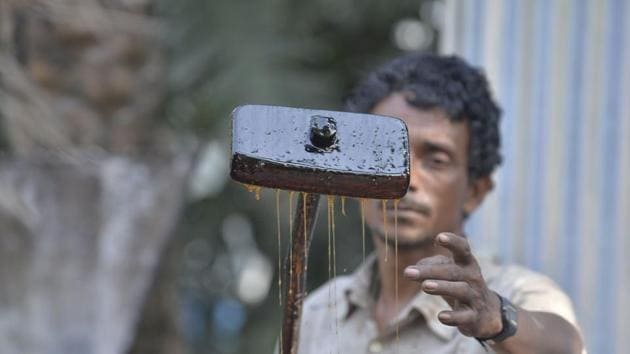
Jaggery made from the sap of the date palm is available only between November and January. Urbanisation and increased dependence on sugarcane for white sugar has made this product more expensive and scarce. (Diptendu Dutta / AFP)
6/6
 View Photos in a new improved layout
Updated on Dec 21, 2017 1:42 PM


