
 E-Paper



Photos: Depletion of lakes, rivers plunges Chennai into water crisis
On Chennai's march towards becoming a 1,000 km sq. megapolis from its present 465 km sq. area, the only places that are not running out of water are those that have clung to the traditional models. The unchecked growth of the city has led to the depletion of its water resources. Farmers are struggling to take care of the natural resources around them owing to deteriorating productivity. Residents are relying on the unregulated packaging units supplying bottled water, with the city at the mercy of the parallel water economy.
Updated on: Mar 26, 2019 1:14 PM IST

Share via


Copy link

1/9
 View Photos in a new improved layout
Updated on Mar 26, 2019 1:14 PM
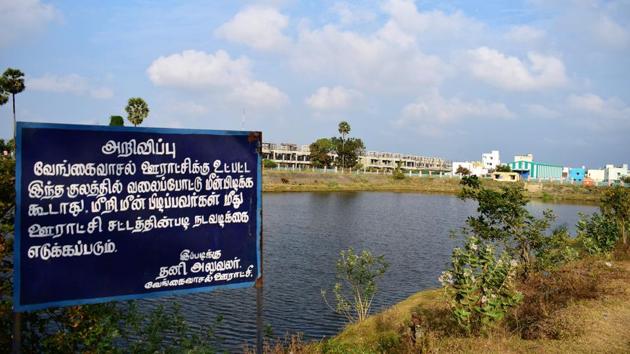
Chennai, the capital of Tamil Nadu, is facing an acute water crisis owing to the city’s unchecked growth. Residents rely on water from natural resources from the outskirts of the city. In Vengaivasal, once considered the outskirts of Chennai and now subsumed by the city’s suburbs, the two aeris, periyeri and chitteri, have been stubbornly protected against encroachments, construction and water pilfering by the local community. (Gayatri Jayaraman / HT Photo)
2/9
 View Photos in a new improved layout
Updated on Mar 26, 2019 1:14 PM
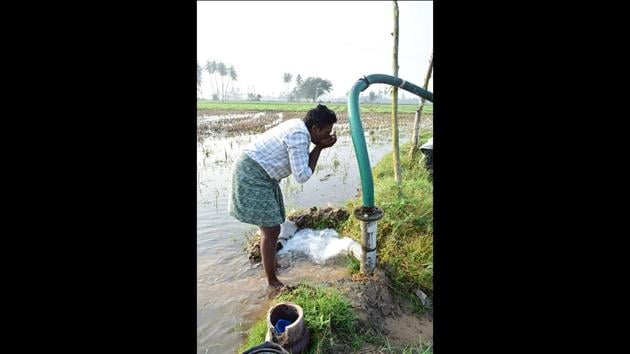
Water in Kakkavaku village in Uuthakottai (the name itself means spring) taluk of Tiruvallur district is sweet and abundant. It contributes to Chennai’s tanked supply in its dry months. Chennai Metro Water Board and private tankers come to buy water here every year from May to June, when the city is at its thirstiest. (Gayatri Jayaraman / HT Photo)
3/9
 View Photos in a new improved layout
Updated on Mar 26, 2019 1:14 PM
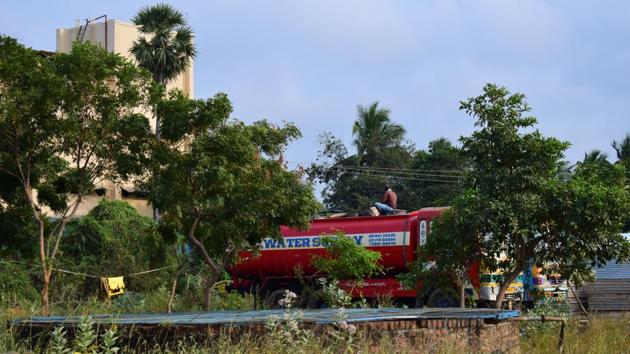
“We don’t always charge them money, sometimes we give the water to tankers for free, because we have it in abundance and the city suffers,” said Purushottaman, a 35-year-old farmer at Kakkavakkam village in Uuthakottai. The tankers sell the water in the city for up to Rs. 5,000 a load. Around 500 tankers leave the village a day in the summer, the farmers say. (Gayatri Jayaraman / HT Photo)
4/9
 View Photos in a new improved layout
Updated on Mar 26, 2019 1:14 PM
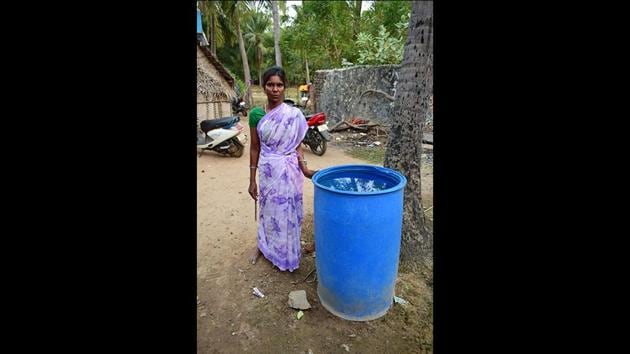
In the shadow of the Nemmelli desalination plant, in Sulerikadu village, ground water is brackish and yellow. The men of the village receive employment once in one-and-a-half months under a rotation system of the panchayat and must wait their turn. The jobs they were promised at the plant have not materialised. They still have to pay Rs. 30 per bubble top for their drinking water needs. (Gayatri Jayaraman / HT Photo)
5/9
 View Photos in a new improved layout
Updated on Mar 26, 2019 1:14 PM
MS Ravi (L) is one of the natives of the original Chennai, a sixth-generation resident farmer in perhaps one of the last of Chennai’s traditional farms in Manapakkam. However, urea and farmer’s benefits are not available within urban city limits and Ravi doesn’t qualify for compensation for farming. Eventually, the isolated farmer or protector of water bodies, no matter how vital his role, cannot hold on to the water alone in the metropolis. (Gayatri Jayaraman / HT Photo)
6/9
 View Photos in a new improved layout
Updated on Mar 26, 2019 1:14 PM
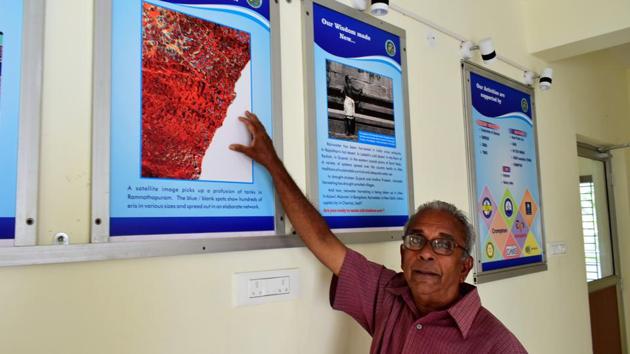
Water budgets being spent on desalination plants are pointless and work for countries like the United Arab Emirates that do not receive rain, said Chennai’s rain man Sekhar Raghavan, under whose guidance late chief minister J Jayalalithaa mandated replenishing groundwater into law. New vertical colonies burdened by tanker costs are increasingly turning to him to put in rainwater harvesting systems now, he said. (Gayatri Jayaraman / HT Photo)
7/9
 View Photos in a new improved layout
Updated on Mar 26, 2019 1:14 PM
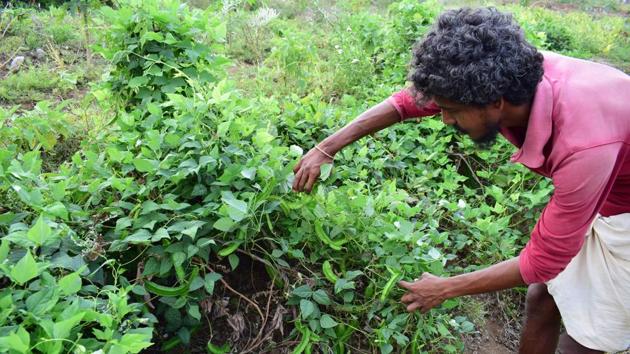
Adaikala Regan, a 26-year-old marine engineer volunteer at Vanagam, an eco-resource outfit near Karoor, displays the bounty from the live mulching techniques from the organisation. He points to the record of depletion of Chennai’s water bodies in the place names. Places that ended in aar were on the banks of a river, eri next to an irrigation tank, and bakkam, or pakkam, were next to ponds or tanks. (Gayatri Jayaraman / HT Photo)
8/9
 View Photos in a new improved layout
Updated on Mar 26, 2019 1:14 PM
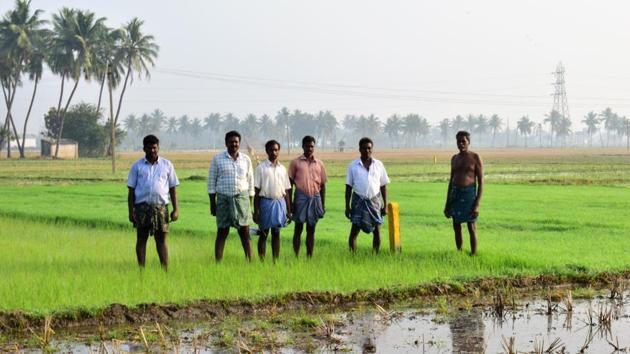
Farmers point to the yellow stone markers in their fields placed by officials who have marked out the highway in Kakkavaku village in Uuthakottai. Chennai runs on a rationed distribution of half its water requirement at 450 mld, and building societies pay in the range of Rs. 2-3 lakh per month towards tanker bills. (Gayatri Jayaraman / HT Photo)
9/9
 View Photos in a new improved layout
Updated on Mar 26, 2019 1:14 PM


