
 E-Paper



Photos: Excavation at Purana Qila unearths new chapter in Delhi history
An ongoing excavation at the Purana Qila in Delhi has revealed remains of a pre-Mauryan era settlement from the 6th-4th century BCE with its own kind of pottery discovered below the Mauryan settlement layer. The findings fill in another gap between the timeline of the Delhi area's inhabitation from the fabled Indraprastha of the Mahabharata to the later cities that form its history. And while archaeologists aren’t ready to jump to conclusions on the Puranic city, this new chapter in the city’s history is exciting enough.
Updated on: Mar 19, 2018 11:06 AM IST

Share via


Copy link

1/7
 View Photos in a new improved layout
Updated on Mar 19, 2018 11:06 AM
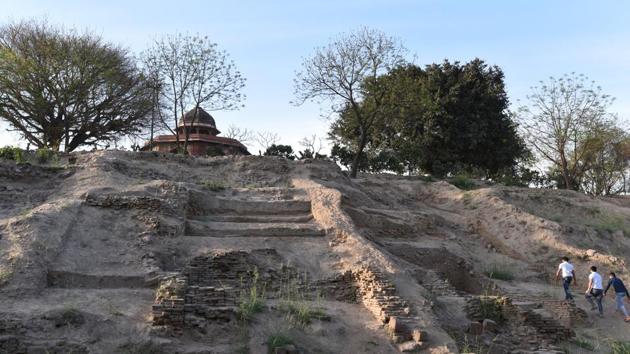
Where Delhi is often described as a city going back to the Mahabharata, the remains seen in the shape of architectural evidence are mostly from the medieval era onwards. The citadel of Purana Qila or Old Fort attributed to Sher Shah is one site in the city where archaeologists observe a continuous history of 2500 years. Fresh finds here now push the history of Delhi back another 300 years. (Arvind Yadav / HT Photo)
2/7
 View Photos in a new improved layout
Updated on Mar 19, 2018 11:06 AM
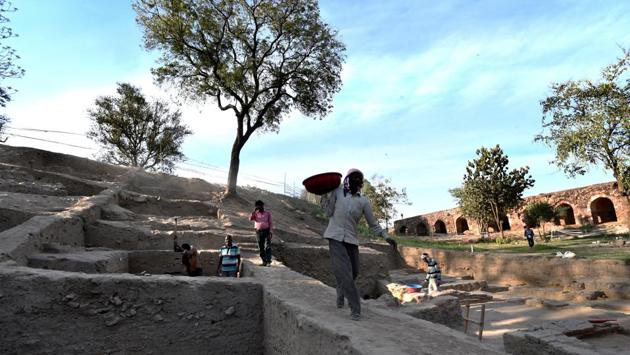
Excavations by archaeologist BB Lal in the 1950s at sites mentioned in the Mahabharata revealed painted grey ware (PGW) pottery dating to 1200 – 800 BCE, tying the sites culturally, and evidence of a flood that destroyed Hastinapur around 800 BCE like the Mahabharata legend. While odd pieces of the pottery were found at Purana Qila, no specific PGW layer has been found to date it back to the Puranic Indraprastha. (Arvind Yadav / HT Photo)
3/7
 View Photos in a new improved layout
Updated on Mar 19, 2018 11:06 AM
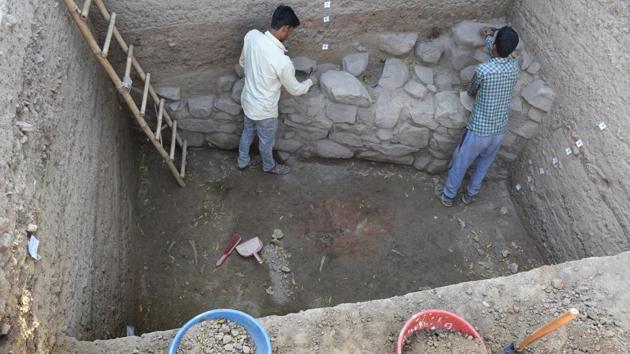
Previous digs in the 1970s and 2013-14 reached as far back as the Mauryan Era – 4th to 2nd century BCE. The ongoing excavations this year have uncovered a layer of simple grey ware and simple red ware, below the layer of Mauryan-era artefacts, which shows the presence of a pre-Mauryan settlement here at the time of the 16 Mahajanapadas or kingdoms. (Arvind Yadav / HT Photo)
4/7
 View Photos in a new improved layout
Updated on Mar 19, 2018 11:06 AM
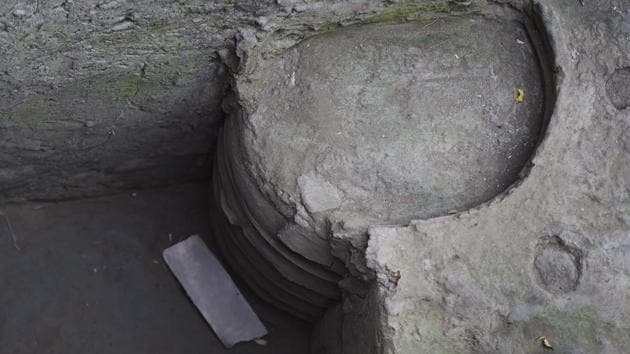
Each period in history is identified by its pottery and other associated ware or structural forms. The Mauryan era is identified by its Northern Black Polished Ware and the typical Mauryan-era ring wells seen here at Purana Qila. Though the newly unearthed pottery hasn’t been carbon dated, early estimates peg it to 6th to 4th century BCE adding another 300 years of established settlement. (Arvind Yadav / HT Photo)
5/7
 View Photos in a new improved layout
Updated on Mar 19, 2018 11:06 AM
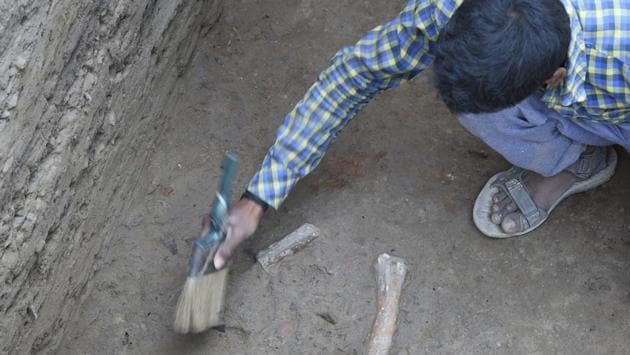
Histories of Delhi usually count seven cities beginning with Indraprastha and jump nearly 2,000 years to the 8th century AD Tomara Rajput settlements of Anangpur and Lal Kot. Finds like this and older Stone Age evidence from Delhi Ridge help fill the gaps in charting that while not always a political capital, human settlements, if only rural in nature, have dotted the region. (Arvind Yadav / HT Photo)
6/7
 View Photos in a new improved layout
Updated on Mar 19, 2018 11:06 AM
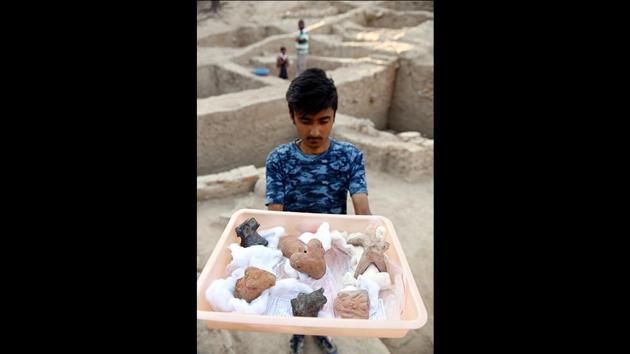
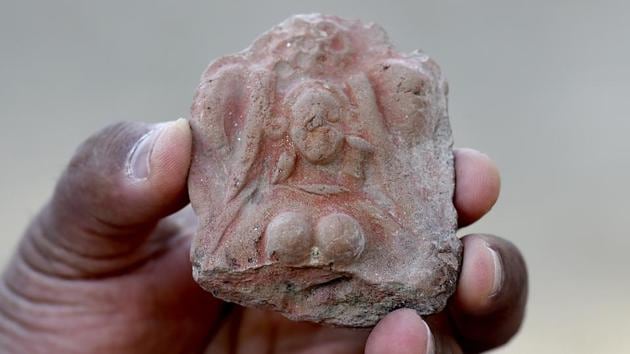
A sampling of the simple grey and simple red ware pottery unearthed recently. Although PGW artefacts were found this time also, a stratified PGW layer remains elusive. Even if discovered, historians say that it would link Purana Qila to the other sites in a shared material culture rather than prove Indraprastha’s existence or the veracity of the Mahabharata texts. (Arvind Yadav / HT Photo)
7/7
 View Photos in a new improved layout
Updated on Mar 19, 2018 11:06 AM


