
 E-Paper



Photos: Four months into lockdown, Maharashtra wrestles with Covid-19
Four months after entering a self-imposed lockdown to check the rise of the coronavirus, Maharashtra is yet to see the light at the end of the tunnel. Some curbs have been lifted since June but cases of infection have also surged in the state with more people out and about since. This has made the government mull further relaxations, even as the need to open the economy grows more urgent. The state has now turned to localised, district level clampdowns as cases appear shifting out of Mumbai and into other regions.
Updated on: Jul 24, 2020 11:17 AM IST


Share via


Copy link

1/10
 View Photos in a new improved layout
Updated on Jul 24, 2020 11:17 AM
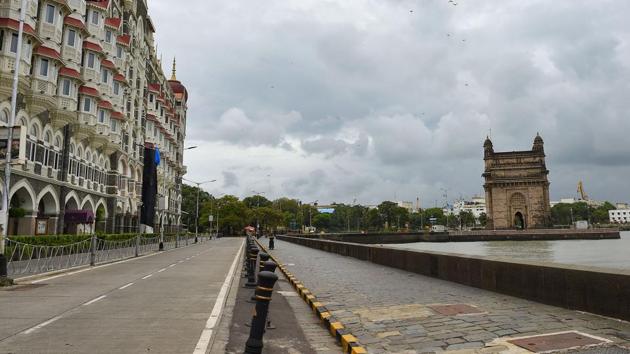
A deserted road leads up to the Gateway of India, in Mumbai on July 23. Maharashtra continues to grapple with the spread of Sars-Cov-2, four months after having entered a state of lockdown and then attempting gradual relaxations in attempts towards normalcy since June. The state remains the country’s worst affected region in terms of Covid-19 as of July 23. (Kunal Patil / PTI)
2/10
 View Photos in a new improved layout
Updated on Jul 24, 2020 11:17 AM
Brihanmumbai Municipal Corporation (BMC) workers clean a viewing gallery opposite CST Station in Mumbai on July 23. Maharashtra reported its first case of Covid-19 in Pune on March 9. It announced lockdown across the state on March 23, a day before the nationwide lockdown was announced by PM Narendra Modi. As of July 23, the state has recorded 347,502 cases, with 140,093 active cases. (PTI)
3/10
 View Photos in a new improved layout
Updated on Jul 24, 2020 11:17 AM
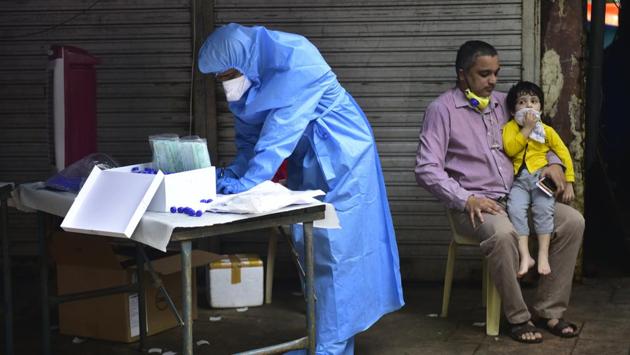
A member of the BMC medical staff during a screening and swab test of residents in Dadar (West) in Mumbai on July 23. Nearly 78% of the state’s total cases have been recorded after lockdown restrictions were lifted in June as part of ‘Mission Begin Again’. State officials told HT, the number of patients and toll could have been higher had it not been for timely lockdown, travel restrictions, social distancing, and other interventions. (Anshuman Poyrekar / HT Photo)
4/10
 View Photos in a new improved layout
Updated on Jul 24, 2020 11:17 AM
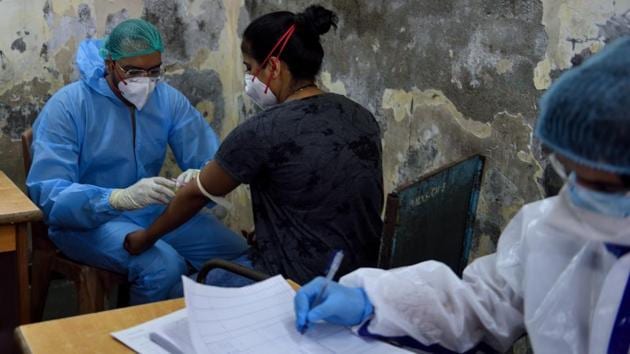
BMC health workers collect plasma samples from patients in Dharavi who recovered from Covid-19 in Mumbai on July 23. Maharashtra recorded 74,647 confirmed Covid-19 cases and 2,855 fatalities during the lockdown between March 24 and June 3. Since the relaxations were gradually lifted, while keeping the lockdown intact, the state has registered almost quadrupled both those figures. (Satish Bate / HT Photo)
5/10
 View Photos in a new improved layout
Updated on Jul 24, 2020 11:17 AM
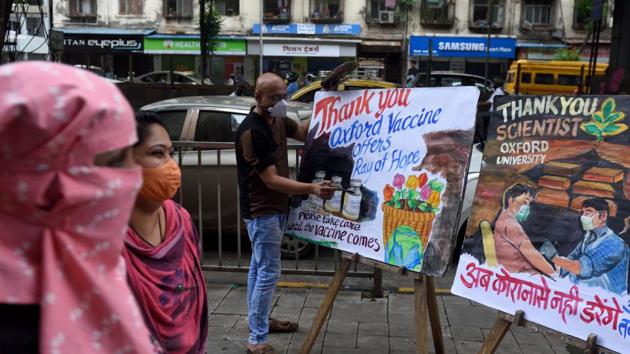
A member of Gurukul School of Art makes artwork lauding Oxford University’s efforts towards a Covid-19 vaccine, in Mumbai on July 21. Since stepping out of hard lockdown, Maharashtra has provided relaxations for outdoor physical activities from June 3. Market areas, shops except for malls and shopping centres were opened from June 5. Private offices were allowed to open with up to 10% of staff from June 8. (Satish Bate / HT Photo)
6/10
 View Photos in a new improved layout
Updated on Jul 24, 2020 11:17 AM
A healthcare worker during a door-to-door screening to check the temperature and pulse rate of residents in Sahyadri Nagar, Chembur, Mumbai, on July 23. Mumbai’s daily average increase in cases has been 1,200 in recent weeks. Meanwhile, the active case count in semi-urban areas, rural areas and satellite towns in the Mumbai Metropolitan Region (MMR) has gone up. (Pratik Chorge / HT Photo)
7/10
 View Photos in a new improved layout
Updated on Jul 24, 2020 11:17 AM
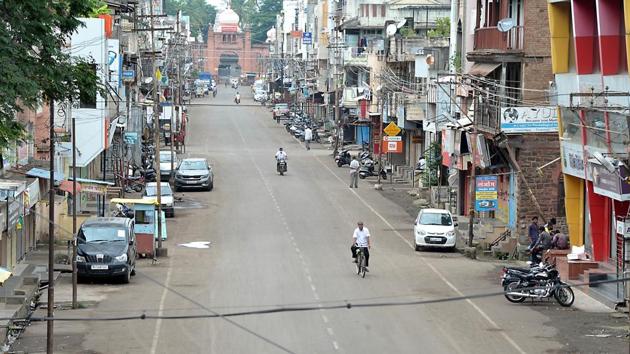
An empty stretch in Ganpati Peth during reimposed lockdown in Sangli on July 23. “Rather than going into the numbers, we should look at the case fatality rate (CFR), which is less in the state (at 3.72%). We have done quite well in the lockdown period and later too,” Dr Om Shrivastav, an Infectious diseases specialist and a member of state government-appointed task force on Covid-19, told HT. (Udar Deolekar / HT Photo)
8/10
 View Photos in a new improved layout
Updated on Jul 24, 2020 11:17 AM
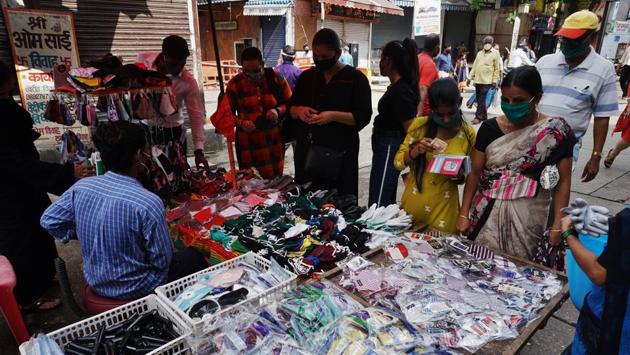
Residents of Thane city out buying face masks during lockdown relaxation on July 22. After the unlocking of activities, cases shot up in parts of MMR, Pune, Nashik, Aurangabad and Solapur districts. “There are no projections but looking at the trend today, the cases are expected to rise till August after which we can probably see the cases plateau,” Anup Kumar Yadav, health commissioner of Maharashtra told HT. (Praful Gangurde / HT Photo)
9/10
 View Photos in a new improved layout
Updated on Jul 24, 2020 11:17 AM
A health worker uses a temperature scanner on a priest of a temple in Malad (E), Mumbai, on July 21. The positivity rate in most days of July has been between 22% and 25%. A high positivity rate is a reflection of the increase in the prevalence of the virus. However, state health department officials differ, chalking a higher rate to targeted testing. (Satyabrata Tripathy / HT Photo)
10/10
 View Photos in a new improved layout
Updated on Jul 24, 2020 11:17 AM


