
 E-Paper



Photos: In Assam, a temple helps nurture ‘extinct’ turtle back to life
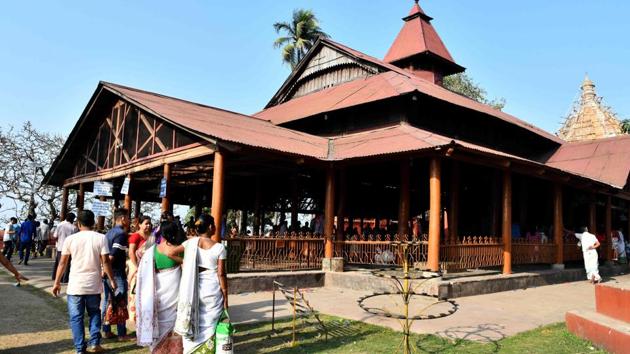
In India, the northeastern state of Assam was once rich in freshwater turtles, but habitat loss and over-exploitation massively depleted their population. Although black softshell turtle is officially extinct in the wild, the caretakers of Hayagriva Madhav temple in Hajo are nurturing these extinct turtle back to life and also protecting them from harm.
Updated on: Jun 12, 2019 10:05 AM IST

Share via


Copy link

1/7
 View Photos in a new improved layout
Updated on Jun 12, 2019 10:05 AM
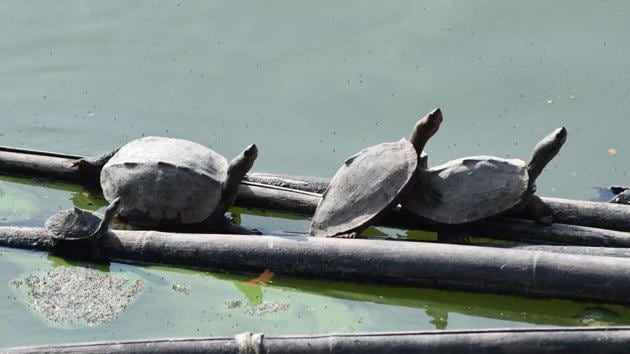
Turtles rest on a bamboo platform in a pond at Hayagriva Madhava temple in Hajo, some 35 kms from Guwahati, Assam. The black softshell turtle is officially extinct in the wild, but a centuries-old temple and its nature-loving caretaker are helping the creature make a tentative comeback. It was declared extinct in the wild in 2002 by the International Union for Conservation of Nature, while the Indian softshell turtle and the Indian peacock softshell turtle are classified as vulnerable. (Biju Boro / AFP)
2/7
 View Photos in a new improved layout
Updated on Jun 12, 2019 10:05 AM
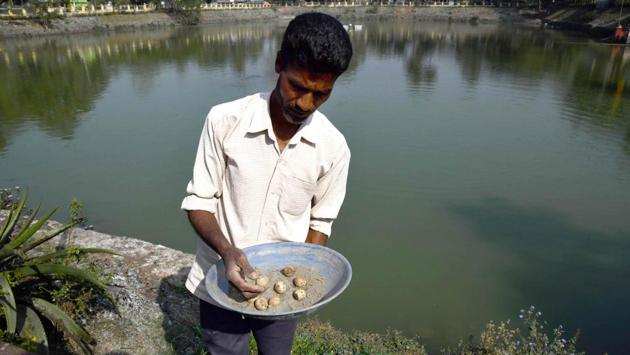
Caretaker of temple pond Pranab Malakar checks turtle eggs after collecting them from the bank of a pond. In January his organisation’s first batch of 35 turtle hatchlings, including 16 black softshells hand-reared at the temple, was released into a nearby wildlife sanctuary. “No one harms them here as they are incarnations of Lord Vishnu (a Hindu deity). I was born and grew up here. We have been seeing the turtles since our childhood. People respect them,” he said. (Biju Boro / AFP)
3/7
 View Photos in a new improved layout
Updated on Jun 12, 2019 10:05 AM
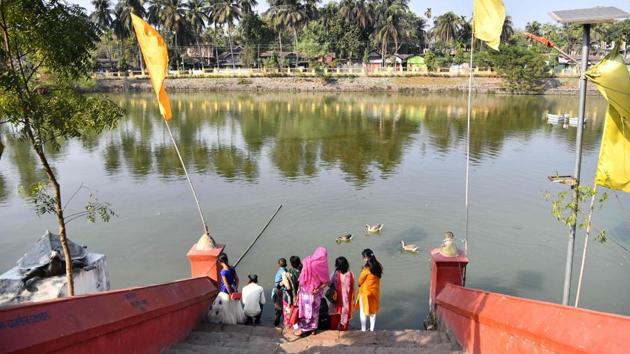
Devotees gather to see turtles on the banks of a pond. The pond of the temple has provided a safe haven, thanks to the sacred status of turtles protecting them from harm. “There are plenty of turtles in the temple pond,” said Jayaditya Purkayastha, from conservation group Good Earth. (Biju Boro / AFP)
4/7
 View Photos in a new improved layout
Updated on Jun 12, 2019 10:05 AM
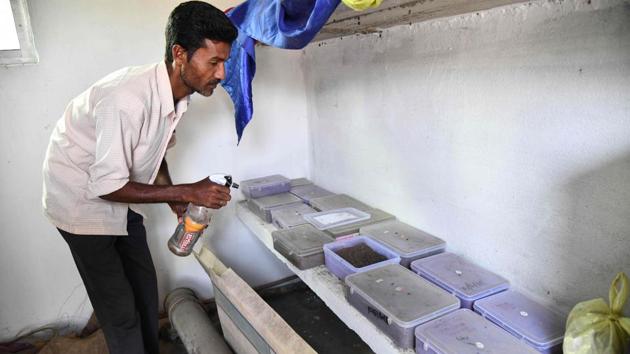
The northeastern state of Assam was once rich in freshwater turtles, but habitat loss and overexploitation -- they were once a popular local food -- have massively depleted their population. (Biju Boro / AFP)
5/7
 View Photos in a new improved layout
Updated on Jun 12, 2019 10:05 AM
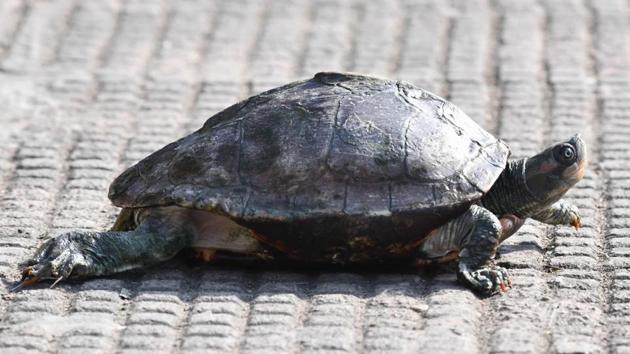
A turtle is seen near a pond. The population of the turtle in Assam has gone down by a great extent so in order to save the species from extinction there are groups who have teamed up with the temple authorities in a breeding programme of these turtles. (Biju Boro / AFP)
6/7
 View Photos in a new improved layout
Updated on Jun 12, 2019 10:05 AM
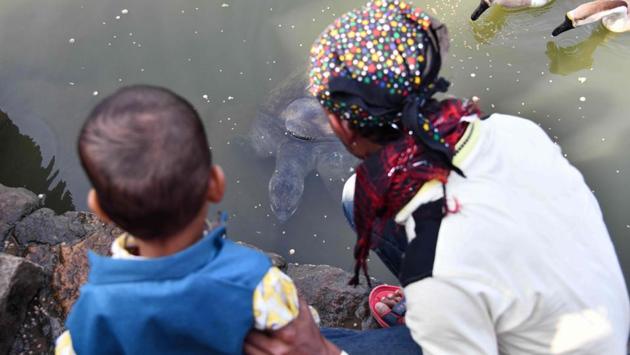
A devotee along with his child watch a black softshell turtle feed in a pond. The caretakers collects eggs laid by the turtles on the sandy banks of the pond -- a new concrete bank had to be demolished a few years ago -- and gingerly puts them into an incubator. The project has been so successful that Good Earth has identified 18 other temple ponds in the area which could also be used for similar initiatives. (Biju Boro / AFP)
7/7
 View Photos in a new improved layout
Updated on Jun 12, 2019 10:05 AM


