
 E-Paper



Photos: India zips past China with a silent e-rickshaw revolution
While China, the world’s largest auto market dangled significant subsidies to encourage purchases of battery-powered cars, India’s e-movement hardly got a hand from the state. Despite this, an electric-vehicle revolution is gaining ground in India, and it has nothing to do with cars. Three-wheeled vehicles make up a $1.5 billion market, and manufacturers of electric versions include Mahindra & Mahindra Ltd. and Kinetic Engineering Ltd., along with smaller outfits that assemble parts imported from China.
Updated on: Oct 27, 2018 1:59 PM IST

Share via


Copy link

1/10
 View Photos in a new improved layout
Updated on Oct 27, 2018 1:59 PM
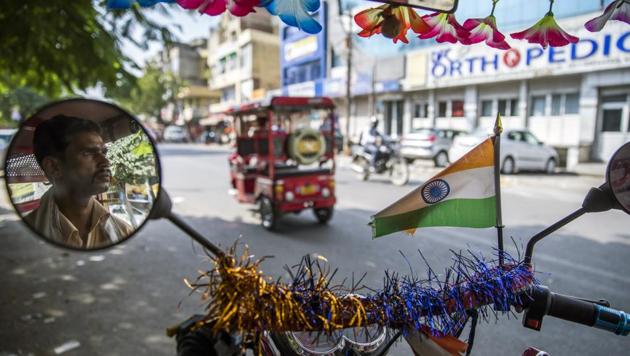
An e-rickshaw driver is reflected in a mirror while waiting for passengers in New Delhi. India is home to about 1.5 million battery-powered, three-wheeled rickshaws – a fleet bigger than the total number of electric passenger cars sold in China since 2011. But while the world’s largest auto market dangled significant subsidies to encourage purchases of battery-powered cars, India’s e-movement hardly got a hand from the state. (Prashanth Vishwanathan / Bloomberg)
2/10
 View Photos in a new improved layout
Updated on Oct 27, 2018 1:59 PM
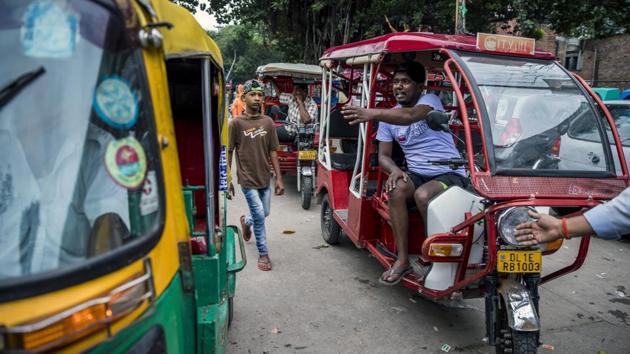
Drivers of the ubiquitous three-wheelers weaving through crowded, smoggy streets discovered that e-rickshaws are quieter, faster, cleaner and cheaper to maintain than a traditional auto rickshaw. They also are less strenuous than cycle rickshaws, which require all-day peddling. So with more rides possible in a day, the e-rickshaws are proving more lucrative. (Prashanth Vishwanathan / Bloomberg)
3/10
 View Photos in a new improved layout
Updated on Oct 27, 2018 1:59 PM
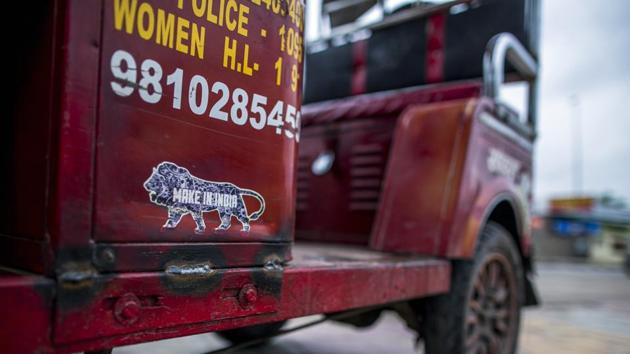
As many as 11,000 new e-rickshaws hit the streets every month, and annual sales are expected to increase about 9% by 2021, according to Rahul Mishra, a principal at consulting firm A.T. Kearney. Three-wheeled vehicles make up a $1.5 billion market, and manufacturers of electric versions include Mahindra & Mahindra Ltd. and Kinetic Engineering Ltd., along with smaller outfits that assemble parts imported from China. (Prashanth Vishwanathan / Bloomberg)
4/10
 View Photos in a new improved layout
Updated on Oct 27, 2018 1:59 PM
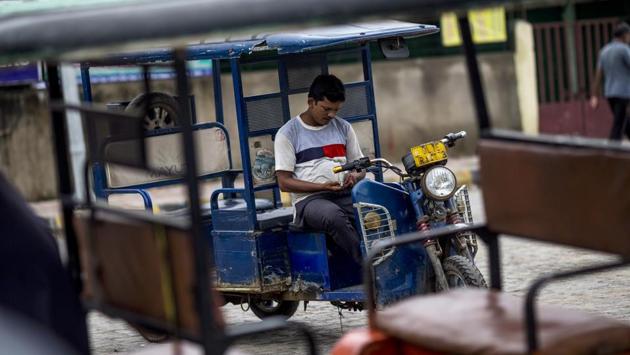
India is the world’s fourth-largest auto market, but previous attempts to boost private electric-car ownership flopped. The government likely scaled back because it fears disrupting an industry that contributes about 7% of the total gross domestic product, according to a Bloomberg NEF report in March. (Prashanth Vishwanathan / Bloomberg)
5/10
 View Photos in a new improved layout
Updated on Oct 27, 2018 1:59 PM
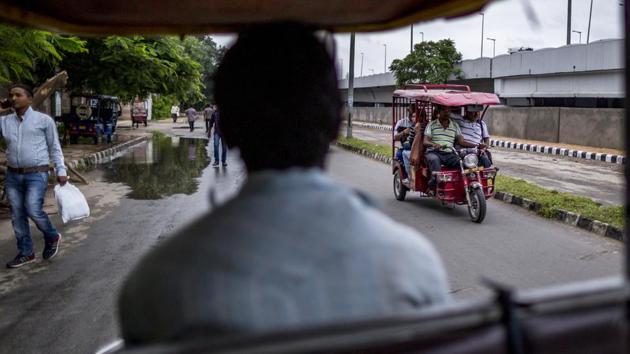
Unlike the estimated 1.35 million passenger EVs cruising around China, the number of electric cars plying Indian roads is a paltry 6,000, according to BNEF data. Chinese automakers sell more than that in three days. India’s largest automaker, Maruti Suzuki India Ltd., won’t sell its first EV until 2020. (Prashanth Vishwanathan / Bloomberg)
6/10
 View Photos in a new improved layout
Updated on Oct 27, 2018 1:59 PM
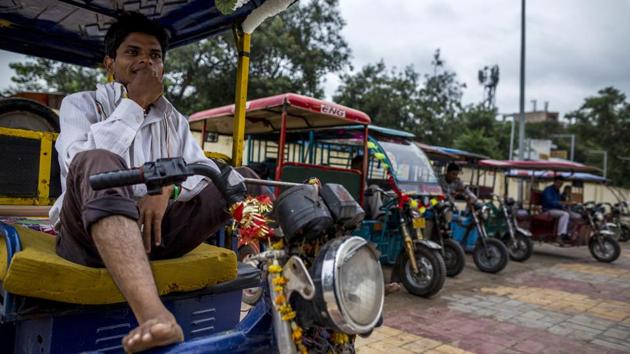
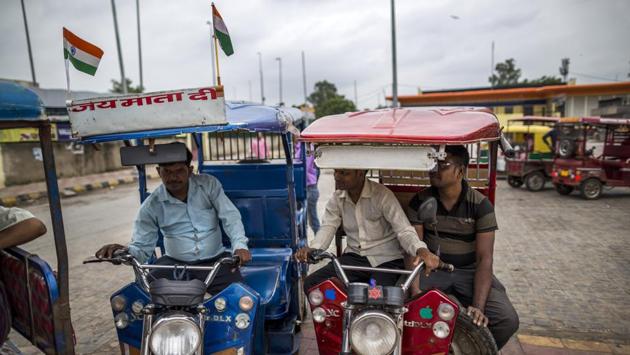
E-rickshaw drivers wait for passengers at a stand in New Delhi, India, on Saturday, Sept. 22, 2018. The South Asian nation is home to about 1.5 million battery-powered, three-wheeled rickshaws – a fleet bigger than the total number of electric passenger cars sold in China since 2011. (Prashanth Vishwanathan / Bloomberg)
7/10
 View Photos in a new improved layout
Updated on Oct 27, 2018 1:59 PM
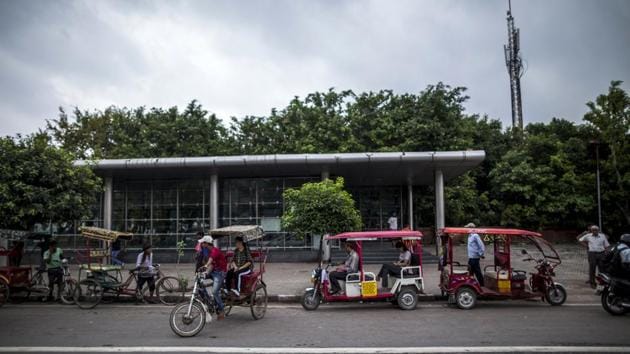
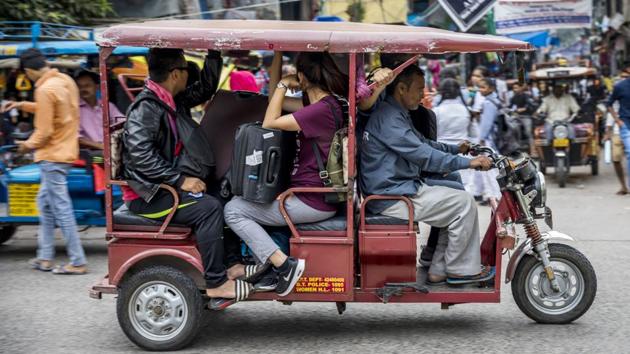
Outside an east Delhi metro station, a slew of partly open-air vehicles line the street as commuters hail their rides. They also carry tourists, schoolchildren, crates of fruit and the occasional goat. Anil Chaudhary, 32, switched to an e-rickshaw from a cycle model two years ago. His income increased, he’s able to take longer breaks and he sends money to his wife and three children in Bihar. He’s already on his second electric model. (Prashanth Vishwanathan / Bloomberg)
8/10
 View Photos in a new improved layout
Updated on Oct 27, 2018 1:59 PM
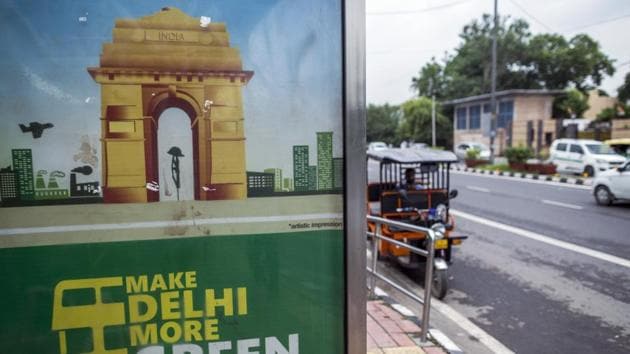
Then there’s the ameliorative effect that e-ricks have on the toxic air in India, home to 10 of the world’s most-polluted cities. .A total of 635,698 three-wheel vehicles were sold during the fiscal year that ended in March – a 24% increase from a year earlier, according to the Society of Indian Automobile Manufacturers. By comparison, about 3.3 million passenger cars were sold, mostly powered by petrol or diesel. (Prashanth Vishwanathan / Bloomberg)
9/10
 View Photos in a new improved layout
Updated on Oct 27, 2018 1:59 PM
One hindrance to the potential growth of EVs is the lack of charging and battery-swapping stations nationwide. India had about 425 publicly available charging points at the end of last year. By 2022, government and private efforts are expected to boost that to an estimated 2,800 charging points, according to BNEF. (Prashanth Vishwanathan / Bloomberg)
10/10
 View Photos in a new improved layout
Updated on Oct 27, 2018 1:59 PM


