
 E-Paper



Photos: ISRO’s Chandrayaan-2 heads to the moon in an historic event
India’s 2nd Moon mission Chandrayaan-2 by ISRO finally launched today at 14:43 hours, 7 days after the initial launch was called off due to a technical snag. A look at the mission from preparation to final launch.
Updated on: Jul 22, 2019 8:45 PM IST

Share via


Copy link

1/9
 View Photos in a new improved layout
Updated on Jul 22, 2019 8:45 PM
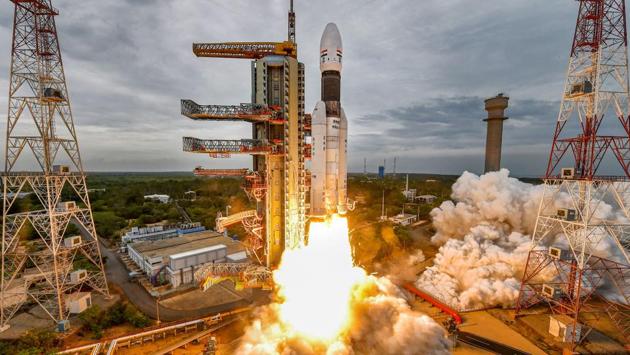
India’s second moon mission Chandrayaan-2 lifts off onboard GSLV Mk III-M1 launch vehicle from Satish Dhawan Space Center at Sriharikota. Andhra Pradesh. It will be a long, over one-and-a-half-month journey for Chandrayaan-2 as it traverses the 384,400 km journey to the Moon. It will also make India the fourth country to soft land a rover on the lunar surface after Russia, the US and China. (ISRO / PTI)
2/9
 View Photos in a new improved layout
Updated on Jul 22, 2019 8:45 PM
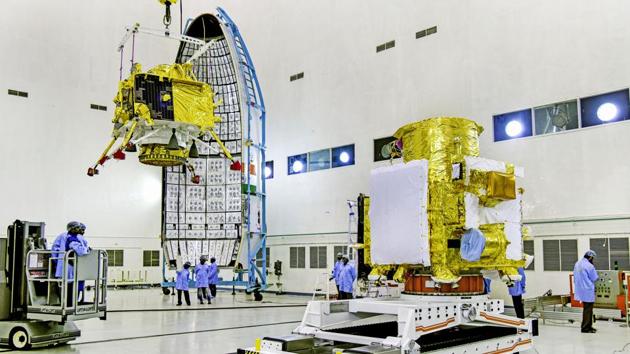
ISRO officials carry out the hoisting of the Vikram Lander during the integration of Chandrayaan-2. The mission will send the rover to the moon’s south pole and Indian scientists hope to directly observe the water ice on the lunar surface, evidence for which was gathered by spectrometers aboard India’s first moon mission in 2008. (ISRO / PTI)
3/9
 View Photos in a new improved layout
Updated on Jul 22, 2019 8:45 PM
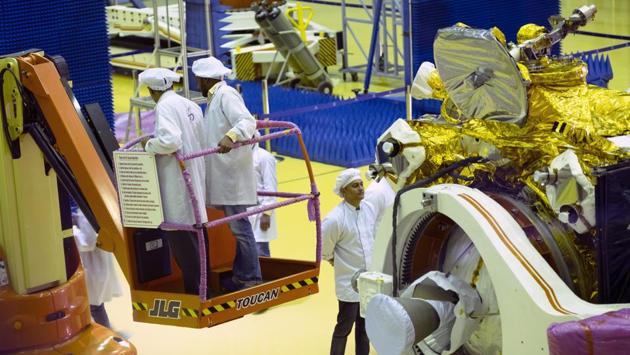
Scientists and employees view the Chandrayaan-2 spacecraft Lander module at the ISRO’s Satellite Integration and Test Establishment at ISRO headquarters in Bengaluru. Chandrayaan-2 consists of an orbiter, a lander (Vikram), and a rover (Pragyan). The entire project is costs Rs 978 crore: Rs 603 crore for the spacecraft and Rs 375 crore for the GSLV Mk-III. (Karen Dias / Bloomberg)
4/9
 View Photos in a new improved layout
Updated on Jul 22, 2019 8:45 PM
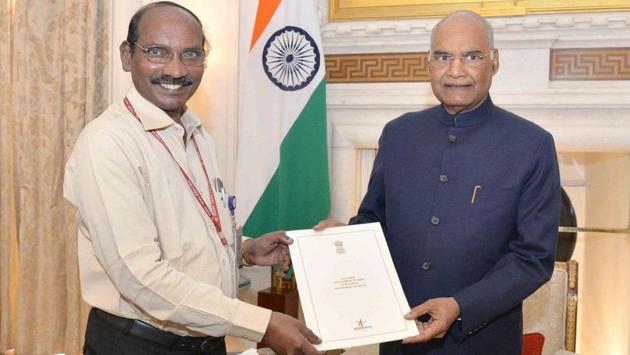
K. Sivan, Chairman, ISRO and Space Commission, called on President Ram Nath Kovind and briefed him about space mission Chandrayaan-2 on June 21. The mission, with an Indian Lander-Rover (Vikram-Pragyaan) combine, is India’s first step in robotic space exploration. (ANI)
5/9
 View Photos in a new improved layout
Updated on Jul 22, 2019 8:45 PM
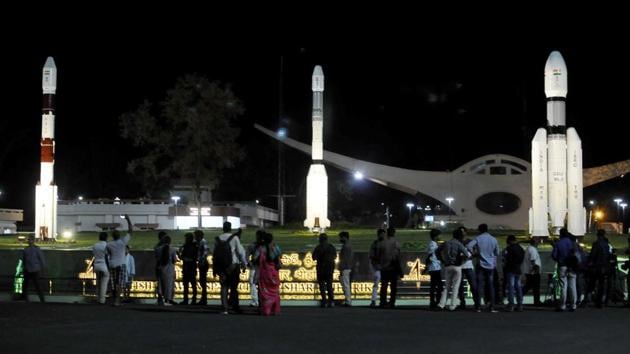
To facilitate viewing of the launch, ISRO inaugurated a viewing gallery at the Satish Dhawan Space Centre in Sriharikota. Here people stand next to models of Indian Space Research Organization’s Geosynchronous Satellite launch Vehicle (GSLV) MkII. (ANI)
6/9
 View Photos in a new improved layout
Updated on Jul 22, 2019 8:45 PM
Thousands gathered at Satish Dhawan Space Center to witness the historic event on July 15. Doordarshan was telecasting the launch live. An unmanned lunar probe was launched almost a decade ago and was a landmark in India’s space mission. ISRO joined an elite list of just six space organisations to send an orbiter to the moon. (ANI)
7/9
 View Photos in a new improved layout
Updated on Jul 22, 2019 8:45 PM
Fifty six minutes and 24 seconds to launch, the first attempt was called off due to a technical snag. It left people disappointed but ISRO was quick to respond and rectify, and the next launch date was scheduled for July 22. (P. Ravikumar / REUTERS)
8/9
 View Photos in a new improved layout
Updated on Jul 22, 2019 8:45 PM
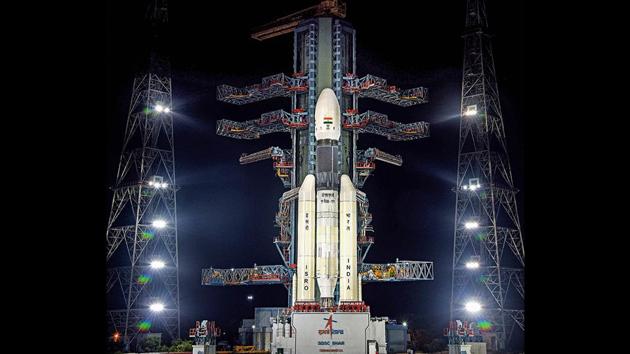
Chandrayaan-2 is now set to spend six additional days in Earth’s orbit and 15 fewer days around the moon before it lands on the day that was originally planned. To gain the lost time due to the delayed launch and the additional days around Earth and in the journey in between, the time spent in the lunar orbit will be reduced from 28 days to 13 days. (PTI)
9/9
 View Photos in a new improved layout
Updated on Jul 22, 2019 8:45 PM


