
 E-Paper



Photos: Kashmir’s Hari Parbat Fort to be centre of Srinagar city tourism
In a bid to boost tourism, Jammu and Kashmir Tourism Minister Tassaduq Mufti has stressed this week on making the 200-year-old Hari Parbat fort that traces its history back to the Mughal emperor Akbar, into the cynosure of Srinagar city's tourist activity. Besides plans for maintaining its rich heritage, Mufti has also directed the officials to initiate synergise efforts for the preservation and the promotion of the heritage site using light and sound shows and 3D projections, as the newest attraction in Kashmir's tourism roster.
Updated on: Mar 28, 2018 1:54 PM IST


Share via


Copy link

1/7

 View Photos in a new improved layout
Updated on Mar 28, 2018 1:54 PM
Perched atop the Koh-i-Maran hill also known as Predemna Peet, overlooking Srinagar is the Hari Parbat fort. Its first fortifications and outer wall, built by the Mughal emperor Akbar in 1590 as part of a new capital, never saw completion and the fort as it stands today was constructed in the 19th century under the reign of Shuja Shah Durrani. (Waseem Andrabi / HT Photo)
2/7
 View Photos in a new improved layout
Updated on Mar 28, 2018 1:54 PM
Reaching the fort itself is a 15 minute climb from the point where vehicles aren’t allowed and the hill itself is favourable to almond trees, seen in abundance. In a bid to boost this central location in the valley, state tourism minister Tassaduq Mufti has directed efforts to turn the 200-year old fort into the cynosure of tourism in Srinagar city. (Waseem Andrabi / HT Photo)
3/7
 View Photos in a new improved layout
Updated on Mar 28, 2018 1:54 PM
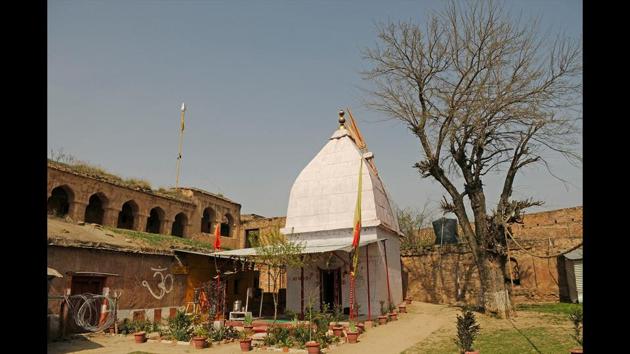
A view of the Mata Ambay temple inside the fort. A protected monument under the Archaeological Survey of India, the fort shares the hill with sites of religious significance: A Parvati temple on the western slope and the Khwaja Makhdoom Sahib and Akhund Mullah Shah shrines on the hill’s southern slope. (Waseem Andrabi / HT Photo)
4/7
 View Photos in a new improved layout
Updated on Mar 28, 2018 1:54 PM
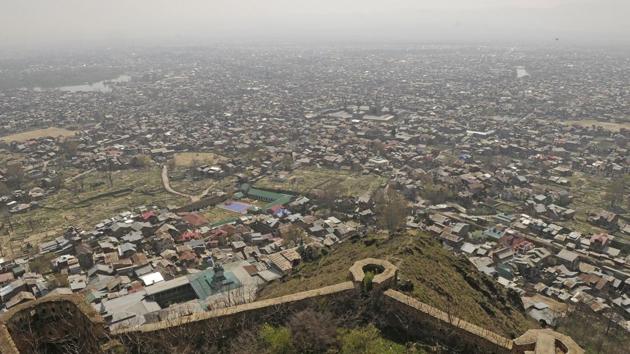
The hill and the fort atop can be made out from nearly anywhere in Srinagar city and the elevated location of the fort in turn lends itself to panoramic views of the city and Dal Lake. (Waseem Andrabi / HT Photo)
5/7
 View Photos in a new improved layout
Updated on Mar 28, 2018 1:54 PM
Used by various rulers over the centuries as a display of might, access to the fort was barred in the 1990s after the eruption of militant unrest in Kashmir. Guarded by personnel of the Central Reserve Police Force(CRPF) today, the fort complex was opened again in 2007 after a span of 17 years. (Waseem Andrabi / HT Photo)
6/7
 View Photos in a new improved layout
Updated on Mar 28, 2018 1:54 PM
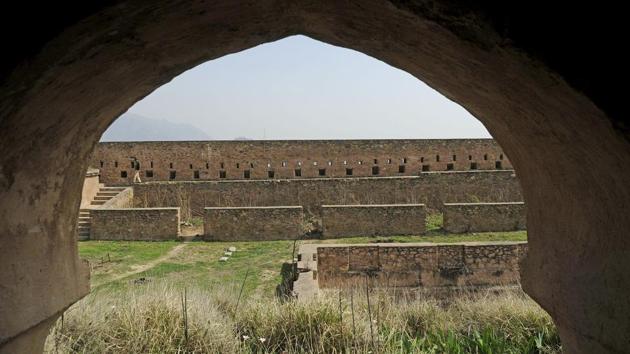
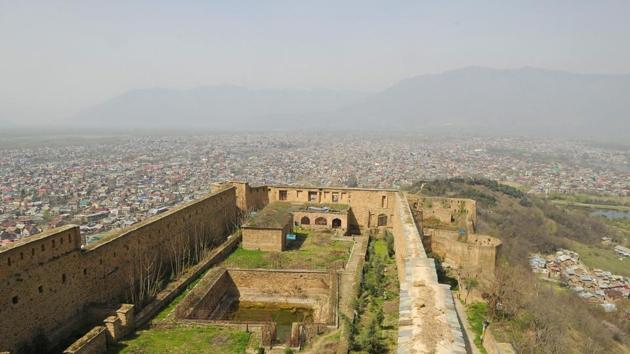
The fort houses four huge towers, two ponds and lawns. Plans for highlighting the location as a tourist site have called for a light and sound show at its grounds. (Waseem Andrabi / HT Photo)
7/7
 View Photos in a new improved layout
Updated on Mar 28, 2018 1:54 PM


