
 E-Paper



Photos| Kolkata’s Messbaris: Urban hostels now remnants of a forgotten past
Kolkata, home to some of India’s most notable literary figures, also houses its first urban hostels called messbaris. From Byomkesh Bakshi’s creator Sharadindu Bandyopadhyay to legendary Bengali author Shibram Chakraborty, many stalwarts have stayed in such hostels. However, most of them are crumbling and forgotten today; the ornate facades that remain hiding decrepit interiors. Organisations like Heritage Walks Calcutta are now documenting these spaces and showing them to the world through an Instagram page ‘The Messbari Project’, hoping to raise awareness and establish the need for restoration.
Updated on: Mar 18, 2019 2:15 PM IST

Share via


Copy link

1/9
 View Photos in a new improved layout
Updated on Mar 18, 2019 2:15 PM
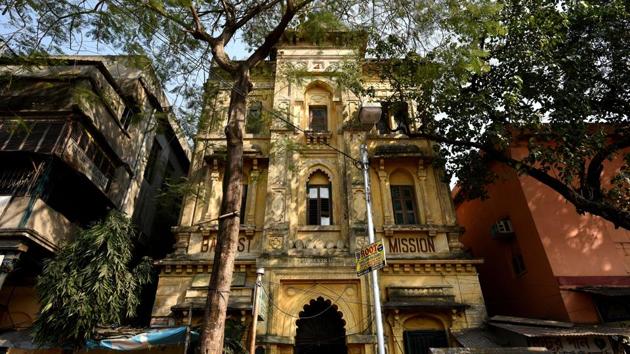
A view of Baptist Mission Students Hall in Kolkata. India’s first urban hostels called messbaris flourished in the city in the 20th century. By early 1900s, they were housing thousands of young men who had headed to rapidly industrialising Bengal. Messbaris still around have accumulated years of neglect. But thanks to movies set in these buildings and heritage initiatives, efforts are now being made to revive them. (Arijit Sen / HT Photo)
2/9
 View Photos in a new improved layout
Updated on Mar 18, 2019 2:15 PM
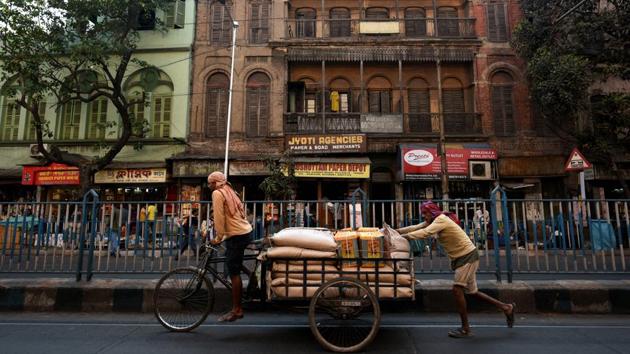
Presidency Boarding House in Kolkata. Most residents arrive seeking jobs, some pursuing education. Byomkesh Bakshi, the famous fictional detective, lived in one; as did his creator, author Sharadindu Bandyopadhyay. In the 2017 film Detective Byomkesh Bakshy, Presidency House was used in the set. When Tathagata Neogi from Heritage Walk Calcutta (HWC) visited the place, he found it in a “terrible state.” (Arijit Sen / HT Photo)
3/9
 View Photos in a new improved layout
Updated on Mar 18, 2019 2:15 PM
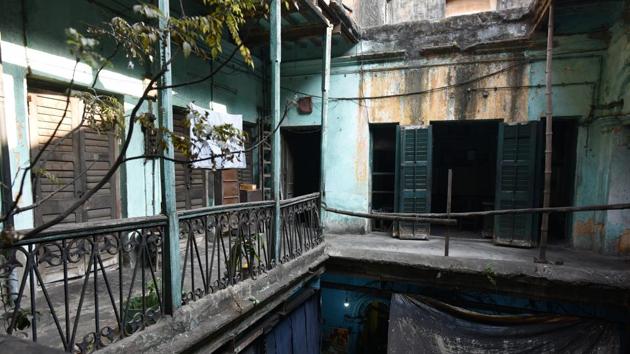
A view inside Presidency Boarding House. Looking at its sorry state, Neogi, who was scouting for ideas on a documentary on the history of Kolkata, did an episode on messbaris as part of Sutanuti Diaries. In January, HWC began to document the messbaris through photographs, residents’ accounts and cultural references. They found 53 that were still standing. (Arijit Sen / HT Photo)
4/9
 View Photos in a new improved layout
Updated on Mar 18, 2019 2:15 PM
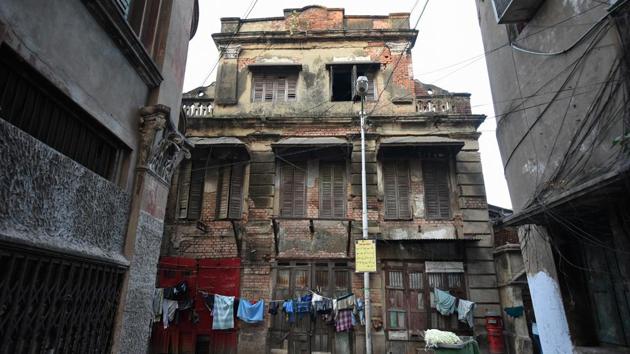
Not far from Presidency is Khetra Kuthi, with the room on the second floor where legendary Bengali author Shibram Chakraborty spent most of his life and died in 1980. “Multiple people have come looking for his room. One man, when led to his room, bowed down and touched the floor with his forehead. It was thrilling to see,” said 27-year-old Dip Chakraborty, the room’s present occupant . (Arijit Sen / HT Photo)
5/9
 View Photos in a new improved layout
Updated on Mar 18, 2019 2:15 PM
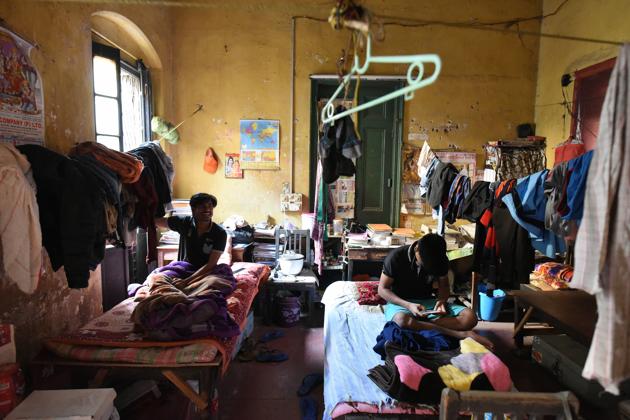
A room at Baptist Mission Students Hall. In messbaris, people preferred to live with those from similar backgrounds, so the messes were organised by community — a Marwari mess, an Odia one, a Goan messbari, one for nurses, and one for refugees from China. There were even some posh boarding houses in central parts of the city for Europeans. (Arijit Sen/HT Photo)
6/9
 View Photos in a new improved layout
Updated on Mar 18, 2019 2:15 PM
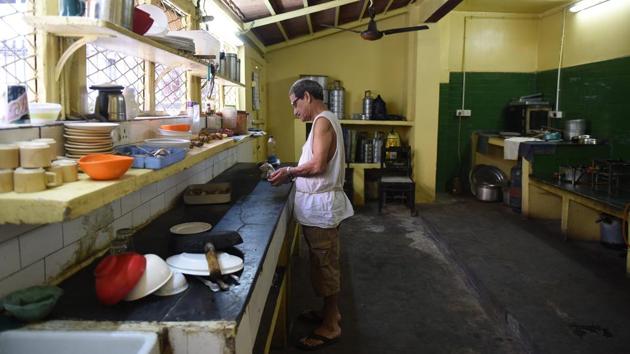
A look inside the kitchen of Manacjee Rustomjee Dharmashala for Parsi Travelers. Today, some messbaris have survived as hotels. The Chinese mess for refugees in Tirretta Bazar now houses a Chinese restaurant. The Parsi mess is well-maintained and still functional and also has a Parsi takeaway joint, a rarity in the city. (Arijit Sen / HT Photo)
7/9
 View Photos in a new improved layout
Updated on Mar 18, 2019 2:15 PM
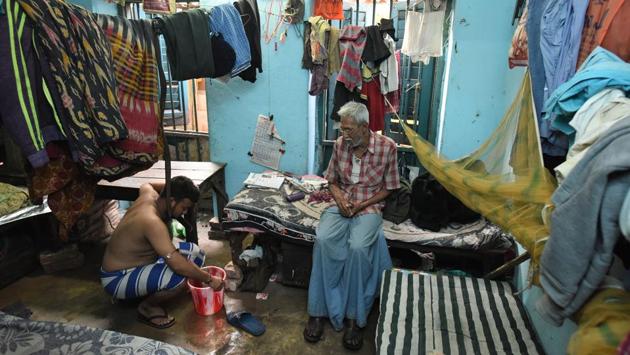
People of different age groups live together at Raghunath Residency. HWC now has an Instagram page called The Messbari Project showcasing images they’ve taken. The project report is on their website. In October, a team from HWC met West Bengal Heritage Commission chairman Subhaprasanna Bhattacharjee to discuss ways to preserve the structures. “We will submit our documentation to the commission in April,” said Neogi. (Arijit Sen / HT Photo)
8/9
 View Photos in a new improved layout
Updated on Mar 18, 2019 2:15 PM
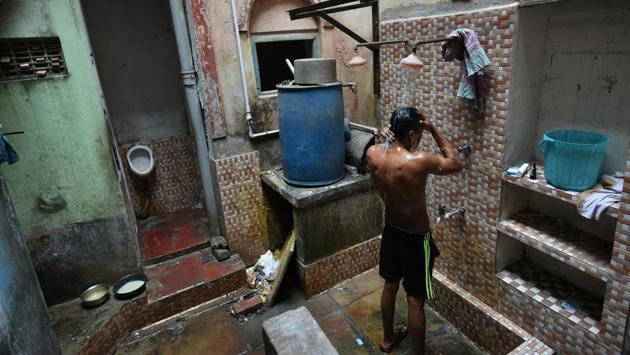
Bathing at Raghunath Residency. “The Messbari Project is a wonderful initiative and I will help take it forward in my capacity,” said Bhattacharjee. Realising that there were many stories to be told, HWC launched an internship project to study messbaris. Armed with literary references, anecdotes and street directories dating back to 1915, interns began cataloguing the structures, and uncovering historical references. (Arijit Sen / HT Photo)
9/9
 View Photos in a new improved layout
Updated on Mar 18, 2019 2:15 PM


