
 E-Paper



Photos: The Ayushman Bharat healthcare scheme’s possible sway on votes
While Prime Minister Narendra Modi's nationalist tub-thumping has been widely credited with his recent election win, another factor was one he kept relatively quiet about: Modicare. Despite some teething problems and a dire need for further reforms and more spending, this huge initiative launched last year -- one of the world's largest publicly funded healthcare programmes -- appears to have made a difference.
Updated on: May 30, 2019 5:57 PM IST

Share via


Copy link

1/8
 View Photos in a new improved layout
Updated on May 30, 2019 5:57 PM
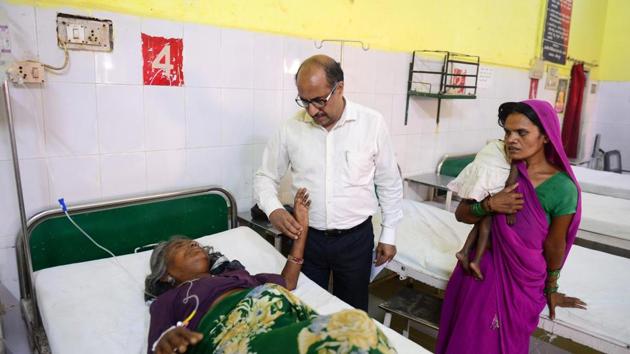
Chief medical officer Doctor Anil Agarwal (C) during his inspection round in a hospital at Sitapur, Uttar Pradesh. “This scheme has infused a sense of belief in the poor that if they fall sick they will get treatment without spending a rupee,” Agarwal said. Voting data from the election that ended last week showed particularly strong support for Modi’s BJP in poorer areas where people would have benefited most. (Sanjay Kanojia / AFP)
2/8
 View Photos in a new improved layout
Updated on May 30, 2019 5:57 PM
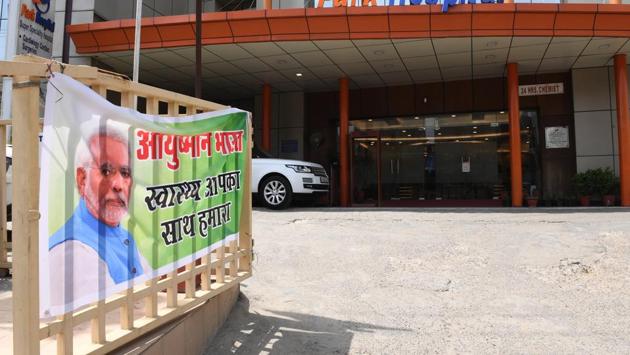
A banner for Ayushman Bharat, commonly known as “Modicare” at a hospital in Gurgaon. “It has certainly been welcomed as a welfare measure by the poor and probably contributed to electoral victory,” said K. Srinath Reddy, president of the non-profit Public Health Foundation of India. Modicare covers hospital costs up to Rs 5 lakh for the poorest 40% of Indians, in a country where the average annual income is little above Rs 1 lakh. (Money Sharma / AFP)
3/8
 View Photos in a new improved layout
Updated on May 30, 2019 5:57 PM
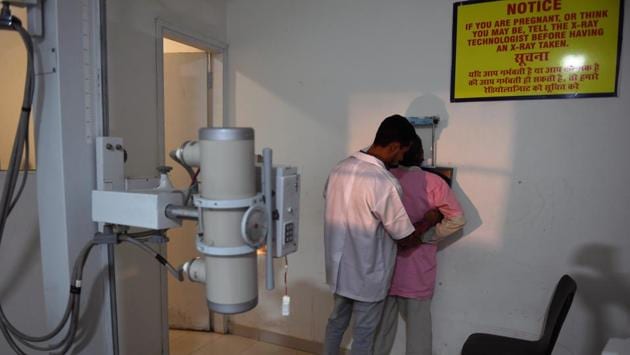
A patient is prepared for an X-ray. Even before Modicare was introduced in September, treatment was largely free at government hospitals. But patients still had to shell out for diagnostics and medicines, as well as for implants. Private clinics were out of reach for many, but now poorer Indians can visit these clinics, providing they sign up to the scheme. (Money Sharma / AFP)
4/8
 View Photos in a new improved layout
Updated on May 30, 2019 5:57 PM
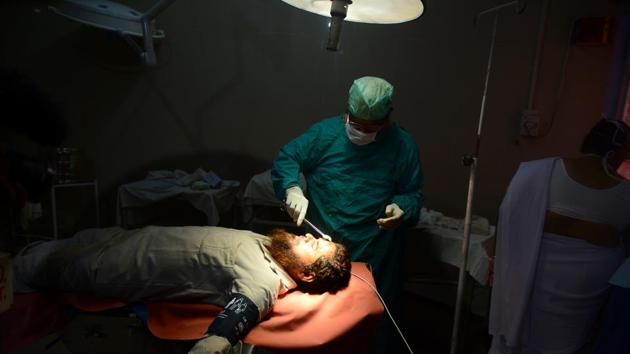
Sabir Ali, an impoverished weaver who got a card for himself and his family to use at any of the 15,000-odd participating hospitals, had a cyst removed from his forehead. “It was unbelievable to hold the card in my hands,” Ali told AFP, his head bandaged at the Sitapur district hospital. “I used the card and I didn’t have to spend a single rupee on my treatment.” (Sanjay Kanojia / AFP)
5/8
 View Photos in a new improved layout
Updated on May 30, 2019 5:57 PM
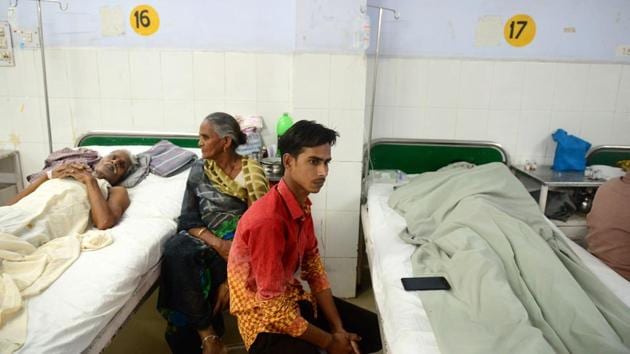
An estimated 60 million Indians are pushed below the poverty threshold every year paying for medical care, while a report last year by The Lancet medical journal found substandard healthcare was responsible for some 1.6 million deaths a year. Almost 2 million people have benefited, with the government allocating $1.2 billion so far. The costs are shared between central and state governments 60:40. (Sanjay Kanojia / AFP)
6/8
 View Photos in a new improved layout
Updated on May 30, 2019 5:57 PM
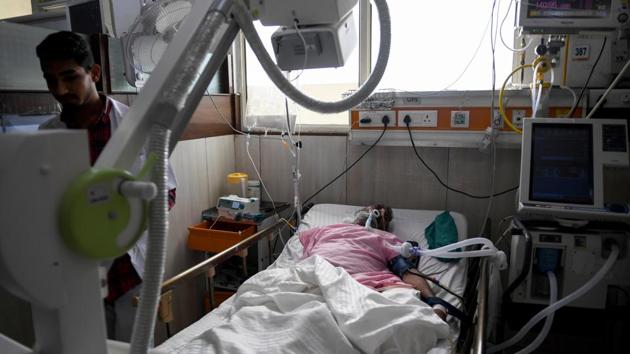
A patient in bed on a ventilator in Gurgaon. Modi’s second term, however, will have to iron out some of the scheme’s teething problems. “We can’t cope with (receiving) 9,000 rupees for a caesarean section which would include stay of the patient, fees of the anaesthetist, paediatrician, medicines and so on,” said Doctor V.K. Monga from the Indian Medical Association. “But corrective steps are being taken, ” he added. (Money Sharma / AFP)
7/8
 View Photos in a new improved layout
Updated on May 30, 2019 5:57 PM
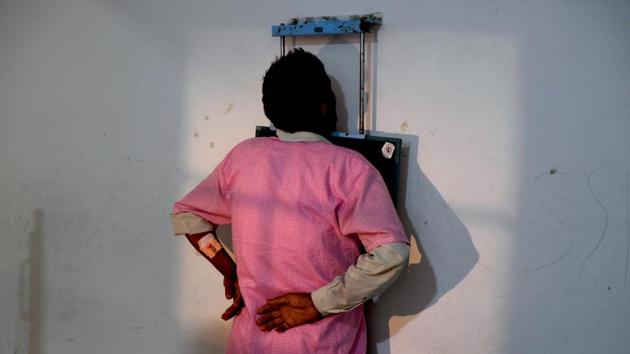
A patient undergoes an X-ray. More broadly, building more facilities, training more staff and implementing more reforms are needed in what remains a dysfunctional system, experts say. Modi has promised to hike health spending to 2.5% of GDP by 2025, from 1.15% now but it is unclear if this will suffice. Critics also say that Modicare helps unscrupulous private providers boost profits. (Money sharma / AFP)
8/8
 View Photos in a new improved layout
Updated on May 30, 2019 5:57 PM


