
 E-Paper



Photos | Survival of the warmest: Homeless’ cold struggle
Last week, as the city shivered at 2.4°C— lowest minimum temperature since 1996— and Delhiites put on extra layers, a large number of homeless people were forced to brave the cold by sleeping out in the streets, like always. The city has around 193 night shelters, of which 80 are permanent buildings, 113 are porta cabins, which can house a total of 16,000 people. In addition to this, 77 make-shift tents have been pitched this year, which can house more than 3,000 people. All the shelters are run by various NGOs on a contract basis.
Updated on: Jan 1, 2020 4:25 PM IST


Share via


Copy link

1/8
 View Photos in a new improved layout
Updated on Jan 1, 2020 4:25 PM
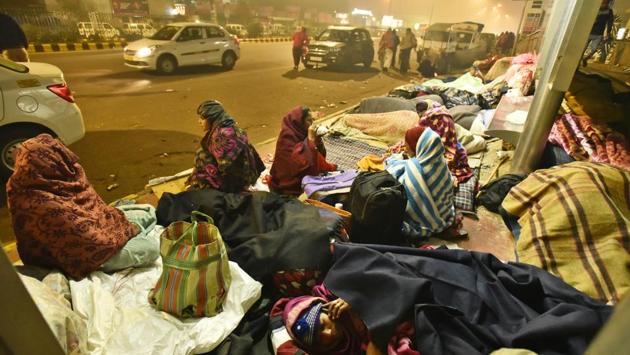
People spending the night near a bus shelter near AIIMS, in New Delhi. Last week, as the city shivered at 2.4°C— lowest minimum temperature since 1996— and Delhiites put on extra layers, a large number of homeless people were forced to brave the cold by sleeping out in the streets, like always. (Sanjeev Verma / HT Photo)
2/8
 View Photos in a new improved layout
Updated on Jan 1, 2020 4:25 PM
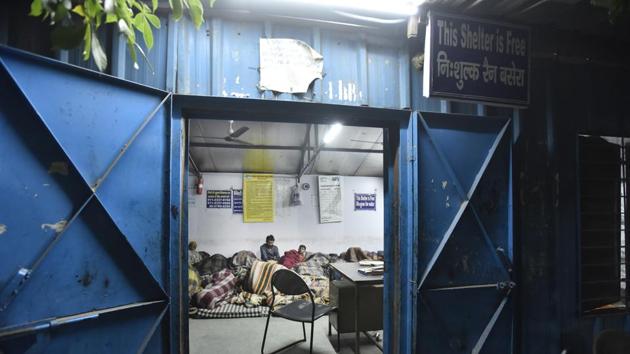
People seen in a night shelter on a cold winter night at Jama Masjid. As per government data, the 270 shelters in the city can accommodate at least 19,000 people. However, NGOs, maintain that the total number of homeless in the city is at least over a lakh. (Sanjeev Verma/HT Photo)
3/8
 View Photos in a new improved layout
Updated on Jan 1, 2020 4:25 PM
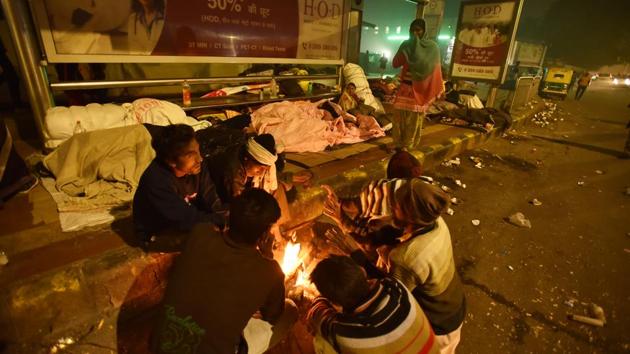
People gather around a bonfire near a bus shelter on a cold winter night near AIIMS. “The doctors have asked me to stay warm, but it’s not possible here. Many of us here use tarpaulin sheets, as they are waterproof and helps keep the dew away,” said Satish Singh, who had come to Delhi for getting treatment for his liver ailment. He has been living here for over a month. (Sanjeev Verma/HT Photo)
4/8
 View Photos in a new improved layout
Updated on Jan 1, 2020 4:25 PM
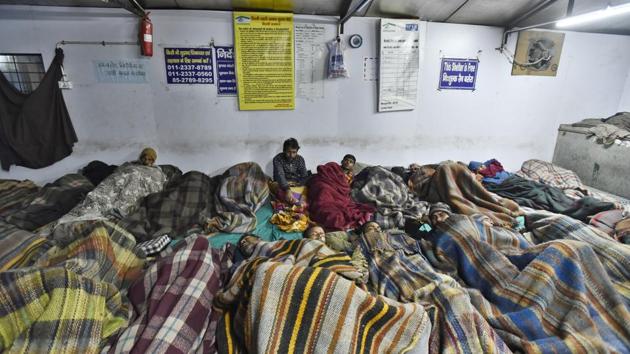
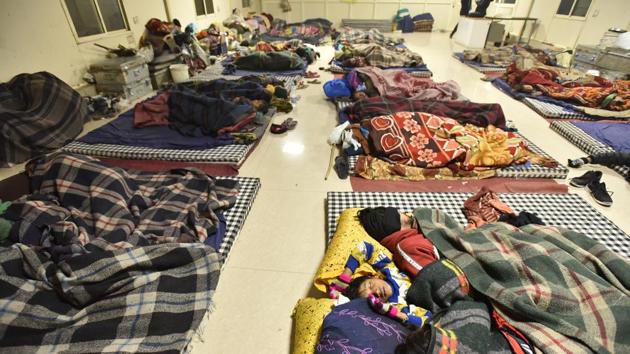
People asleep in a night shelter on a cold winter night at Jama Masjid. While the shelters HT visited had blankets and beddings, people complained of thefts, rodents and lack of basic amenities, such as functional toilets and warm water. The tents have folding beds, linen, pillows and mattresses. Only permanent shelter buildings — 80 out of the total 270 — have facilities such as geysers and TVs. (Sanjeev Verma/HT Photo)
5/8
 View Photos in a new improved layout
Updated on Jan 1, 2020 4:25 PM
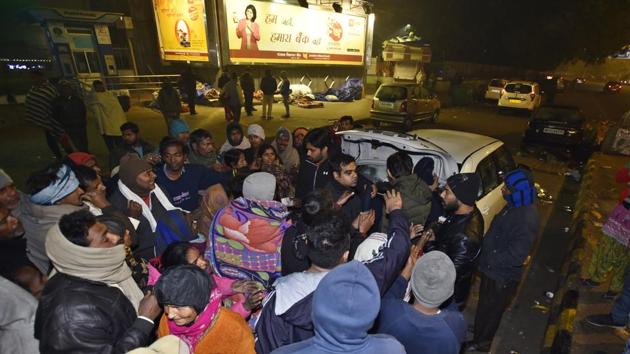
People distribute blankets to persons spending the night out in the open near AIIMS. Hasina Khan, 43, who managed to get a bed in the tent outside AIIMS Metro station, said one has to go far to use a washroom, as public toilets in the vicinity run out of water and are hence locked. Her five-year-old son, she said, was diagnosed with stomach cancer and was being treated at AIIMS. (Sanjeev Verma/HT Photo)
6/8
 View Photos in a new improved layout
Updated on Jan 1, 2020 4:25 PM
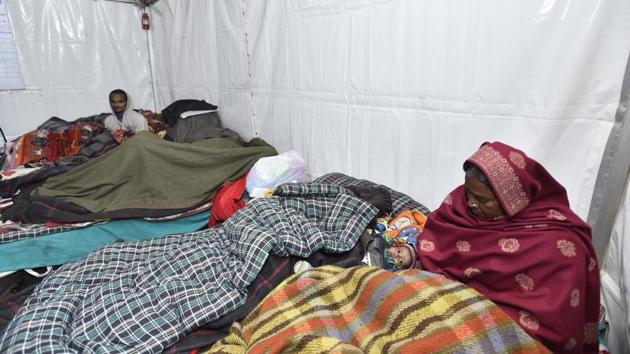
People sleep in a night shelter on a cold winter night near AIIMS. This year, officials of the Delhi Urban Shelter Improvement Board (DUSIB) — who are tasked with providing a roof to the city’s homeless — said more tents had been pitched at AIIMS and the number of people sleeping out in the cold had reduced, when compared with last year. “This year nine tents have been set up, some with toilets, as compared to seven last year. But all are packed and there is not much space left to pitch more tents,” said a DUSIB official. (Sanjeev Verma/HT Photo)
7/8
 View Photos in a new improved layout
Updated on Jan 1, 2020 4:25 PM
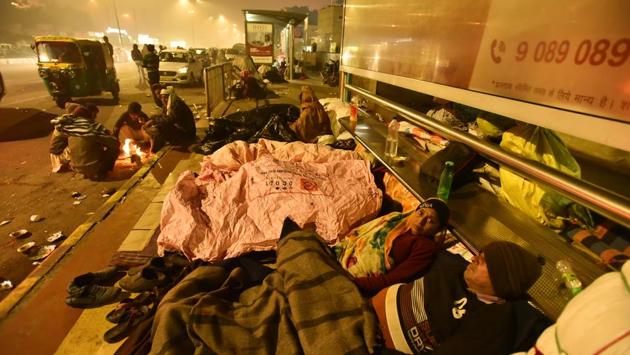
People spending the night near a bus shelter near AIIMS. The city has around 193 night shelters, of which 80 are permanent buildings, 113 are portable cabins, which can house a total of 16,000 people. In addition to this, 77 makeshift tents have been pitched this year, which can house more than 3,000 people. All the shelters are run by various NGOs on a contract basis. (Sanjeev Verma/HT Photo)
8/8
 View Photos in a new improved layout
Updated on Jan 1, 2020 4:25 PM


