
 E-Paper



Photos: The NRC and the challenges of being Bengali in Assam
The National Register of Citizens exercise in Assam is about identifying illegal immigrants within its territory. But what it reveals is an old and continuous history of the Assamese-Bengali divide. The exercise recently being conducted in Assam didn’t include the names of 40 lakh people (approx) in the register’s final draft. Four lakh (approx) from the Bengali-dominated Barak valley have not made it to the list. There is worry now on every brow. What if this is by design, ask the inhabitants of the valley.
Updated on: Sep 10, 2018 11:26 AM IST

Share via


Copy link

1/9
 View Photos in a new improved layout
Updated on Sep 10, 2018 11:26 AM
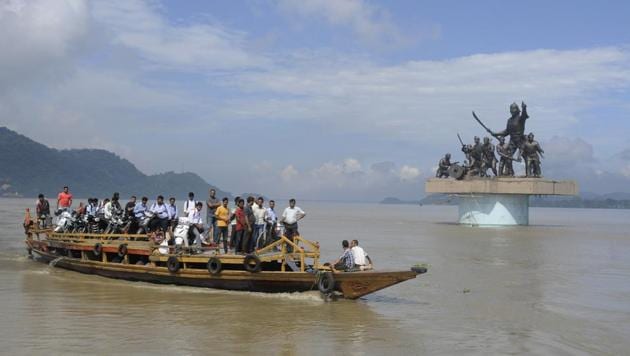
The statue of Ahom general Lachit Borphukan who defeated the Mughals in the Battle of Saraighat, on the river Brahmaputra in Guwahati. Even before it became part of independent India, Assam was a meeting ground of dynasties, tribes, traders, immigrants. It was also a place where Bengalis of all faiths learnt to pull together, watchful of the other yet cordial. Both were accepted by the Assamese as part of Assam, till, as they say, “they couldn’t”. (Samir Jana / HT Photo)
2/9
 View Photos in a new improved layout
Updated on Sep 10, 2018 11:26 AM
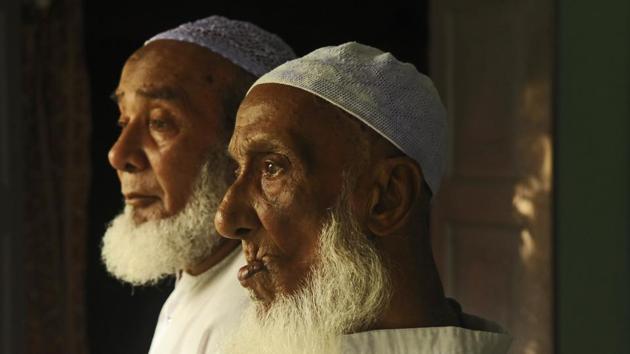
(L-R) Brothers and retired teachers of Rongpur-1 (near Silchar) Moinuddin Mozumder and Alauddin Mozumder’s names are missing from the National Register of Citizens (NRC) final draft. The exercise being conducted in Assam, does not include the names of 40 lakh people (approx) in its final draft. Four lakh (approx) from the Bengali-dominated Barak valley haven’t made it to the list. What if this is by design, they ask. (Samir Jana / HT Photo)
3/9
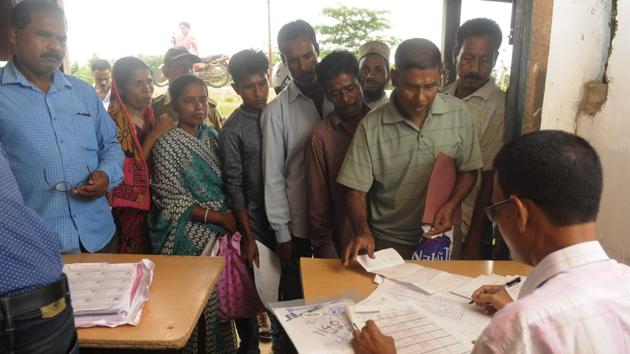
![A NRC Seva Kendra (NSK) in Rongpur-1 near Silchar in Assam. “Every 10 years, the Assamese spring something like this on us,” says Sanjib Deb Laskar of the Barak Valley Bengali Literary and Cultural Association. “In the ‘50s, thousands of Bengali Hindus and Muslims relocated to or from East Pakistan and returned [after the Liaquat-Nehru Pact] to Assam to find their names missing from the electoral rolls of 1952 and the NRC of 1951.” (Samir Jana / HT Photo)](https://images.hindustantimes.com/rf/image_size_630x354/HT/p2/2018/09/09/Pictures/nrc-in-assam_c34422c0-b449-11e8-bb15-a1f88311a832.jpg "A NRC Seva Kendra (NSK) in Rongpur-1 near Silchar in Assam. “Every 10 years, the Assamese spring something like this on us,” says Sanjib Deb Laskar of the Barak Valley Bengali Literary and Cultural Association. “In the ‘50s, thousands of Bengali Hindus and Muslims relocated to or from East Pakistan and returned [after the Liaquat-Nehru Pact] to Assam to find their names missing from the electoral rolls of 1952 and the NRC of 1951.” (Samir Jana / HT Photo)") View Photos in a new improved layout
View Photos in a new improved layoutUpdated on Sep 10, 2018 11:26 AM
A NRC Seva Kendra (NSK) in Rongpur-1 near Silchar in Assam. “Every 10 years, the Assamese spring something like this on us,” says Sanjib Deb Laskar of the Barak Valley Bengali Literary and Cultural Association. “In the ‘50s, thousands of Bengali Hindus and Muslims relocated to or from East Pakistan and returned [after the Liaquat-Nehru Pact] to Assam to find their names missing from the electoral rolls of 1952 and the NRC of 1951.” (Samir Jana / HT Photo)
4/9
 View Photos in a new improved layout
Updated on Sep 10, 2018 11:26 AM
The ‘60s saw Assamese imposed in Barak valley schools, with Bengali back after resistance mounted. The ‘70s to the ‘80s saw the ‘Bideshi kheda’ movement, the target shifting from outsiders to illegal immigrants to Bengalis in general. Now there is the NRC. Many families could not apply for inclusion in the final draft of the current NRC because they could not supply the legacy data of which the 1951 NRC is a key document. (Samir Jana / HT Photo)
5/9
 View Photos in a new improved layout
Updated on Sep 10, 2018 11:26 AM
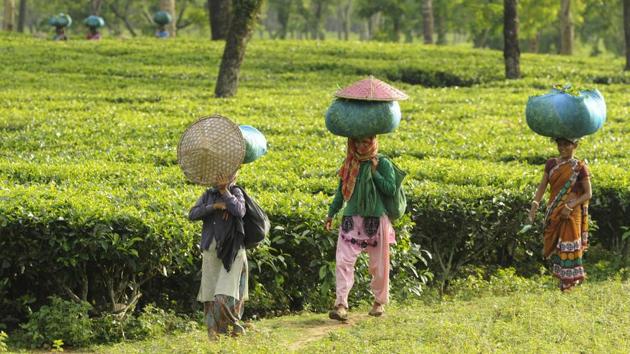
Tea garden workers at Dolu Tea garden in Barkhola of Barak region. Laskar’s father has been a legislator in the Assam assembly. Some in his family have not been included in the NRC. “Barak Bengalis”, he says, “have been here as part of undivided Sylhet. Bengalis have been in Assam since the 5th century. And they are calling us foreigners!” (Samir Jana / HT Photo)
6/9
 View Photos in a new improved layout
Updated on Sep 10, 2018 11:26 AM
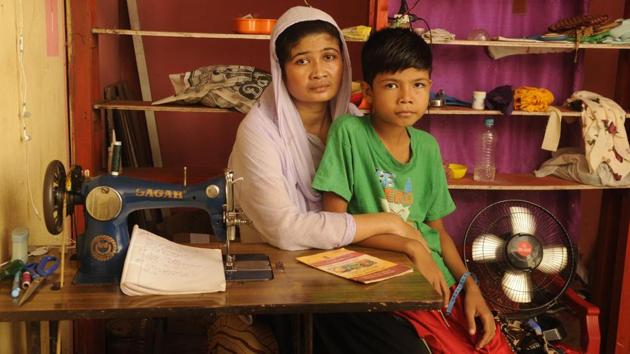
Ruksha Khan, with her son in Kashipur 2 near Silchar. Her husband Hanif Khan committed suicide due to trauma after the family’s names were missing. That Bengalis of both communities find themselves out of the NRC has reinforced their shared identity though that unity is not a given. The Bengali of the Barak valley is not on the same page with those of the Brahmaputra valley. (Samir Jana / HT Photo)
7/9
 View Photos in a new improved layout
Updated on Sep 10, 2018 11:26 AM
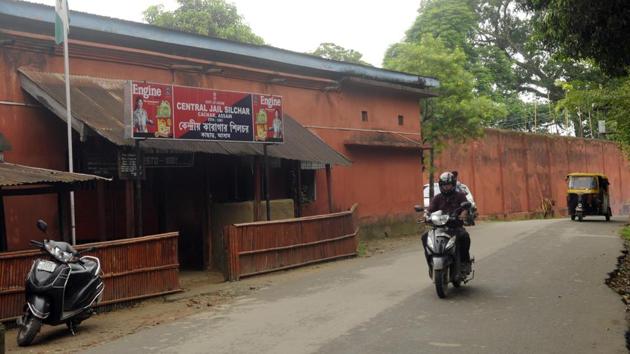
Three of Barak’s districts (Cachar, Karimganj and Hailakandi) and Barpeta in the Brahmaputra valley have a majority of Bengali-speakers, both Hindus and Muslims. Both communities were accommodated in Assam for different reasons. The main reason is historical; the current controversy surrounding the labels ‘illegal immigrants’ and ‘indigenous people’, which this NRC exercise has thrown up like the ‘51 NRC did, is political. (Samir Jana / HT Photo)
8/9
 View Photos in a new improved layout
Updated on Sep 10, 2018 11:26 AM
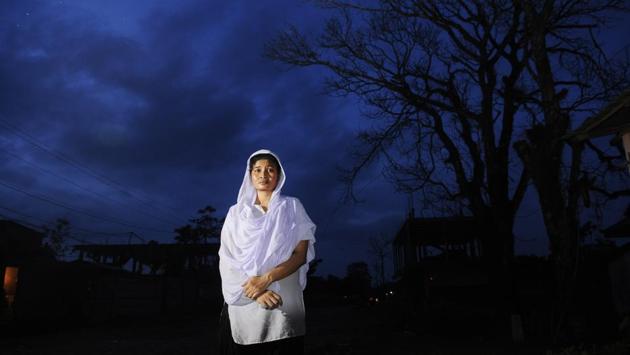
“The attack on the Bengali Hindu is in the name of language – the Assamese say they do not accept our culture. The assault on the Bengali Muslim is in the name of religion. But there are chauvinists in all parties,” says writer Hafiz Ahmed of Barpeta. “‘Who is Khilonjia (original)? It’s basically the Shiv Sena line, the Sena considers only the Marathi manoos as ‘indigenous’,” he asked recently on a talk show. (Samir Jana / HT Photo)
9/9
 View Photos in a new improved layout
Updated on Sep 10, 2018 11:26 AM


