
 E-Paper



Photos: What Rohingya people carry as they flee homes in Myanmar
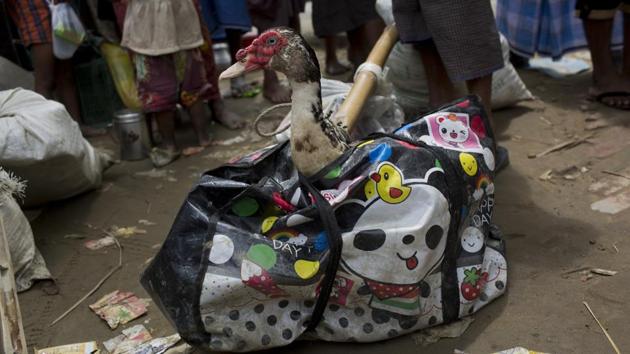
As the number of Rohingya displaced after the August 25, 2017 upsurge in violence in the Rakhine state reaches a new high of nearly 300,000 in a fortnight, a look at what meagre belongings most of those escaping manage to bring along as they flee to safety.
Updated on: Sep 11, 2017 11:31 AM IST

Share via


Copy link

1/9
 View Photos in a new improved layout
Updated on Sep 11, 2017 11:31 AM
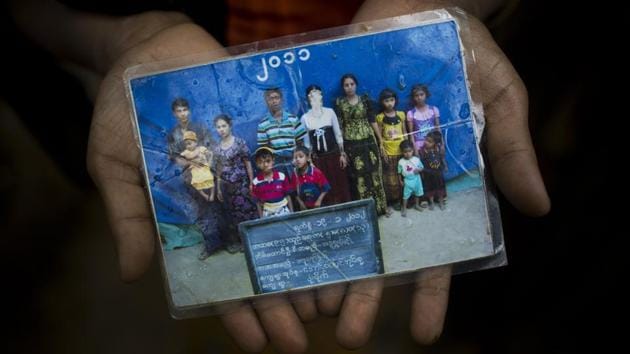
Mubarak Begum, holds a photograph of her family members, in Bangladesh. She says the government took pictures of Rohingya families annually to track numbers. Her daughter Rubina (face scratched) couldn't make it across and is still in Maungdaw. An estimated 300,000 Rohingya have fled in the fortnight since August 25, 2017. As thousands pour into Bangladesh escaping shootings, arson, violence and growing reports of landmines along the border, most carry but a handful from life back home. (Bernat Armangue / AP)
2/9
 View Photos in a new improved layout
Updated on Sep 11, 2017 11:31 AM
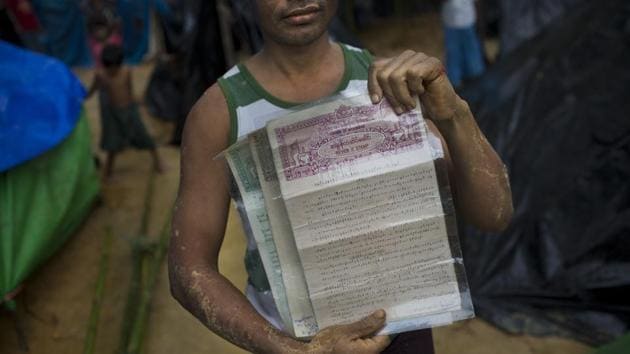
Nur Bashar a Rohingya refugee, holds documents of property and land his family owns in Myanmar. Many bring documents from their life back in Myanmar, laminated to protect them from the rain. National or school ID cards and scraps that prove that even their grandparents lived in that country. One family brought property records, proof of a parcel of land they bought in 1994. Also proof of their desire to one day return to the place they still call home. (Bernat Armangue / AP)
3/9
 View Photos in a new improved layout
Updated on Sep 11, 2017 11:31 AM
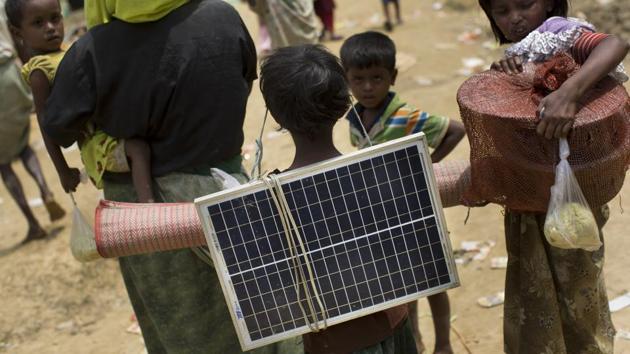
A Rohingya Muslim child carries a solar panel as she crosses over the border from Myanmar into Bangladesh in Teknaf area. Small solar panels are everywhere in the makeshift refugee camp that has sprouted up to accommodate many of the more than 270,000 people the UN says have entered Bangladesh since the violence started. The dark-blue-and-white panels are also perched on the plastic roofs of their shelters. ‘We got it so that in the dark we can have some light,’ said one man. (Bernat Armangue / AP)
4/9
 View Photos in a new improved layout
Updated on Sep 11, 2017 11:31 AM
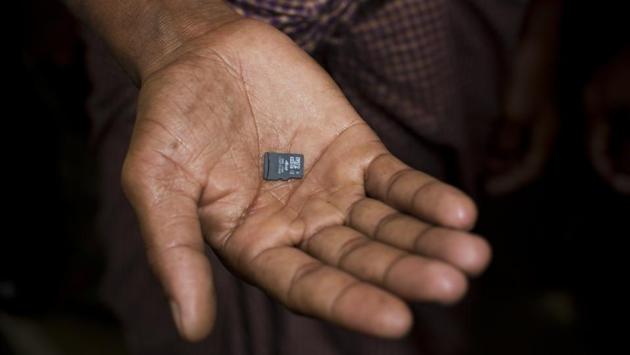
A Rohingya refugee displays a memory card carried across from Myanmar into Bangladesh. Those who don’t carry cellphones still often bring memory cards from their abandoned phones. Some Rohingya said they erased personal photos and videos because they were afraid that Myanmar soldiers would use them to find and persecute their families still behind. With access to internal media restricted, memory cards and cellphones are invaluable at getting information out of Myanmar. (Bernat Armangue / AP)
5/9
 View Photos in a new improved layout
Updated on Sep 11, 2017 11:31 AM
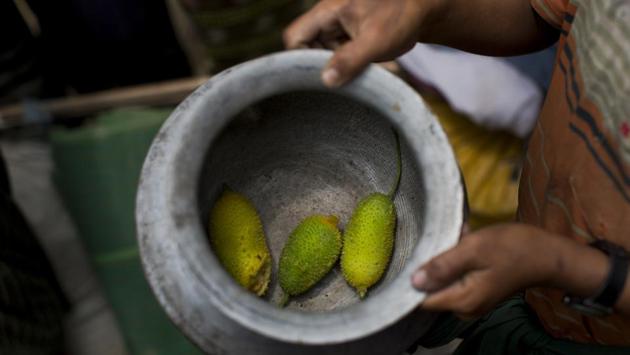
A Rohingya refugee carries vegetables in a vessel after crossing over the border from Myanmar into Bangladesh in Teknaf area. Fleeing just having packed a few precious items into used sacks and bamboo baskets, those escaping on foot through forests, or on precarious boats on rain-swollen rivers face weeks of travel before they can reach safety. Sacks of rice, vegetables and other food packed along makes it on to the list of essentials. (Bernat Armangue / AP)
6/9
 View Photos in a new improved layout
Updated on Sep 11, 2017 11:31 AM
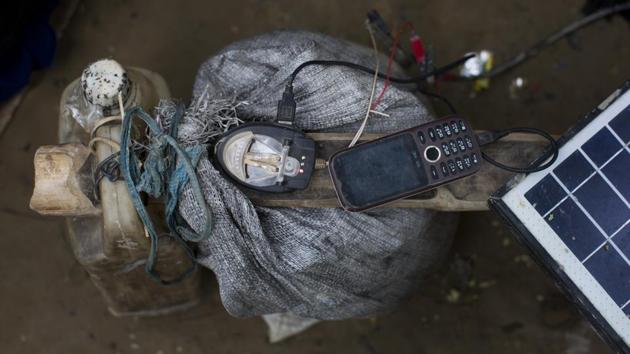
A mobile phone is charged by a solar panel brought across the border by a Rohingya in Teknaf area, Bangladesh. Tied in plastic pouches and hung around their necks, or tucked into the waistbands of their wraparounds, cellphones allow Rohingya to reach relatives who arrived in Bangladesh during earlier waves of fear-fueled migrations from Myanmar. They also allow them to reconnect with relatives they became separated from along the tricky journeys that bring them to safety. (Bernat Armangue / AP)
7/9
 View Photos in a new improved layout
Updated on Sep 11, 2017 11:31 AM
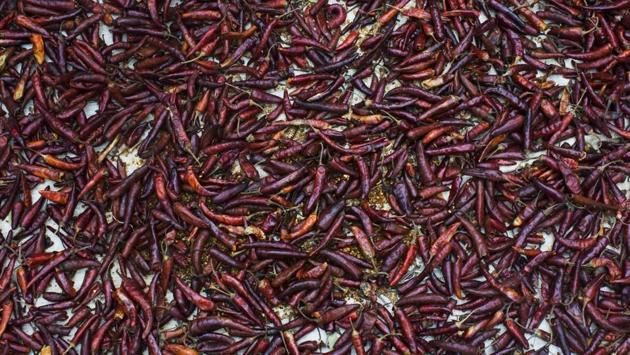
Red chilli are spread on a plastic sheet carried across the border from Myanmar into Bangladesh by fleeing Rohingya in Teknaf. With food in the camps scarce, most people eat only when aid agencies or volunteers bring bags of food, most often rice and watery curry. But even in these dire circumstances, many Rohingya have brought with them spices from their homeland: pungent red chilies drying on plastic sheets; fiery chutneys in battered boxes or dried beef in bamboo cases. (Bernat Armangue / AP)
8/9
 View Photos in a new improved layout
Updated on Sep 11, 2017 11:31 AM
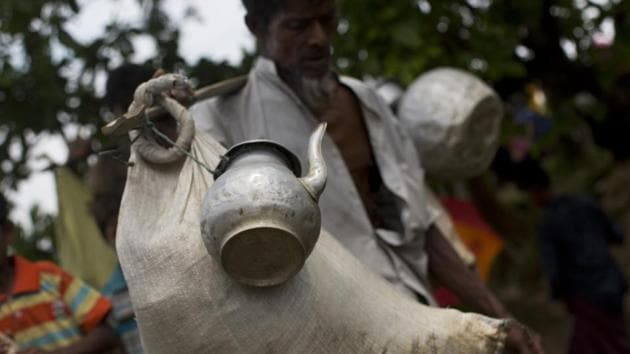
A Rohingya Muslim man arrives with a sack of belongings and a kettle and other utensils tied to a stick as he crosses the border into Bangladesh's Teknaf area. Many Rohingya report entire villages being burnt to the ground as they fled from the Rakhine state, leaving scant remnants of their presence in the region. (Bernat Armangue / AP)
9/9
 View Photos in a new improved layout
Updated on Sep 11, 2017 11:31 AM


