
 E-Paper



Preparing ‘Karah Parshad’: Making of a sweet and sacred offering
The Golden Temple’s karah parshad is made daily with the unique flavour of devotion and served in true Sikh spirit of equality among all. HT visits the shrine’s kitchen and soaks up the recipe and ritual of this delectable offering.
Updated on: Jun 26, 2018 6:27 PM IST

Share via


Copy link

1/7
 View Photos in a new improved layout
Updated on Jun 26, 2018 6:27 PM
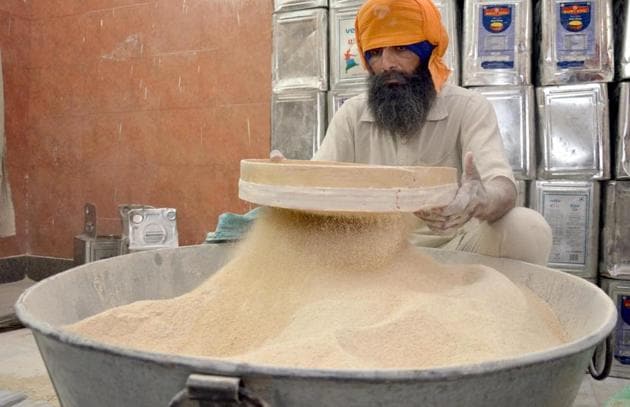
In Sikhism, ‘karah parshad’ is a type of semolina halwa made with almost equal quantities of whole wheat flour, desi ghee and sugar. (Sameer Sehgal/HT)
2/7
 View Photos in a new improved layout
Updated on Jun 26, 2018 6:27 PM
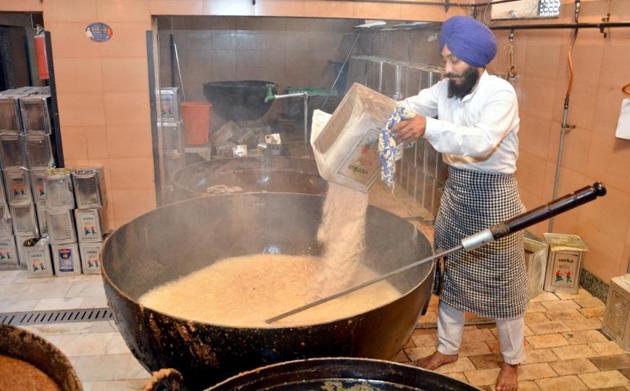
The parshad is prepared in a two-storeyed kitchen near Akal Takht. Preparation starts at 12.30am daily and continues till late at night. (Sameer Sehgal/HT)
3/7
 View Photos in a new improved layout
Updated on Jun 26, 2018 6:27 PM
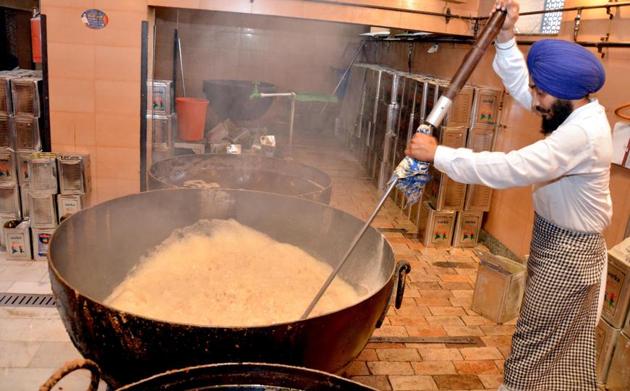
Bhupinder Singh, a cook at the kitchen, says the ‘degh’ is then taken to the sanctum sanctorum before the ‘parkash’ or installation ceremony of Guru Granth Sahib around 1.30am. (Sameer Sehgal/HT)
4/7
 View Photos in a new improved layout
Updated on Jun 26, 2018 6:27 PM
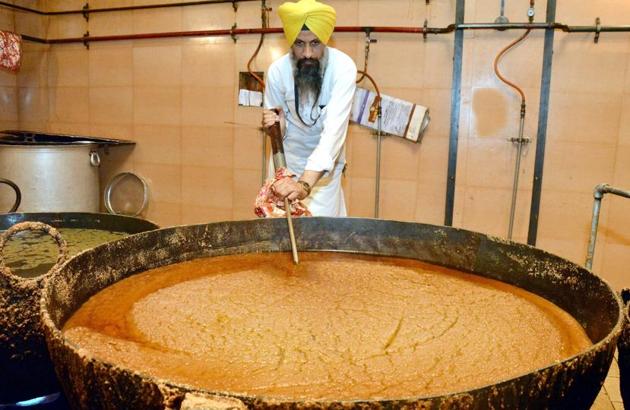
“Besides two cooks and their helps, employees and devotees join the preparation,” says Nardeep Singh, the kitchen supervisor. (Sameer Sehgal/HT)
5/7
 View Photos in a new improved layout
Updated on Jun 26, 2018 6:27 PM
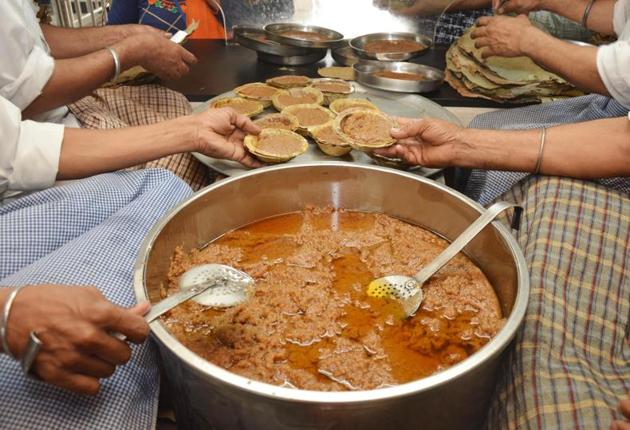
‘Degh’ is available at counters which are part of the kitchen. The devotees offer the ‘degh’ outside the sanctum sanctorum. Accepting the offering from devotees, the sewadars distribute it among the devotees after touching it with a kirpan. (Sameer Sehgal/HT)
6/7
 View Photos in a new improved layout
Updated on Jun 26, 2018 6:27 PM
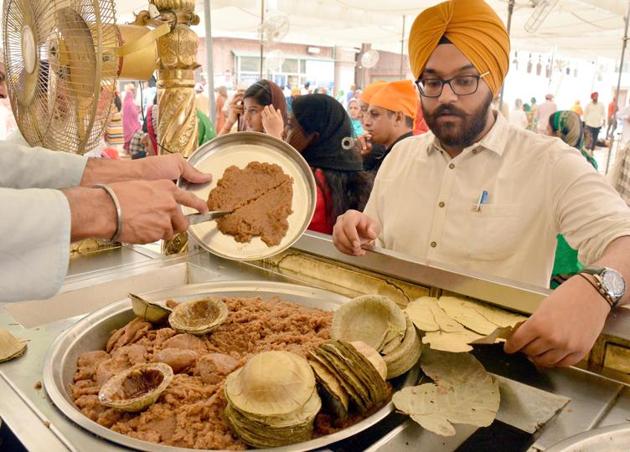
Apart from the act of serving the ‘degh’ inside the sanctum sanctorum during Amrit Vela (early morning) diwan, the parshad is served almost throughout the day near Darshani Deodi, the entry to the sanctum sanctorum. (Sameer Sehgal/HT)
7/7
 View Photos in a new improved layout
Updated on Jun 26, 2018 6:27 PM


