
 E-Paper



Kenya: Drought worsens, with no end in sight
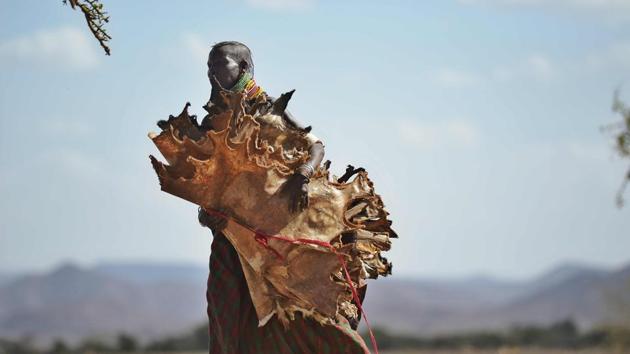
A Turkana woman carries dried skinned from goats she has lost to a biting drought that has ravaged livestock population in nothern Kenya near Lokitaung in Turkana county . (TONY KARUMBA / AFP)
Updated on: Apr 06, 2017 12:17 PM IST

Share via


Copy link

1/11
 View Photos in a new improved layout
Updated on Apr 06, 2017 12:17 PM
A Turkana woman carries dried skinned from goats she has lost to a biting drought that has ravaged livestock population in nothern Kenya near Lokitaung in Turkana county . (TONY KARUMBA / AFP)
2/11
 View Photos in a new improved layout
Updated on Apr 06, 2017 12:17 PM
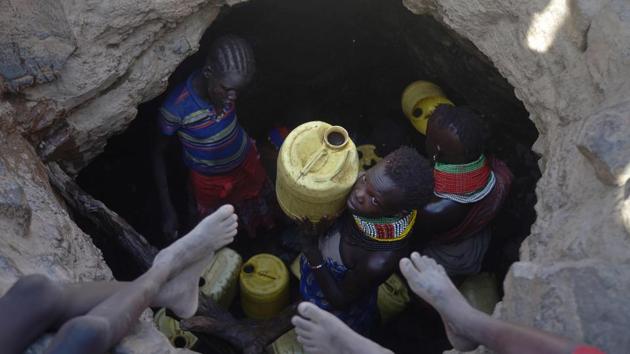
A young girl passes up a jerrycan filled with murky water trickling into a waterhole from underground rocks near Lokitaung. (TONY KARUMBA / AFP)
3/11
 View Photos in a new improved layout
Updated on Apr 06, 2017 12:17 PM
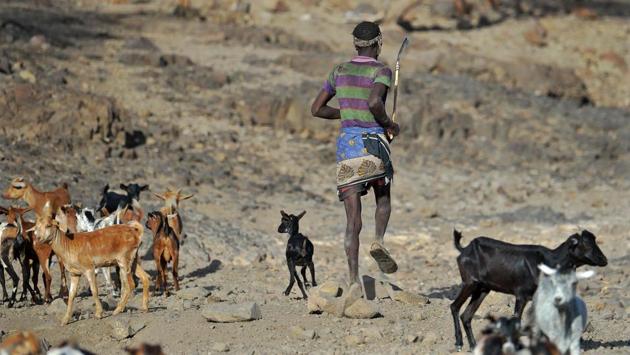
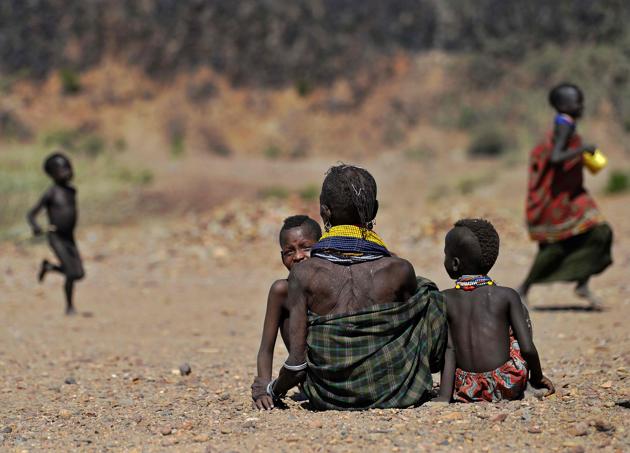
In just a few years water, oil and money would flow. Roads, schools and hospitals would follow. Turkana's generations of poverty and neglect in Kenya's arid north would end. But it was not to be: five years after the discovery of oil, and four since a giant aquifer was found, drought has struck again, shattering the dreams of a different future for Turkana, a bone dry region of dust and stone, home to mostly semi-nomadic livestock herders and lacking the most basic trappings of modernity. (TONY KARUMBA / AFP)
4/11
 View Photos in a new improved layout
Updated on Apr 06, 2017 12:17 PM
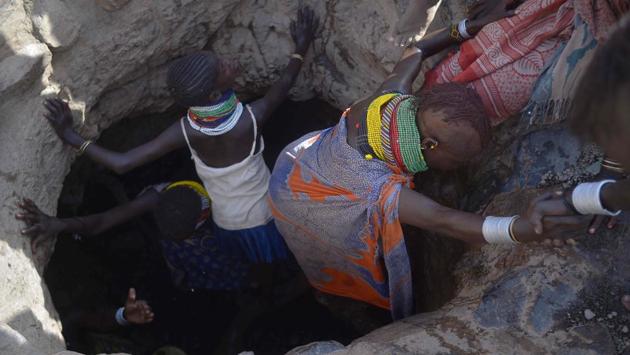
Five years after the discovery of oil, and four since a giant aquifer was found, drought has struck again, shattering the dreams of a different future for Turkana, a bone dry region of dust and stone. (TONY KARUMBA / AFP)
5/11
 View Photos in a new improved layout
Updated on Apr 06, 2017 12:17 PM
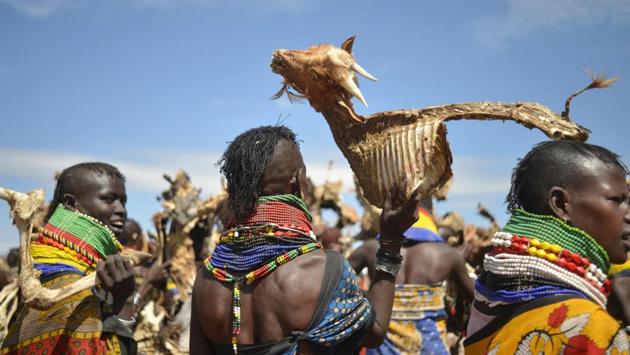
Turkana woman hold and launch dead animals they lost due to a biting drought that has ravaged livestock population in nothern Kenya . (TONY KARUMBA / AFP)
6/11
 View Photos in a new improved layout
Updated on Apr 06, 2017 12:17 PM
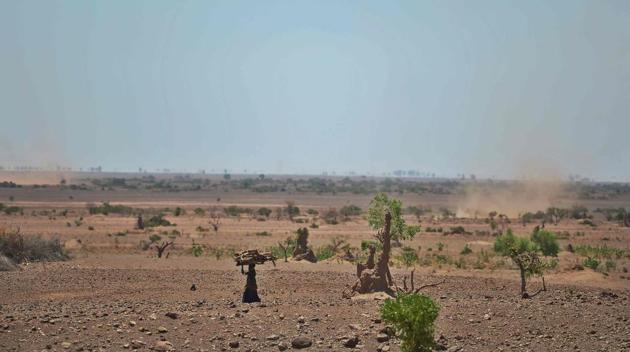
A Turkana woman carries firewood. Kenya has declared this year’s drought a ‘national disaster’ and appealed for international aid. (TONY KARUMBA / AFP)
7/11
 View Photos in a new improved layout
Updated on Apr 06, 2017 12:17 PM
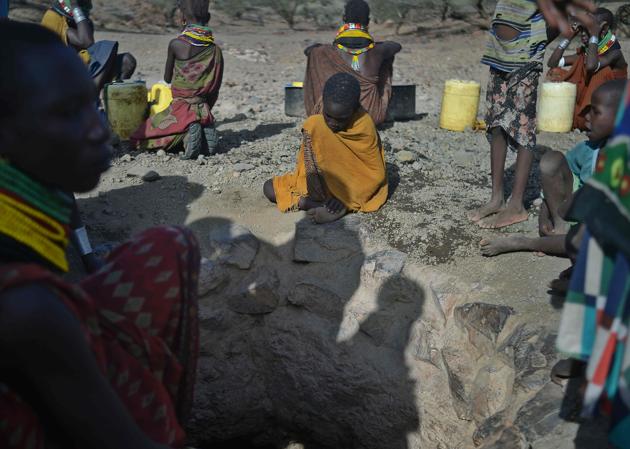
A young boy waits by the mouth of a rapidly drying waterhole near Lokitaung in northern Kenya’s Turkana county where a biting drought has ravaged livestock population . (TONY KARUMBA / AFP)
8/11
 View Photos in a new improved layout
Updated on Apr 06, 2017 12:17 PM
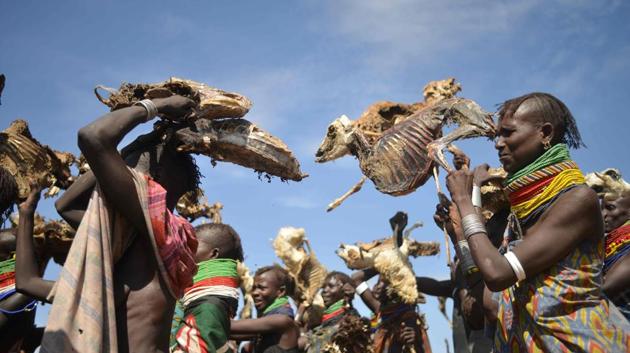
Turkana women carry dead animals they lost due to a biting drought that has ravaged livestock population in nothern Kenya near Lokitaung in Turkana. (TONY KARUMBA / AFP)
9/11
 View Photos in a new improved layout
Updated on Apr 06, 2017 12:17 PM
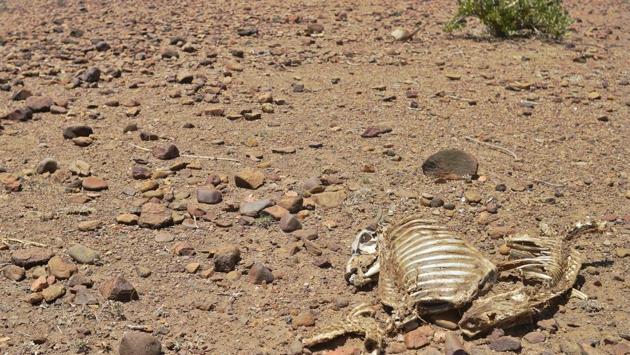
A dead animals lies in the sun near Lokitaung in northern Kenya’s Turkana county where a biting drought has ravaged livestock population. (TONY KARUMBA / AFP)
10/11
 View Photos in a new improved layout
Updated on Apr 06, 2017 12:17 PM
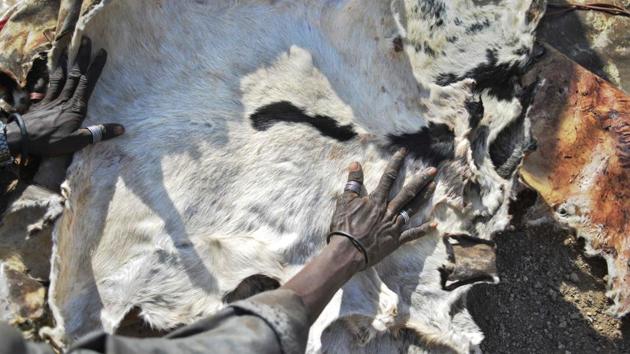
A Turkana woman lays out hides skinned from animals she lost due to a biting drought. (TONY KARUMBA / AFP)
11/11
 View Photos in a new improved layout
Updated on Apr 06, 2017 12:17 PM


