
 E-Paper



Photos: 3D printed prostheses give Brazilian cancer survivor a new face
After losing her right eye and part of her jaw to cancer, Denise Vicentin recently received a new face thanks to a digitally-engineered prosthesis. Researchers at Paulista University are employing smartphones and 3D printing to create digital facial impressions used to make silicone prostheses. The pioneering method has slashed costs and halved production times. AFP has followed Vicentin's journey for more than a year and a half, documenting the various stages of her physical and psychological recovery.
Updated on: Jan 8, 2020 5:02 PM IST


Share via


Copy link

1/10
 View Photos in a new improved layout
Updated on Jan 8, 2020 5:02 PM
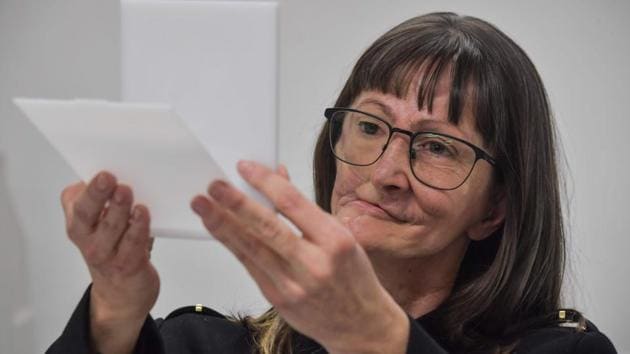
Denise Vicentin looked in the mirror and burst into tears. After losing her right eye and part of her jaw to cancer, she was getting a digitally-engineered prosthesis. “Today I can say how much better I will feel being out in the streets. I have no words,” Vicentin, 53, told AFP at a clinic in Sao Paulo after being fitted for a missing chunk of her face. (Nelson Almeida/AFP)
2/10
 View Photos in a new improved layout
Updated on Jan 8, 2020 5:02 PM
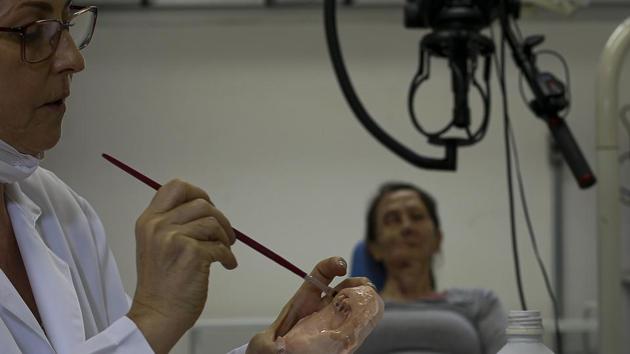
Researchers at Paulista University are employing smartphones and 3D printing to create digital facial impressions used to make silicone prostheses. The method has slashed costs and halved production times. “In the past, it took much longer work, hours of sculpting by hand, and the process was very invasive, with material on the patient’s face to get an imprint of their appearance,” said Rodrigo Salazar, the lead researcher. (Miguel Schincariol/AFP)
3/10
 View Photos in a new improved layout
Updated on Jan 8, 2020 5:02 PM
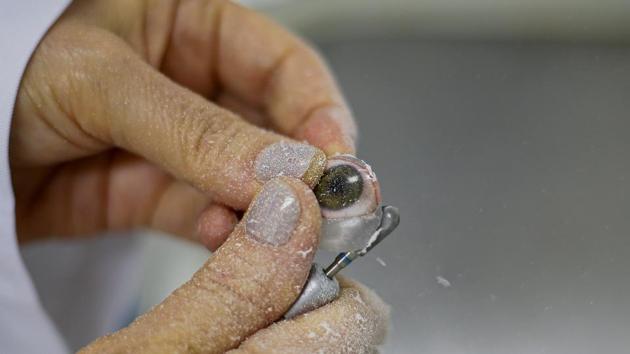
A doctor works on the construction of an eye implant. Vicentin is one of more than 50 patients treated by Salazar and his colleagues since 2015. The team specialises in maxillofacial prosthetics, a branch of dentistry focused on disfigurements by birth defects, disease or trauma. Their technique was published in 2016 in the peer-reviewed Journal of Otolaryngology - Head & Neck Surgery. (Miguel Schincariol/AFP)
4/10
 View Photos in a new improved layout
Updated on Jan 8, 2020 5:02 PM
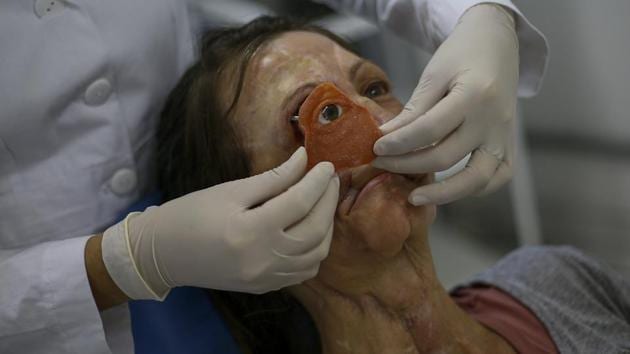
A doctor tests an eye implant on Vicentin. Her ordeal began 30 years ago when she developed a facial tumour. Removed twice, it returned as malignant two decades later. Gradually, she lost parts of her face. “When I was on the metro or train, I tried not to pay attention to the stares,” she recalled. “At places like the bowling alley, I felt them looking, and the person would even leave when they saw me.” (Miguel Schincariol/AFP)
5/10
 View Photos in a new improved layout
Updated on Jan 8, 2020 5:02 PM
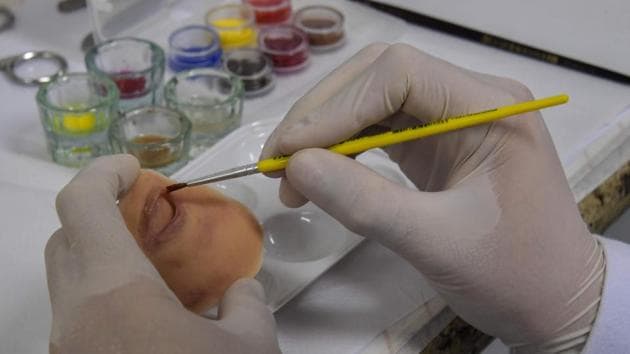
Doctor Salazar works on a prosthesis for Vicentin. As 3D printing developed in recent years, Luciano Dib—one of Salazar’s supervisors and a co-researcher—got the idea to use the technique for prosthesis models. “I saw people at the mall do 3D printing, so I thought, ‘Why can’t we use that for prostheses?’” he told AFP. (Nelson Almeida/AFP)
6/10
 View Photos in a new improved layout
Updated on Jan 8, 2020 5:02 PM
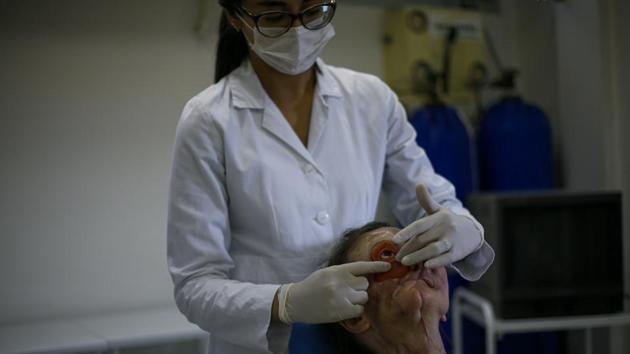
Vicentin’s transformation began in 2018. Dib implanted titanium rods in her eye socket to hold the prosthesis. Over the next year, she underwent surgeries to build up her facial tissue. Using a smartphone, Salazar took 15 pictures of her face from different angles, which were used to make a 3D digital model. Using that model, a graphic designer created a mirror image of the healthy half of Vicentin’s face. (Miguel Schincariol/AFP)
7/10
 View Photos in a new improved layout
Updated on Jan 8, 2020 5:02 PM
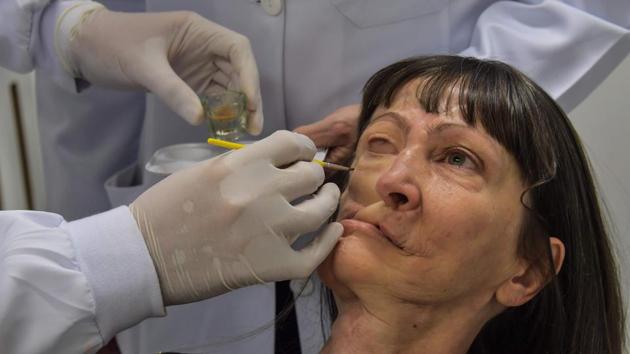
Technicians then 3D-printed a prototype prosthesis and then made a final from silicone, resin and synthetic fibres. To make the prosthesis as real-looking as possible, Salazar and his colleagues carefully matched it to Vicentin’s skin and blue-green eye. The process for making the final prosthesis took 12 hours—half the time of conventional methods. But it was spread out over a year because of Vicentin’s surgeries. (Nelson Almeida/AFP)
8/10
 View Photos in a new improved layout
Updated on Jan 8, 2020 5:02 PM
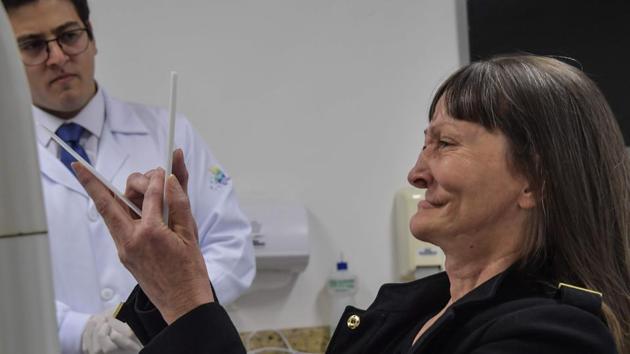
Denise Vicentin cries as she looks in the mirror for the first time after getting a prosthesis. Conventional techniques for making prosthesis models involve equipment costing up to $500,000, Salazar said. This one requires a computer and a smartphone. “The method demonstrates that you don’t need big investments to use advanced technology,” Salazar said. (Nelson Almeida/AFP)
9/10
 View Photos in a new improved layout
Updated on Jan 8, 2020 5:02 PM
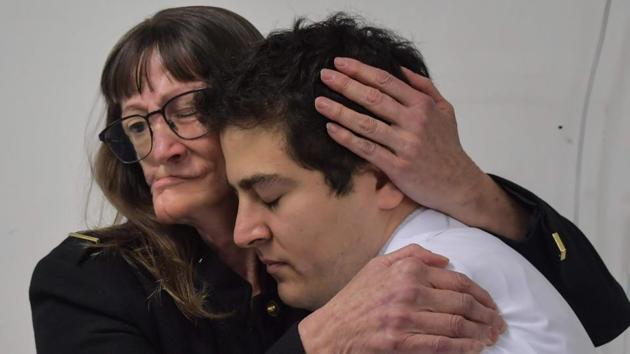
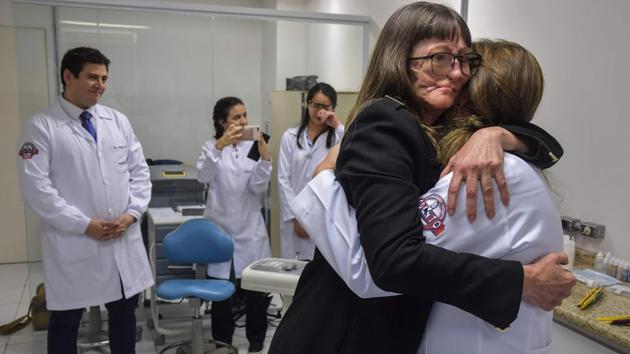
Denise Vicentin embraces Doctor Rodrigo Salazar. Next year, Dib and Salazar plan to open a treatment centre for facial prosthetic rehabilitation built by Paulista University and a non-profit organisation which they founded, called Plus Identity. They have a waiting list of potential patients. Eventually, Dib hopes 3D printing can be used to make the actual silicone prostheses. (Nelson Almeida/AFP)
10/10
 View Photos in a new improved layout
Updated on Jan 8, 2020 5:02 PM


