
 E-Paper



A rate hike beckons but what else | Number Theory
The unanimity and difference of opinion both convey important insights about the state of the economy and policy choices and challenges which follow
Updated on: Oct 7, 2026, 08:58:39 IST

 Prefer HTon Google
Share via


Copy link

The Monetary Policy Committee (MPC) of RBI will announce its decision today (Wednesday, October 7). There is near-unanimity on RBI increasing the policy rate in this meeting, although analysts are divided on the quantum of the rate hike and other tweaks to policy including its stance. The unanimity and difference of opinion both convey important insights about the state of the economy and policy choices and challenges which follow.

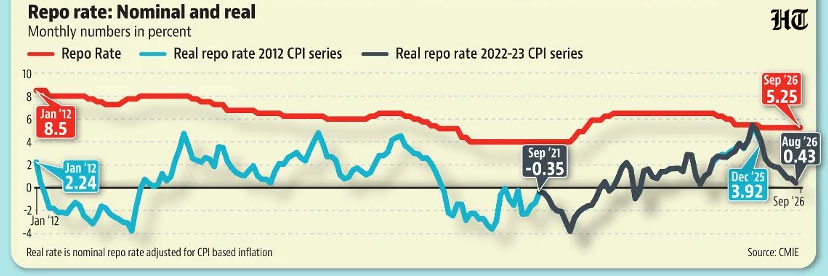
 A rate hike would be a first in 44 monthsThis is the most important takeaway from what most analysts see as a definite rate hike MPC meeting. The last time MPC increased interest rates was in February 2023 when it increased the policy rate from 6.25% to 6.5%. The February 2023 rate hike was the culmination of a sharp and swift hike-cycle when RBI increased the repo rate by 2.5 percentage points in just ten months. The existing policy rate of 5.25% has been unchanged since December 2025 and a rate hike will mark the end of a monetary easing cycle which began in February 2025. This also means that the current hike will be the beginning of the first rate-hike cycle under RBI Governor Sanjay Malhotra who took charge in December 2024. Most analysts expect another rate hike unless RBI effects a half percentage point increase today. The real policy rate, if one were to adjust the nominal rate with inflation, has almost done an inverted-V over the last two years, as inflation fell and started rising once again.
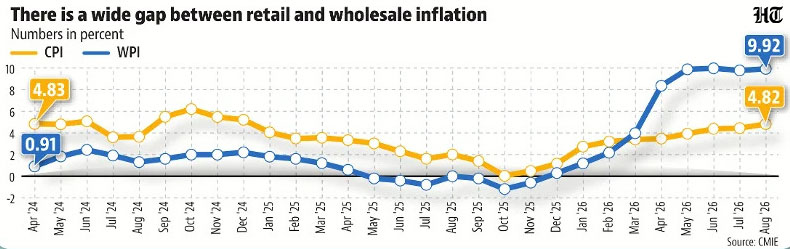
- Movements in CPI do not capture the gravity of the inflation challenge facing the economyIndia’s inflation targeting framework mandates RBI to keep inflation, as measured by the Consumer Price Index (CPI) at 4% within a 2% band. Headline CPI crossed RBI’s target in June and has continued to stay above it. The latest available inflation reading for August was 4.8%. MPC’s August forecasts expect inflation to stay above the 4 percent park in the foreseeable future with projections for the quarters ending September , December, March 2027 and June 2027 being 4.7%, 5.9%, 5.5% and 5.3% respectively. They might see an upward revision in today’s forecasts. The existing and imminent inflation problem is however more serious than what the CPI based index suggests. This is primarily because of the oil shock due to the ongoing war in West Asia. The impact shows in other important variables such as crude oil price and even the Wholesale Price index which is growing at double digits. While part of the CPI based inflation being more benign than WPI story is fuel retailers not passing on the full impact of crude oil price hike to Indian consumers, part of it is also a more general transmission mechanism which takes time for increased input-prices to be passed on to consumers. “Concerns about more generalized inflation have risen, especially because the economy has witnessed a strong cyclical uptick on the back of the fiscal, monetary and regulatory stimulus of 2025. Importantly, events in the Middle East have not dented that recovery. In an environment where demand has picked up, concerns that producers will be more emboldened to pass on higher input prices have only increased”, JP Morgan Chief India Economist Sajjid Chinoy wrote in a research note issued on October 5.
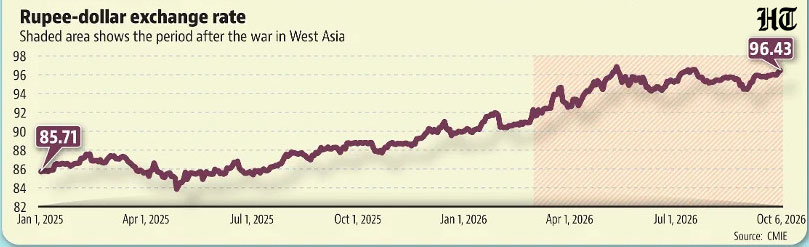
- To be sure, inflation-growth balance is not the only question facing RBI and Indian economyNobody, private and institutional forecasters included sees an implosion of growth or explosion of inflation in India going froward. Such a prognosis should have made a near-certain rate hike an ordinary cyclical event in the monetary policy cycle. However, what makes the current moment critical is the external environment surrounding the Indian economy: high-for-long oil prices will put pressure on both the trade deficit as well as inflation; the ongoing rally in advanced economy bond yields will put pressure on emerging markets such as India to maintain some sort of a difference in interest rates with their advanced economy peers; and the rupee will continue to be under pressure from such developments, which, in turn, will offer some buffer to exports, thereby negating a part of the oil price headwinds to the trade balance. Technically speaking, MPC or RBI need not do anything about all of these factors as its inflation target mandate only looks at the growth-inflation dynamic. However, markets will read both explicit and implicit messages for all of these things in RBI’s decision and messaging today. This MPC is as much about the tone as it will be about the tangible.


Unlock a world of Benefits with HT! From insightful newsletters to real-time news alerts and a personalized news feed – it's all here, just a click away! -Login Now!


