
 E-Paper



Photos: 50 years after Martin Luther King’s death, a look at his life
Martin Luther King Jr. was 39 when he was assassinated fifty years ago, on the evening of April 4, 1968, in Memphis. By then, the civil rights activist had already become one of the world's most well-known figures. King Jr. helped organize the Montgomery bus boycott in 1955 after Rosa Parks was arrested for refusing to give up her seat on a city bus. He pushed for federal civil rights legislation that was eventually enacted and brought him the Nobel Peace Prize for his work. King's example, and his insistence on nonviolent protest, continues to influence many activists pushing for civil rights and social change.
Updated on: Apr 04, 2018 2:51 PM IST

Share via


Copy link

1/11
 View Photos in a new improved layout
Published on Apr 04, 2018 2:51 PM
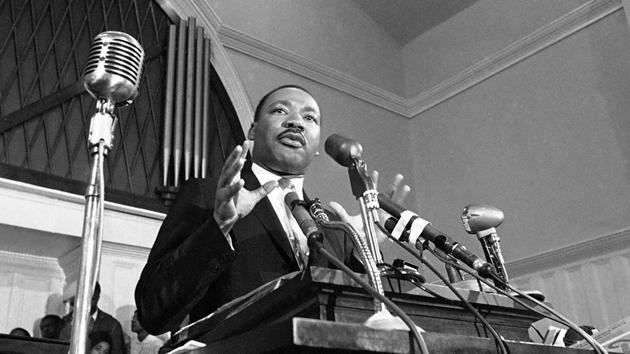
Martin Luther King Jr. speaks in Atlanta in 1960. The civil rights leader who was assassinated fifty years ago today, carried the banner for the causes of social justice — organizing protests, leading marches and making powerful speeches exposing the scourges of segregation, poverty and racism. (AP File)
2/11
 View Photos in a new improved layout
Published on Apr 04, 2018 2:51 PM
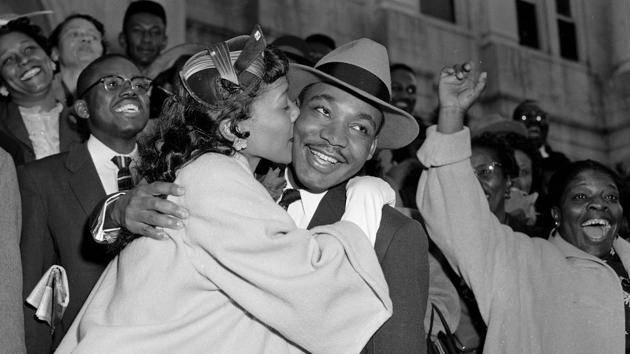
Martin Luther King Jr. is welcomed with a kiss by his wife, Coretta, after leaving court in Montgomery, Alabama on March 22, 1956. King was found guilty in the Montgomery Bus Boycott, a seminal event in the Civil Rights Movement, after Rosa Parks, an African American woman was arrested for refusing to surrender her seat to a white person in 1955. (Gene Herrick / AP File)
3/11
 View Photos in a new improved layout
Published on Apr 04, 2018 2:51 PM
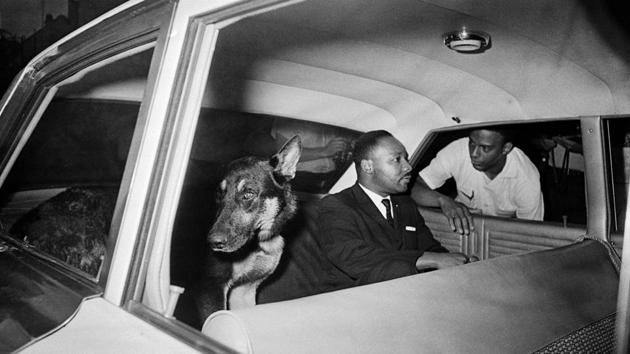
Martin Luther King Jr. speaks to Andrew Young as he rides in the back seat of a police car with a police dog, being returned to jail in St. Augustine, Florida on June 12, 1964 . King was arrested two days prior during a sit in at the Monson Motor Lodge where he challenged the segregation of patrons in the restaurant. (AP File)
4/11
 View Photos in a new improved layout
Published on Apr 04, 2018 2:51 PM
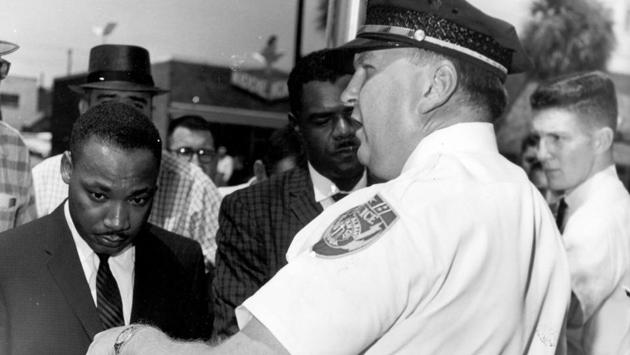
Martin Luther King Jr., is arrested by Albany's Chief of Police Laurie Pritchett after praying at City Hall in Albany, Georgia on July 27, 1962 . King participated in a month's long campaign of local anti-segregation led by the Southern Christian Leadership Conference. (AP File)
5/11
 View Photos in a new improved layout
Published on Apr 04, 2018 2:51 PM
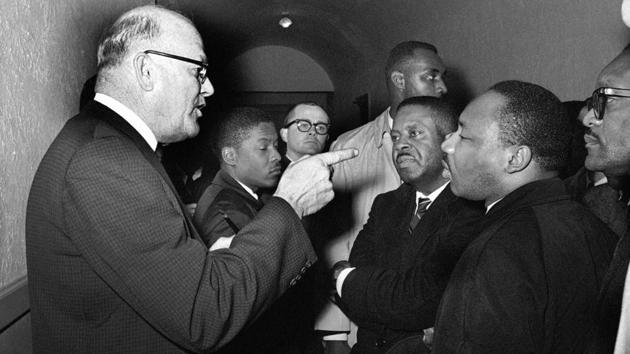
Registrar Carl Golson shakes a finger at the Rev. Dr. Martin Luther King Jr. during meeting at the courthouse in Hayneyville, Alabama on March 1, 1965. King inquired about voter registration procedures but Golson told him that if he was not a prospective voter in Lowndes county, “It's none of your business.” King visited two nearby counties after leading a voter registration drive in Selma. (Horace Cort / AP File)
6/11
 View Photos in a new improved layout
Published on Apr 04, 2018 2:51 PM
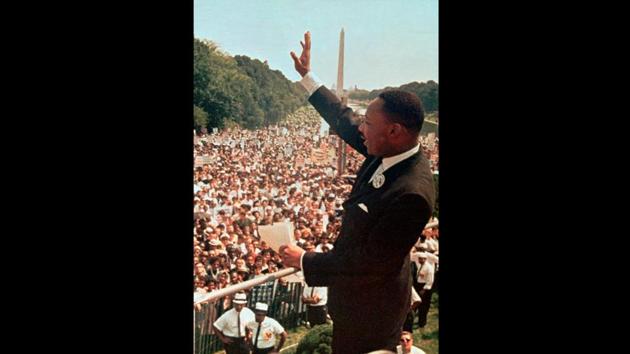
Martin Luther King Jr. at the Lincoln Memorial for his “I Have a Dream” speech calling for equality among the races during the March on Washington on August 28, 1963. A defining moment of the civil rights movement, the March was in part supportive of President Kennedy’s civil rights legislation and the speech an homage to Abraham Lincoln’s Gettysburg Address. (AP File)
7/11
 View Photos in a new improved layout
Published on Apr 04, 2018 2:51 PM
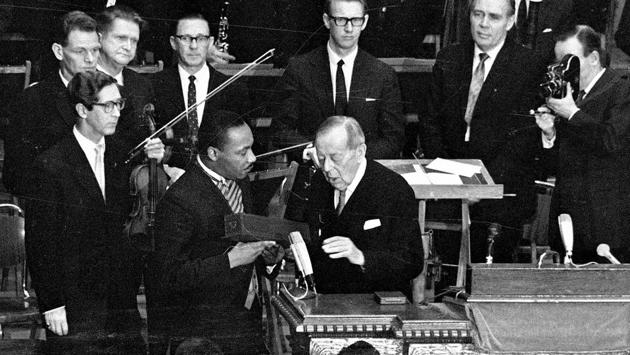
Martin Luther King Jr. receives the Nobel Peace Prize from Gunnar Jahn, chairman of the Nobel Committee, in Oslo, Norway on December 10, 1964. Its 12th American recipient, King called the prize a tribute to Americans who followed the precepts of non-violence and said during his acceptance that he regarded it a sign that world public opinion was on the side of those struggling for freedom and dignity. (AP File)
8/11
 View Photos in a new improved layout
Published on Apr 04, 2018 2:51 PM
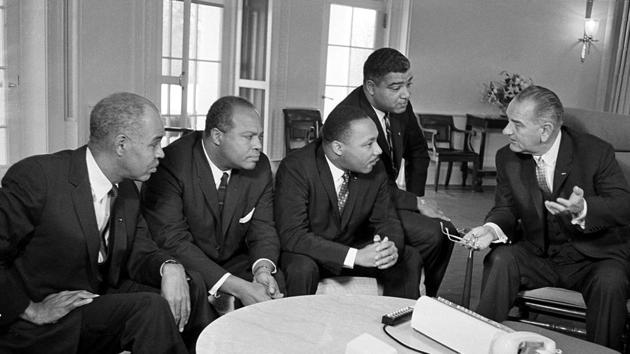
US President Lyndon B. Johnson (R), talks with Martin Luther King Jr (3rd-R) and other civil rights leaders in the White House in Washington on January 18, 1964. (AP File)
9/11
 View Photos in a new improved layout
Published on Apr 04, 2018 2:51 PM
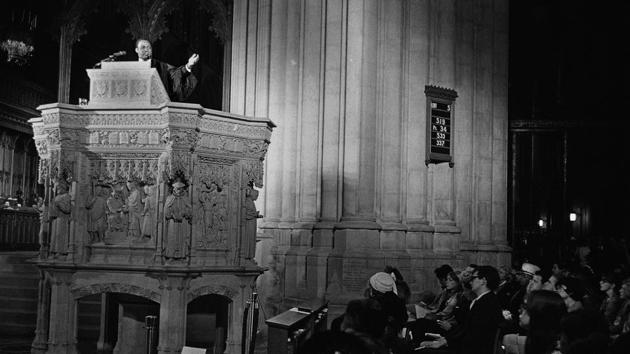
Martin Luther King Jr. (L), who headed the Southern Christian Leadership Conference, preaches to a capacity crowd from the pulpit at the National Cathedral in Washington on March 31, 1968. King spoke from the Cathedral's Canterbury Pulpit in what would be his last Sunday sermon before he was assassinated in Memphis. (John Rous / AP File)
10/11
 View Photos in a new improved layout
Published on Apr 04, 2018 2:51 PM
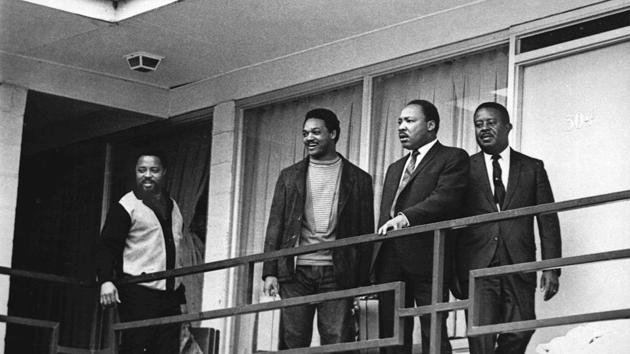
Martin Luther King Jr. (2nd-R) stands with civil rights leaders Hosea Williams, Jesse Jackson, King, and Ralph Abernathy (L-R) on the balcony of the Lorraine Motel in Memphis, Tennessee on April 3, 1968, a day before he was assassinated at approximately the same place. From left are Hosea Williams, Jesse Jackson, King, and Ralph Abernathy. (Charles Kelly / AP File)
11/11
 View Photos in a new improved layout
Published on Apr 04, 2018 2:51 PM


