
 E-Paper



Photos | A lunar trifecta: Gazers watch super blue blood moon
The super blue blood moon yesterday was, as enthusiasts gushed, truly a once-in-a-blue- moon phenomenon, visible across several parts of the world.
Updated on: Feb 01, 2018 10:34 AM IST

Share via


Copy link

1/8
 View Photos in a new improved layout
Updated on Feb 01, 2018 10:34 AM
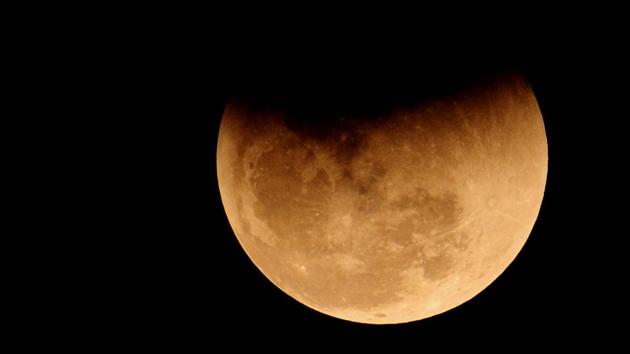
In Chandigarh, India last night the moon put up a striking celestial show as a coppery red orb rose high up in the sky to mark a rare lunar eclipse. After decades, moon-gazers saw a super moon, when it looks bigger and brighter than ever, a blue moon, which is the second full moon in a calendar month, and a blood moon, a reference to the red colour of an eclipse. (Ravi Kumar / HT Photo)
2/8
 View Photos in a new improved layout
Updated on Feb 01, 2018 10:34 AM
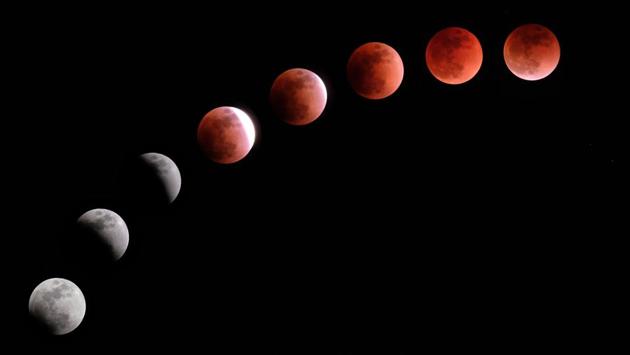
This composite image shows the moon during a lunar eclipse referred to as the “super blue blood moon” in Tokyo. NASA called it a lunar trifecta: the first super blue blood moon since 1982. That combination won’t happen again until 2037. (Kazuhiro Nogi / AFP)
3/8
 View Photos in a new improved layout
Updated on Feb 01, 2018 10:34 AM
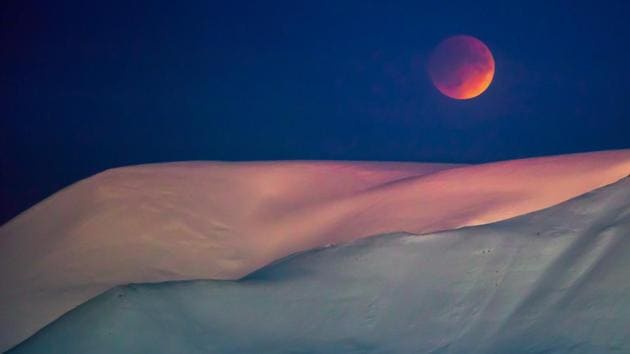
A super blue blood moon behind a mountain is seen from Longyearbyen, Norway. It was, as enthusiasts gushed, truly a once-in-a-blue- moon phenomenon, visible across several parts of the world. It’s the first time in 35 years a blue moon has synced up with a supermoon and a total lunar eclipse, or blood moon because of its red hue. (NTB scanpix / Heiko Junge / AFP)
4/8
 View Photos in a new improved layout
Updated on Feb 01, 2018 10:34 AM
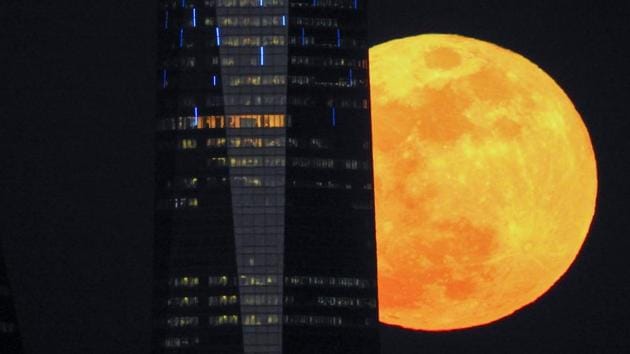
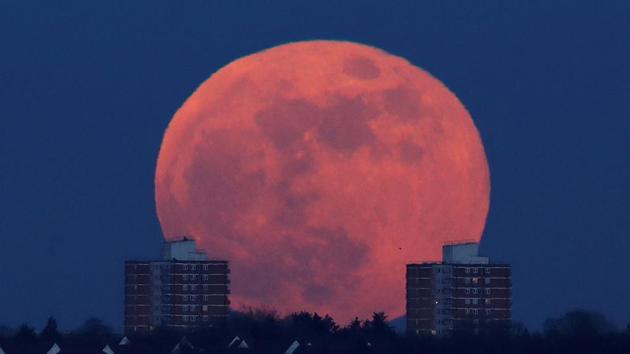
A full moon “supermoon” rises next to a skyscraper in Madrid, Spain. NASA trained its instruments on the Lunar Reconnaissance Orbiter to measure the effect of the temperature drop during the one-hour-16-minute eclipse. Seeing what happens when the surface of the Moon cools quickly will help “understand some of the characteristics of the regolith -- the mixture of soil and loose rocks on the surface -- and how it changes over time.” (Paul Hanna / REUTERS)
5/8
 View Photos in a new improved layout
Updated on Feb 01, 2018 10:34 AM
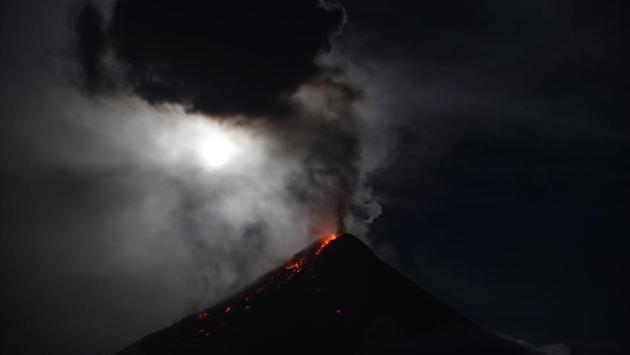
There were gasps of delight for the Philippines at the erupting Mount Mayon volcano. People were treated to a double-spectacle -- a supermoon eclipse rising over a mountain spewing ash and lava. (Ted Aljibe / AFP)
6/8
 View Photos in a new improved layout
Updated on Feb 01, 2018 10:34 AM
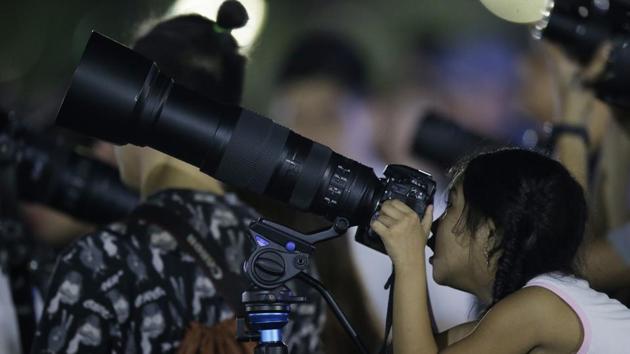
A girl peeks inside the viewfinder of a camera to see a lunar eclipse at a park in Manila, Philippines. One of the great things about a lunar eclipse was that one doesn’t need any special equipment to see it. Anyone can go outside and look at the moon. (Aaron Favila / AP)
7/8
 View Photos in a new improved layout
Updated on Feb 01, 2018 10:34 AM
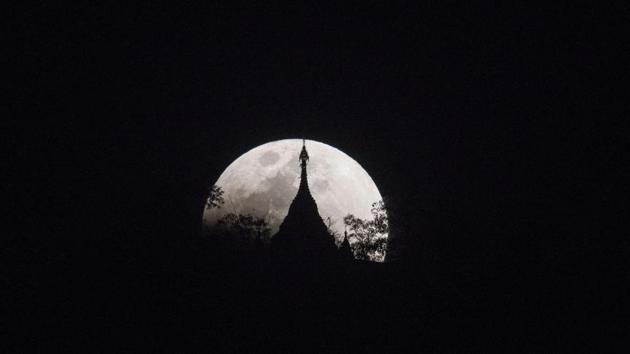
The moon rises over a pagoda in Kumal near Mandalay City. In Nepal, where the super moon was just visible in the hazy polluted sky over Kathmandu, the celestial phenomenon was greeted with more caution as an ominous sign. Local newspapers there had warnings telling citizens not to eat, drink, sleep or even go to the toilet during the eclipse, citing Hindu customs. (Ye Aung Thu / AFP)
8/8
 View Photos in a new improved layout
Updated on Feb 01, 2018 10:34 AM


